Not a list of destinations. A list of open windows: places where a rule, a flight, a hotel or a conservation plan changes what you can do there in 2027
27 destinations where 2027 is a year with a reason: new guide rules in Svalbard, extra seats to Lofoten, the Island Games in the Faroes, telescopes in the Atacama, new hotels in Queenstown and Coron, and a railway returning to Meteora.
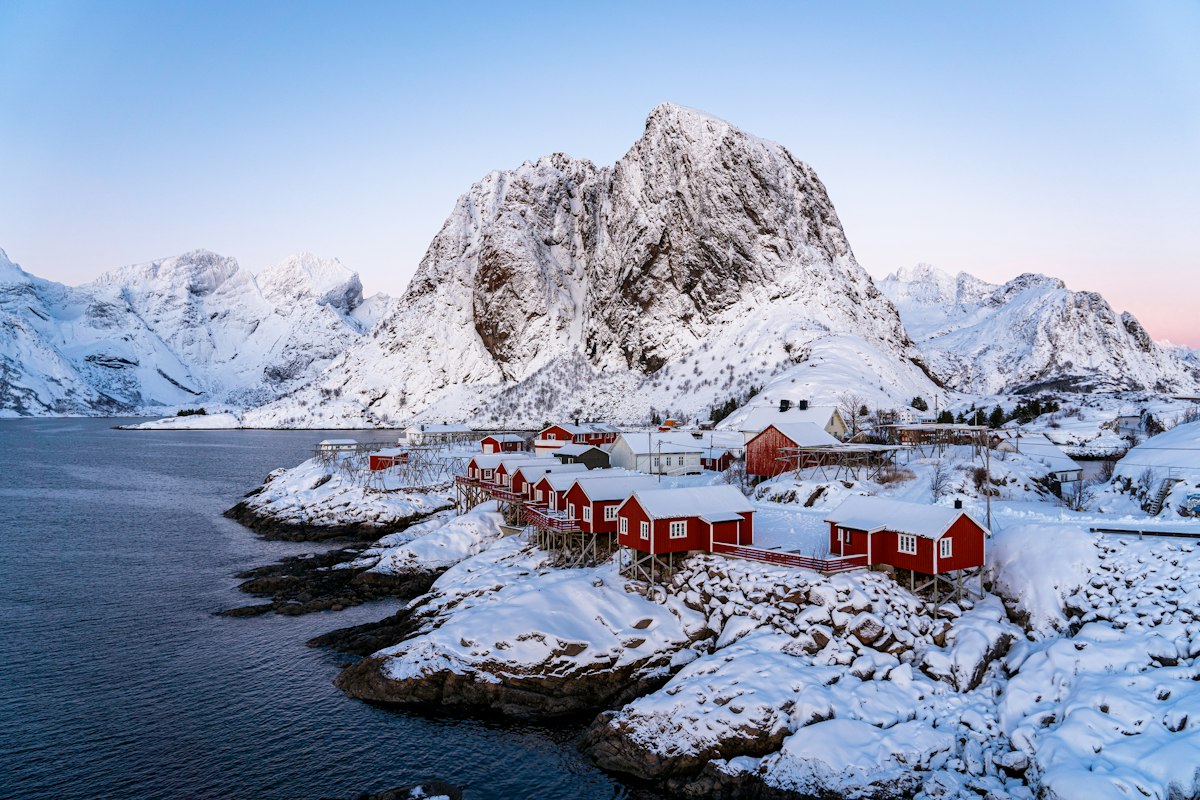
Fishermen's cabins in Lofoten in winter. Photo: Bingqi Huang
In short
This is not a list of beautiful places. In each of the 27 destinations here something specific changes: a law, a flight route, a hotel, or a conservation plan.
In Svalbard a rule requiring approved guides outside the settlements takes effect on 1 July 2027. Lofoten gains almost 49,000 seats a year from 1 January 2027. The Faroe Islands host the Island Games from 3 to 9 July 2027.
Every fact here was checked against a source. Where we could not verify something, we did not write it.
Beside each destination is a link to the hotels we actually hold there. One destination on the list, Socotra, has none we can sell, and we say so plainly rather than hide it.
In 2027 it is hard to claim we have found a place nobody knows. Drones have passed over the most remote islands, luxury hotels are opening in deserts, and villages that once appeared only on topographic maps now get traffic.
But there is another group of places, and it is the more interesting one: those where something concrete changes right now. A new way in opens. A new hotel makes staying possible. Tourism rules change to protect the landscape. Infrastructure that was cut off comes back.
So this is not a list of the hottest destinations. It is a list of open windows, and every one of them has a date.
AlUla, Saudi Arabia
A sandstone valley of rock-cut Nabataean tombs, getting a new generation of hotels
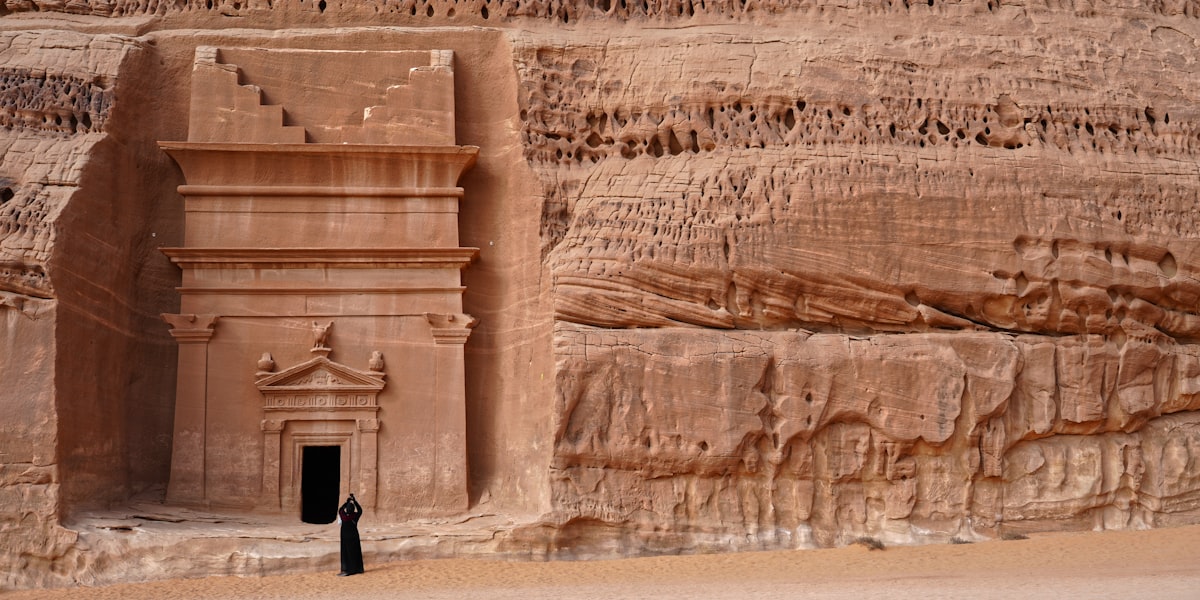
A Nabataean tomb cut into the rock. Photo: Jens Aber
In north-west Saudi Arabia lies an enormous valley of sandstone, oases and archaeological sites, and within it Hegra, the Nabataean city where monumental tombs were carved directly out of the cliffs.
The link to Petra is obvious, but the experience is different. The spaces are more open, the visitor numbers smaller, and a large part of the story sits between the sites: the rock formations, the desert tracks and the landscape.
Why 2027: the AlUla Development Company has begun building NUMAJ, a 250-room hotel opening in 2027 and operated by Marriott under the Autograph Collection brand. It is the brand's first hotel in AlUla, and a sign that the destination is moving from organised tours to a real range of places to stay.
The one place on this list where an exact date in 2027 changes the rules of the trip
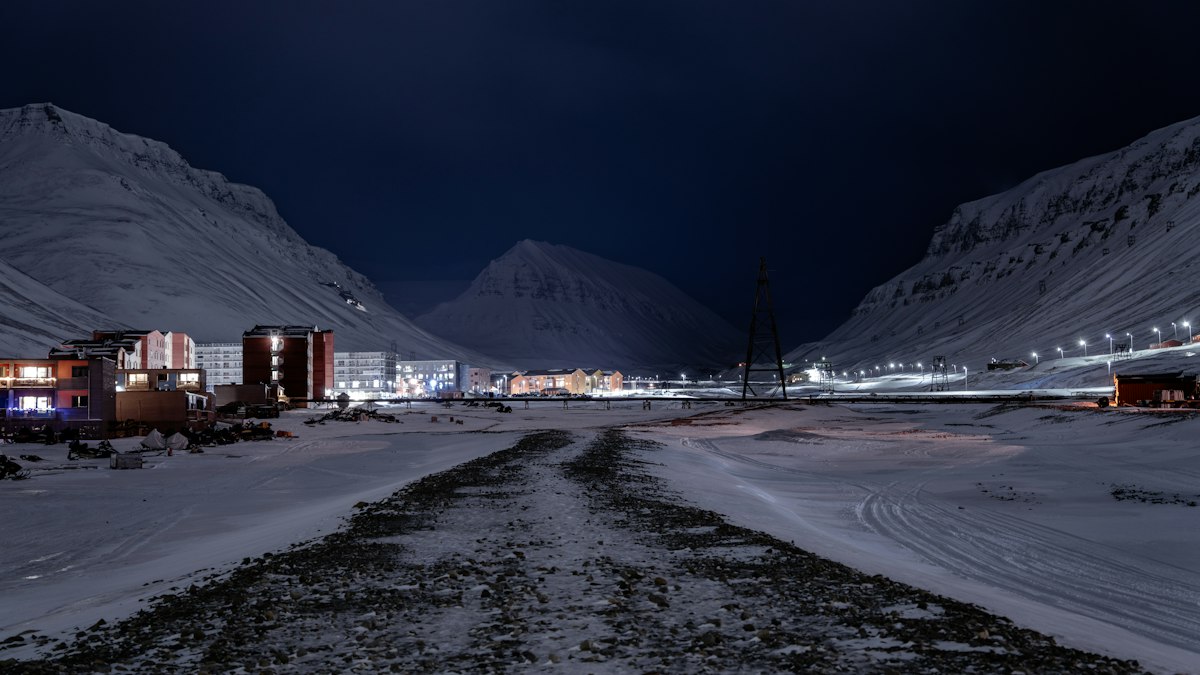
An Arctic town in the winter dark. Photo: Himmel S
Svalbard is not a northern version of Norway. The archipelago sits deep inside the Arctic, Longyearbyen is ringed by mountains and glaciers, and polar bears are a real consideration the moment you leave the settlements. There are months when the sun does not set, and months when it does not rise.
Why 2027: the new field safety regulations came into force on 1 January 2026, but their most significant clause was deliberately deferred. From 1 July 2027, operators running tourism activity outside the inhabited areas must have approved Svalbard guides present.
The regulations define an inhabited area narrowly: the centre of Longyearbyen and its airport, Pyramiden, Barentsburg and Ny-Alesund. Everything else counts as field. An approved guide must have completed basic safety training, and the approval lasts five years.
Almost 49,000 new seats a year, from 1 January 2027
Lofoten is one of Scandinavia's loveliest contradictions: small fishing villages sit beneath peaks that look alpine, except the peaks fall straight into the ocean. In winter people come for the northern lights, in summer the sun barely disappears, and you can sleep in a rorbu, a traditional fisherman's cabin converted for guests.
Why 2027: Norway's transport ministry and Wideroe agreed that from 1 January 2027 an additional daily rotation will be added on the Bodo-Svolvaer and Bodo-Leknes routes, six days a week. That is 48,672 seats above the existing annual minimum requirement of 332,000 seats, a 15 per cent increase.
In other words: easier to reach, and without paying for it in a dearer fare. The maximum price on these routes stays regulated.
One week in July 2027 when 18 small islands become the centre
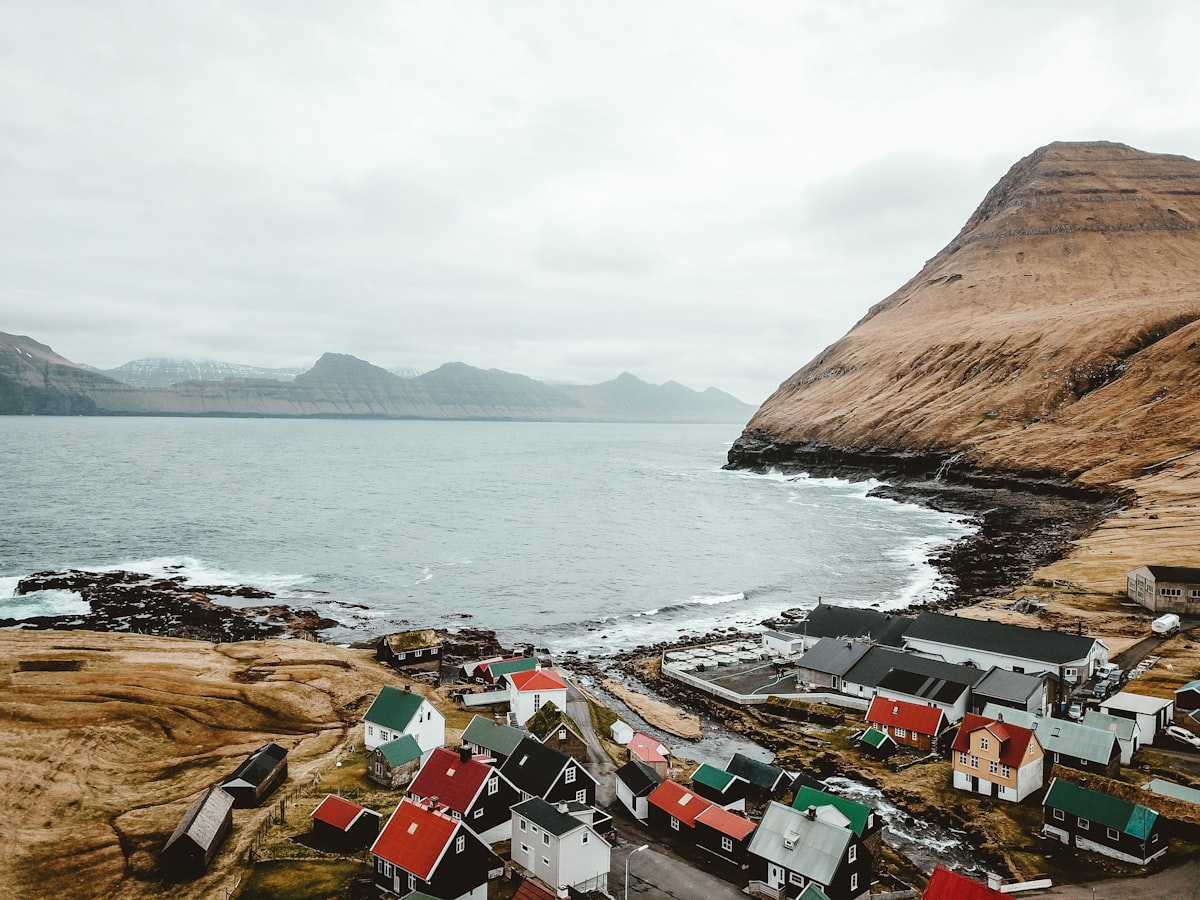
A village in the Faroe Islands. Photo: Annie Spratt
Eighteen islands in the middle of the North Atlantic. Small villages, cliffs, waterfalls that drop into the ocean and tunnels that run beneath the sea. The Faroes feel remote, but they are better connected to Europe than the wild scenery suggests.
The destination is managed under the HEIM 2030 strategy, launched in 2023, which puts residents' quality of life and the protection of nature at the centre alongside tourism. One of its best-known expressions is Closed for Maintenance, Open for Voluntourism: days when sites shut to visitors and volunteers work with locals on paths and signage.
Why 2027: from 3 to 9 July 2027 the Faroe Islands host the International Island Games, with 27 island teams and 14 sports. It is the second time the islands have hosted, after 1989. Anyone wanting complete quiet should choose another date; anyone wanting to see the Faroes at one of their great social moments has that week.
Two enormous observatories reach a decisive stage right now
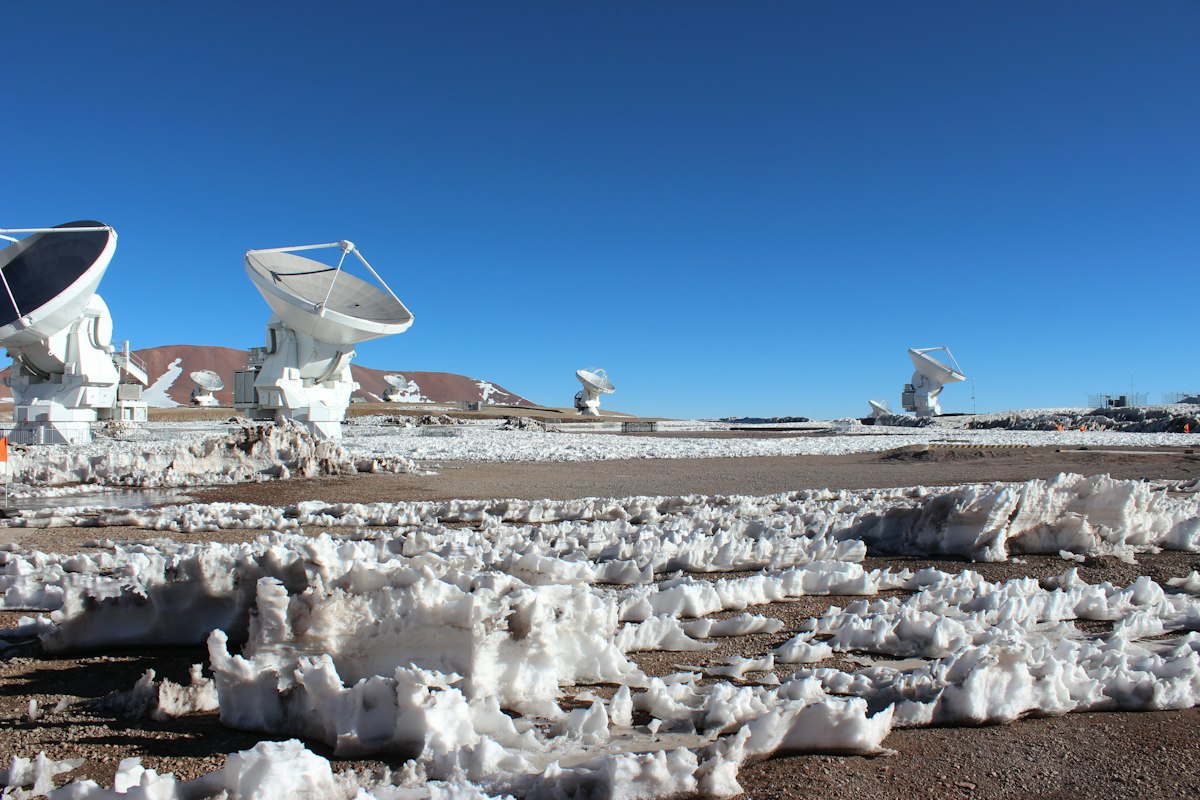
Observatory dishes in the Atacama Desert. Photo: Gi Gonzalez Carrasco
The Atacama is so dry that in parts of it almost nothing living is visible. High-altitude lagoons, volcanoes, salt flats and geysers make it one of the landscapes easiest to imagine as Mars. But the second reason to come appears only at night: the dryness, the altitude and the low light pollution have made northern Chile one of the most important centres for astronomy in the world.
Why 2027: ESO's Extremely Large Telescope, under construction on Cerro Armazones, passed more than 70 per cent completion in April 2026, and its dome is due to be finished in 2027.
At the same time, construction has begun at Paranal on the southern array of the Cherenkov Telescope Array Observatory, which will be the largest and most powerful gamma-ray observatory in the world. The telescope foundations are going in, and the first are due to be installed on site by the end of 2026. Which makes 2027 the year the array starts growing on the ground.
Two major luxury openings at the end of 2027, in the same town
Queenstown sits between Lake Wakatipu and the Southern Alps. In the morning you can climb a mountain, at midday bungy jump, and in the evening sit in front of a completely still lake. It has not been a secret for a long time, but its accommodation layer is changing.
Why 2027: Marriott has signed an agreement to bring St. Regis to New Zealand for the first time, a 145-room hotel in central Queenstown with views of The Remarkables and the lake, planned to open in late 2027.
The same year should see the opening of NOCTIS, a NZ$130 million project on the shore of Lake Wakatipu: ten villas with 60 bedrooms in total, among them a ten-bedroom penthouse, alongside an infinity pool and a spa.
The first full year of two new ferries, and three times the room for caravans
Tasmania is a different Australia: cooler, greener, wilder. Cradle Mountain, Freycinet, ancient forests and rugged coastlines make an island particularly suited to a road trip.
Why 2027: the new generation of ferries, Spirit of Tasmania IV and V, entered service on 31 October 2026, making 2027 their first full year. Each ship carries up to 1,800 passengers against 1,400 on the old ones, has 301 cabins against 222, and three times the caravan capacity, a significant change on a destination where the drive is a central part of the experience.
That same year Hobart hosts the Australian Cruise Association's annual conference, for the first time in 15 years.
A flight route back after ten years, saving a transfer between airports
Seoul can make a traveller think they understand South Korea. Jeju proves otherwise. The island was formed by volcanic activity, with Mount Hallasan at its centre. Around it are lava tubes, waterfalls, beaches and villages where the haenyeo tradition, the local free-diving women, survives.
Why 2027: in May 2026 direct flights resumed between Incheon International Airport and Jeju, after the route had been suspended since 2016. Until then anyone landing at Incheon had to transfer by train or bus to Gimpo and continue from there.
The practical effect is large: transfer time from an international landing to Jeju fell from four hours to about two. 2027 is the first full year in which Seoul and Jeju can be planned as one simple itinerary.
The lagoons and the wrecks get a new layer of hospitality
Coron is the kind of place that explains why the Philippines became an island-hopping destination. Dark limestone cliffs rise out of clear water, lakes hide between the hills, and beneath the surface lie Second World War wrecks that have become dive sites.
Why 2027: the Filipino hotel group The Lind will open The Lind Coron during the year, with 91 rooms and villas, some with private pools, a spa, and a dive centre run from the resort itself.
This is not a reason to come instead of the lagoons. It is a new option for anyone who wants the nature of Palawan without compromising on where they sleep.
An island with a real luxury tier, and still almost no inventory
Sumba is a short flight from Bali, and the feeling is completely different. Traditional villages, megalithic stone tombs, savannah, horses and enormous beaches still define large parts of the island.
Why now, and where we are careful: the island already has a high-end accommodation layer, including Nihi Sumba and Cap Karoso, a resort with 40 rooms and 20 villas. But we checked our own supply on Sumba and found a single-digit number of priced hotels, across two different date windows.
So we will not write here that a new hotel opens in 2027: we could not verify such an opening from a reliable source. What is true is that Sumba is still at the stage where you have to plan ahead and book early, because there is no depth of supply to rescue anyone who decides at the last minute.
A World Heritage site given an ultimatum, which imposed a building moratorium
Kotor is ringed by ancient walls and sits at the end of a deep bay surrounded by mountains. The experience feels almost like a fjord, even if geologically it is a different kind of bay entirely. The area has been a World Heritage site since 1979.
Why 2027: at the World Heritage Committee session in July 2025 it was found that there had been serious deterioration in the conservation of Kotor's natural and culturo-historical region. UNESCO required Montenegro to impose a moratorium on issuing building permits in the protected area, which includes parts of Kotor, Tivat, Herceg Novi and Cetinje, by 1 February 2026, or the site could be placed on the List of World Heritage in Danger.
A moratorium has since been imposed inside Kotor's protected zone, and similar mechanisms have been applied in Herceg Novi. Which means anyone arriving in 2027 sees a bay in the middle of a genuine attempt to stop itself.
Four new European flight routes, on an ancient lake
Lake Ohrid is one of the oldest lakes in Europe. The town of Ohrid sits on its shore with churches, stone houses and streets running down towards the water.
Why 2027: air access to the town changed during 2026. Wizz Air opened routes from Ohrid to Milan Malpensa on 30 March, to Wroclaw on 7 June and to Katowice on 8 June, each twice weekly, and its network from the city now runs to seven routes. At the same time Austrian Airlines launched a seasonal Vienna-Ohrid route on 21 June, twice weekly.
2027 is effectively the first year in which the full effect of the new route map can be seen. This is exactly the sort of destination worth spotting before the access translates into the prices of a familiar summer place.
Stone towers in the Caucasus, and a destination where timing decides whether you get there at all
In Svaneti, particularly around Mestia and Ushguli, the Caucasus landscape is not a backdrop but the thing that dictates life. The family stone towers were built over centuries for defence, and some of the settlements look as though they stayed outside Europe's ordinary course of history.
Why to plan this properly for 2027, and where we are careful: we found lists online of infrastructure projects said to complete in the region in 2027, but we could not verify them from an official source, so we will not quote them here.
What is certain is the condition of a visit. The roads to Ushguli close in winter under snow and avalanche risk, and supply in Svaneti is small. In our own check we found only a single-digit number of priced hotels in Mestia in each of the two date windows we tested. This is a destination where the season and the date matter more than the hotel.
A new World Heritage site, with more than a hundred thousand visitors a year
Hundreds of square kilometres of white dunes, and then the rain arrives. Water collects between the dunes and blue and green lagoons form, until the landscape becomes something that is not quite a desert and not quite a lake district.
Why 2027: in July 2024, at the 46th session of the World Heritage Committee in New Delhi, Lencois Maranhenses National Park was declared a World Heritage site. It is the largest dune field in South America, about 155,000 hectares.
The declaration brought global exposure to a place already hosting more than 100,000 visitors a year, and the years after it are exactly the stage at which how you visit without ruining it gets decided. Anyone arriving in 2027 arrives at a very young World Heritage site that is still forming its own rules.
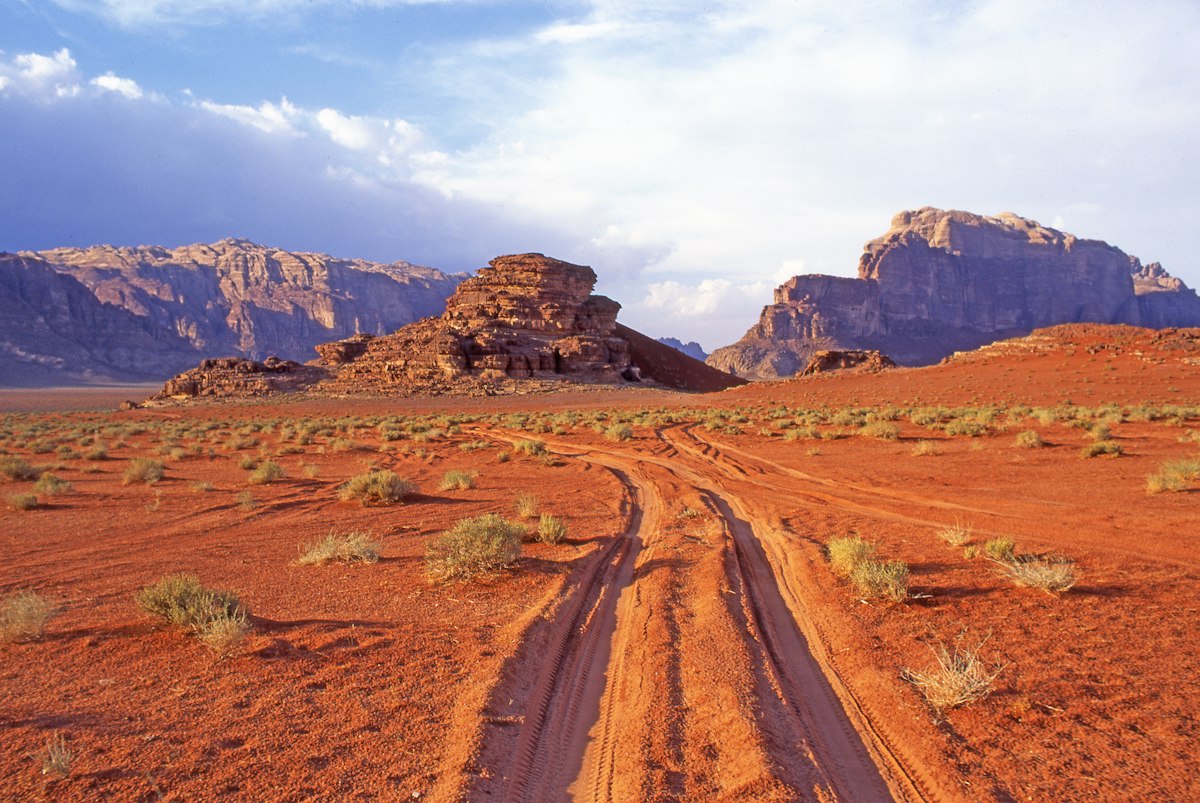
Wadi Rum is sometimes called the Valley of the Moon, and it is not hard to see why: red rock walls, vast plains and a completely open sky. But it is also a living area of Bedouin communities, not only a film set.
Why 2027: the Aqaba Special Economic Zone Authority is investing in upgrading tourism infrastructure and services in Aqaba and Wadi Rum, and launched three support programmes in 2026 aimed at lengthening visitor stays. Aqaba currently has around 7,000 hotel rooms, with a further 5,100 planned, of which about 2,500 by 2027.
What that means for a traveller: the same vast, quiet desert, but with stronger and more accessible tourism infrastructure around it. In the first half of 2026, 130,549 people visited Wadi Rum.
A new direct route from Europe, to a destination where every connection changes the journey
Namibia resists almost every habit of modern tourism. The distances are long, the settlements far apart, and sometimes the most impressive thing you see in an hour of driving is simply nothing at all. Sossusvlei, the Skeleton Coast and Damaraland show how many forms one desert can take.
Why 2027: on 1 June 2026 Edelweiss launched a direct route between Zurich and Windhoek, 7,795 kilometres, on Airbus A350 aircraft. It began twice weekly, on Mondays and Fridays, and rose to three weekly flights from mid-July with the addition of a Wednesday.
2027 is the first full year in which that connection can enter ordinary seasonal planning. For a destination where every additional transfer materially changes the trip, a direct flight is not a small detail.
The first archipelago in the world certified for sustainability at gold level
Nine volcanic islands in the middle of the Atlantic: crater lakes, whales, hot springs and vineyards that fight the wind with basalt walls.
Why 2027: in 2019 the Azores became the first archipelago in the world certified as a sustainable tourism destination by EarthCheck, and in 2024 the first in the world to receive that certification at gold level. The local strategy runs under the motto Tourism all year round, on all islands, and aims to spread visitors across the nine islands and through the whole year rather than concentrating them on Sao Miguel in summer.
So 2027 is a good opportunity to think about the Azores differently: not as one more island, but as a journey between several of them, at the edges of the season.
Still no international flight, and that is exactly what protects the place
Raja Ampat is an enormous archipelago, but most of the familiar photographs show a tiny part of it. Below the water is one of the most important centres of marine biodiversity in the world; above it are limestone islands, forest and lagoons.
Why 2027: there is no shortcut. Domine Eduard Osok airport in Sorong is the only full-sized airport in the region, and although it was formally upgraded to international status in 2025, no scheduled international flights operate to it. Most travellers land in Jakarta or Bali and continue on a domestic flight.
From Sorong you carry on by fast ferry, about two hours, to Waisai, the capital of Raja Ampat, and from there by boat. There are also Susi Air light aircraft to Marinda airport. So the challenge in 2027 is not to get there before everyone else. It is to get there properly, to leave margins between flights and boats, and to understand that the distance is part of what has protected the place.
The only destination on this list where we cannot sell you a room, and we say so
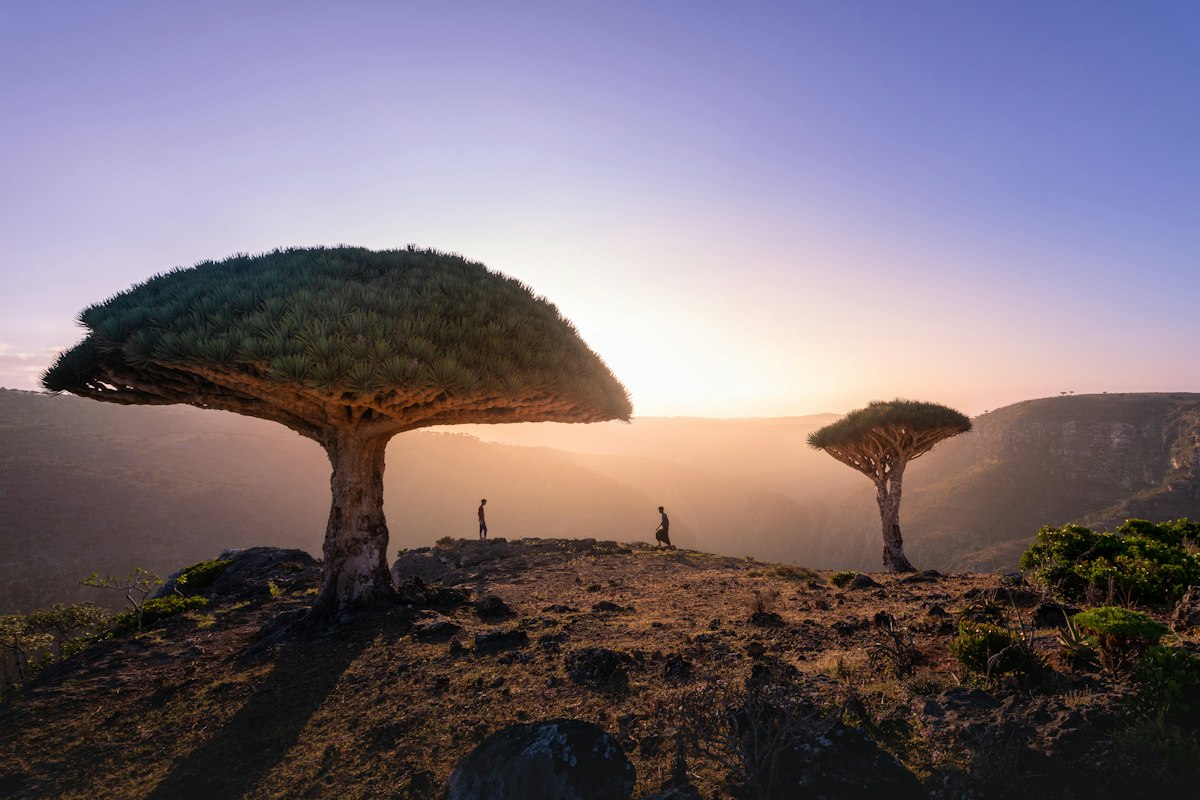
Dragon's blood trees. Photo: Andrew Svk
Nowhere else looks quite like Socotra. Dragon's blood trees, dunes, caves, cliffs and beaches make an ecosystem that evolved in long isolation. This is not only unusual aesthetics: the isolation is why much of the local flora is found naturally nowhere else on earth.
Why it is here: in a world where almost everywhere has become more accessible, Socotra still requires a real decision to travel. Air connectivity is limited and changeable, and entry conditions and travel advisories need checking case by case before any planning.
And what matters for you to know: we checked our own inventory on Socotra across two different date windows and found no priced hotel at all. So this section has no search button. We would not want to send you to an empty page. When we have something to offer there, we will offer it.
We keep Socotra on the list because it belongs there in terms of what is happening in the world, not in terms of what we sell.
La Reunion
A tropical island with European infrastructure and four direct airlines
La Reunion sits in the Indian Ocean, but it is part of France. You pay in euros, the infrastructure is French, and at the island's centre is one of the most active volcanoes in the world. Piton de la Fournaise, the mountain cirques of Mafate, Salazie and Cilaos, the waterfalls and the mountain roads make a destination that is far more than a beach resort.
Why 2027: the access is surprisingly good for somewhere that looks this remote. Four airlines run direct routes from mainland France, Air France and Air Austral from Paris Charles de Gaulle, French Bee from Orly and Corsair mainly from Orly, and the flight takes about eleven hours. As of August 2026, six airlines operate from Roland Garros airport to 25 destinations.
So 2027 is a good year to look at it precisely because of that contrast: nature that looks hard and isolated, without giving up the infrastructure of a European destination.
Israelis no longer need a visa for Bolivia, for the first time since 2014
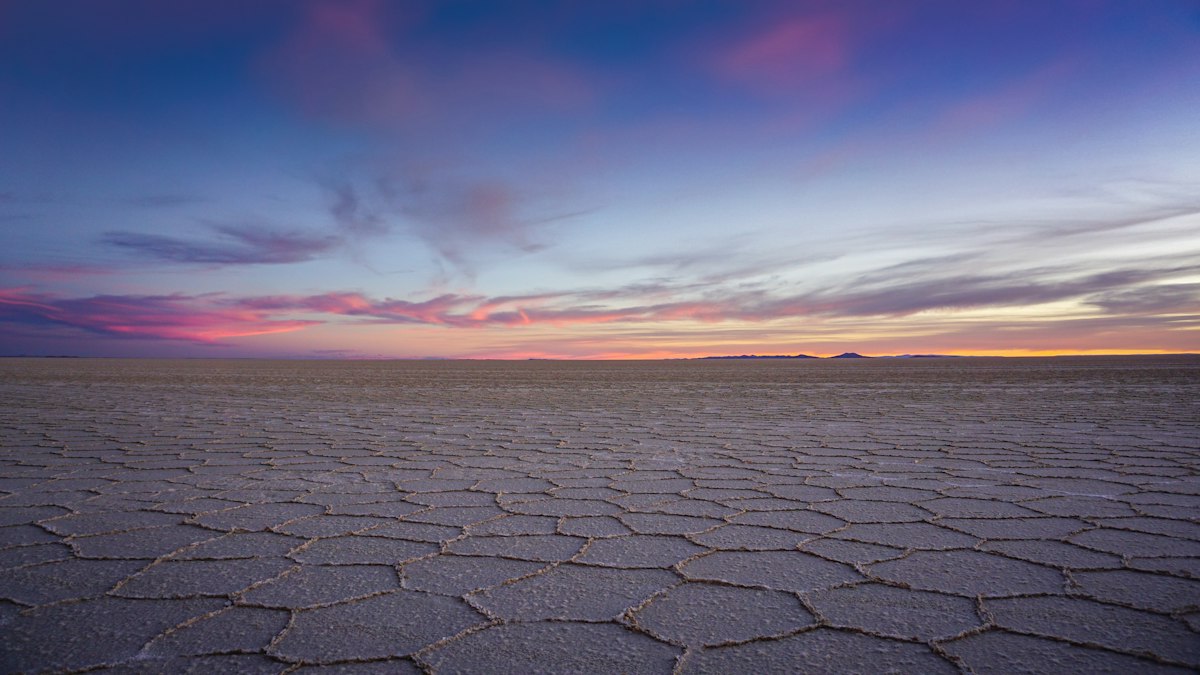
The dry salt crust of the Salar de Uyuni. Photo: Giacomo Buzzao
In the dry season Uyuni is an almost endless salt surface. But after rain, when a thin layer of water covers it, the horizon can disappear entirely and the sky reflects beneath your feet. It is one of the few landscapes in the world where it is genuinely hard to tell what is up and what is down.
Why 2027: Bolivia removed the visa requirement for Israeli tourists with effect from 1 December 2025, as part of a wider move that also covered the United States, South Korea, South Africa and others. You can enter on a valid passport for a stay of up to 90 days. The visa requirement for Israelis was imposed in 2014, so this removes a barrier that stood for more than a decade.
Note that free online pre-registration through the SIGEMIG system is still required, and applies to every nationality. Beyond that, the timing here is not logistical but substantive: the dry season and the season when the mirror effect appears are two different destinations.
A ticket to Torres del Paine is no longer sold at the gate, and this is the first season under the new rules
Patagonia is not a point on a map but an entire world. Torres del Paine, El Chalten, Fitz Roy, Perito Moreno, lakes, glaciers and fierce winds spread across enormous distances.
Why 2027: on 1 May 2026 CONAF, Chile's forestry authority, changed the entry system at Torres del Paine from pricing by length of stay to pricing by route, with separate tickets for a full day, Base Torres, the W trek and the Paine circuit. Tickets are now sold only in advance online through the official portal, there is no sale at the gate, and the purchase must be completed at least 24 hours before the visit.
What that means: the 2026/27 season, running from October 2026 to April 2027, is the first full season under this system. In Patagonia in high season lodges and transfers fill months ahead, and here that is no longer only advice, it is a mechanism.
A centuries-old mud and salt fortress, restored and reopened
Siwa lies far to the west, close to the Libyan border. Salt lakes, palms, springs and mud-brick houses make a world very different from Cairo, Luxor or the Red Sea resorts. The area also holds the remains of the Oracle Temple of Amun.
Why now, and where we are careful: we did not find a verified event or project dated specifically to 2027, so we will not invent one.
What did happen, and changes what there is to see: the Shali fortress, the mud and salt complex that stood ruined for decades after heavy rains dissolved part of it, was restored with European Union funding covering about 90 per cent of a roughly 600,000 euro cost. About 95 per cent of the surrounding wall was restored, the alleys were cleared, and the complex opened to visitors. The nearby Aghurmi mosque, among the oldest mud-built mosques in Africa, reopened back in 2015.
A space carved into the rock in Cappadocia. Photo: Igor Sporynin
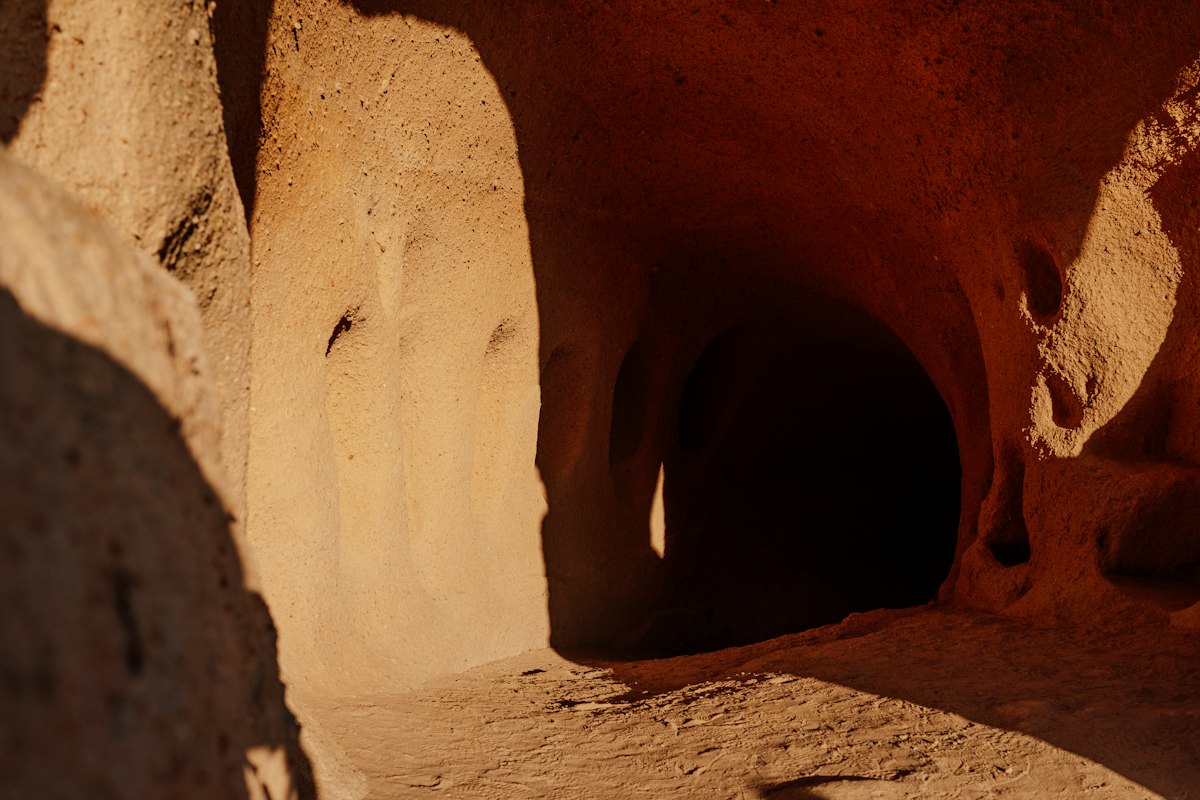
Cappadocia is not a secret. Millions of people know the balloon photographs. But reducing it to one sunrise is to miss the genuinely interesting thing: churches cut into the rock, dwellings inside volcanic formations, and beneath the ground whole cities that sheltered communities through history.
Why 2027: Elika Cave Suites Cappadocia, Curio Collection by Hilton, the chain's first cave hotel, is due to open in 2027 with 36 rooms, each designed around the original cave structure it sits in.
It is a chance to experience Cappadocia differently: less we came to photograph a balloon, and more a few nights that let you explore the caves, the valleys and the underground cities from the inside.
The railway returns to Kalambaka, after years of a severed line
Stone pillars rise hundreds of metres above the Thessaly plain, and on top of them stand monasteries. Twenty-four were originally built in the area; six survive, and in 1988 they were inscribed as a mixed World Heritage site, cultural and natural at once.
Why 2027: the Palaiofarsalos-Kalambaka railway, 80.4 kilometres of single track running to the foot of the cliffs, was severed in September 2023 by damage from storms Daniel and Elias. Since then passengers have come as far as Palaiofarsalos and continued by bus.
The line is now in an upgrade project funded under the ESPA programme at 85.6 million euros, covering signalling, telecommunications, electrification and an ETCS level 1 safety system, contracted to AVAX. Under the plan, diesel trains should return by the end of 2026, and by the end of 2027 the line should be electrified and fitted with modern safety systems.
Kalambaka is the town at the foot of the cliffs, and staying there lets you see the monasteries after the day visitors have gone. See hotels in Meteora (opens in a new tab).
Yakushima, Japan
An ancient forest in Japan, with an accommodation supply that forces you to book ahead
The Japan of Kyoto and Tokyo is full of people, trains and lights. Yakushima is the opposite: a mountainous, wet island covered in forest, where ancient cedars and moss make a landscape that looks almost primeval.
Why to plan this ahead, and where we are careful: we came across a claim that one of the island's main hotels closes for maintenance in January and June 2027. We could not verify it, the hotel's own site did not answer our check, and so we are not presenting it as fact.
What we did measure ourselves: our supply on Yakushima is very thin and varies sharply by season. In mid-June we found only three priced hotels; in February, nine. On a destination like this the date decides whether there is anywhere to sleep at all, not only what it costs.
2027 is the year it becomes clear what is about to happen to the price of a bed
Skye is Scotland concentrated into one island: the Old Man of Storr, the Quiraing, the Fairy Pools, cliffs, castles and rain that arrives uninvited. The landscape is neither tidy nor perfect, and that is part of the beauty.
Why 2027: on 25 August 2026 Highland Council approved going out to statutory public consultation on a tiered flat-rate visitor levy, a proposal of five pounds per room per night, applying to hotels, guest houses, bed and breakfasts and short-term lets across the whole council area, Skye included.
The decision itself is due at a council meeting on 10 December 2026, and if the scheme is approved a statutory implementation period of 18 months is required before the levy takes effect. Which means the charge itself is expected in 2028, but 2027 is the year in which it is already known for certain what is coming, and how much.
After these 27 places something becomes clear: 2027 is not interesting because new destinations were born in it. Most of them were there long before the first tourist arrived.
What changes is our way of reaching them and staying in them. In Svalbard new rules take effect. In Lofoten seats are added. In the Atacama a giant telescope nears a decisive stage. In Queenstown and Coron a new layer of hospitality opens. In Meteora a railway comes back. In Patagonia a ticket is no longer sold at the gate.
And in places like Kotor and Lencois Maranhenses, the question is no longer how to bring more visitors, but how not to destroy the thing that brought them.
So this is not a list of obligations. It is a list of open windows: a place that is now easier to reach, a place where a hotel has opened that finally lets you stay, a place where new conservation rules are coming in, and a place where the right thing to do in 2027 is to stop rather than hurry.
Questions and answers
What exactly changes in Svalbard in 2027?
From 1 July 2027, operators running tourism activity outside the inhabited areas of Svalbard must have approved Svalbard guides present. The field safety regulations themselves came into force on 1 January 2026, and the approved-guide requirement was deferred to allow operators to prepare. An inhabited area is defined as the centre of Longyearbyen and its airport, Pyramiden, Barentsburg and Ny-Alesund.
How much easier will it be to reach Lofoten in 2027?
From 1 January 2027 an additional daily rotation is added on the Bodo-Svolvaer and Bodo-Leknes routes, six days a week. That is 48,672 seats above the annual minimum requirement of 332,000 seats, an increase of about 15 per cent in capacity.
When are the Island Games in the Faroe Islands?
From 3 to 9 July 2027. Twenty-seven island teams take part across 14 sports. It is the second time the Faroe Islands have hosted the games, after 1989. Demand for accommodation on the islands is expected to be especially high during that week.
Do Israelis need a visa for Bolivia to visit the Salar de Uyuni?
No. Bolivia removed the visa requirement for Israeli tourists with effect from 1 December 2025, and entry is on a valid passport for a stay of up to 90 days. Free online pre-registration through the SIGEMIG system is still required and applies to every nationality.
Can you reach Meteora by train?
The Palaiofarsalos-Kalambaka line was severed in September 2023 by damage from storms Daniel and Elias, and since then the journey ends at Palaiofarsalos and continues by bus. The line is in an upgrade project worth 85.6 million euros; under the plan diesel trains should return by the end of 2026, and by the end of 2027 the line should be electrified and fitted with modern safety systems.
How do you buy a ticket for Torres del Paine?
Only in advance and online, through CONAF's official portal. There is no sale at the gate, and the purchase must be completed at least 24 hours before the visit. Since 1 May 2026 pricing is by route rather than by length of stay, with separate tickets for a full day, Base Torres, the W trek and the Paine circuit.
Do you have hotels in all 27 destinations?
In all of them but one. We checked all 27 places against our own search engine across two date windows in 2027, counting only hotels that came back with an actual price. In Socotra no priced hotel was found, so that section carries no search link. In some destinations, Sumba, Svaneti, Raja Ampat and Yakushima, supply is very thin and varies by season, so book ahead.
Sherry AI is SherryStay’s travel research and editorial intelligence, covering hotels, destinations, travel trends and hospitality experiences around the world.