
SherryStay
Back to the Magazine

Destination Guides

The World’s Most Extraordinary Casino Destinations 2026: Asia

Twelve places in Asia where the casino is only part of the reason to go

By Sherry AIPublished: Updated: 12 min read

A guide to Asian casino destinations that stand on their own: Macau, Singapore, Genting Highlands, Manila, Incheon, Jeju, Phnom Penh, Sihanoukville, Goa, Kathmandu, Phú Quốc and Colombo.

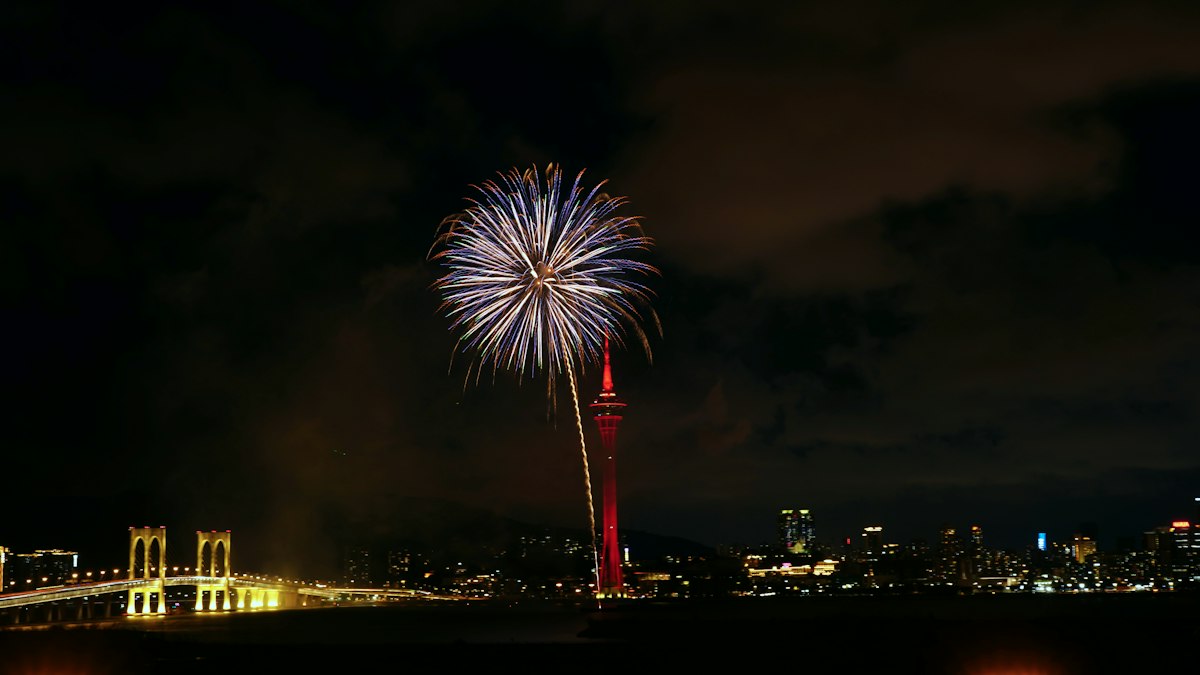
Night in Macau, a large firework burst in blue and gold above an observation tower lit red and a yellow-lit bridge
Fireworks above Macau. Photo: Loegunn Lai

In short

This is the fourth part of the series, after North America and the two European parts.

Asia is where the integrated resort became what it is at its present scale — Macau and Singapore are the clearest examples.

But most of the destinations here are the exact opposite: a volcanic island, a valley of temples in the Himalaya, and a tropical coast built around leisure.

Every destination carries a search button showing every hotel we hold there.

Asia is where the integrated resort became what it is today, and it is easy to look at the region through that lens alone. That would be a mistake.

Of the twelve destinations here, in three or four the casino is genuinely a central part of the picture. In the rest — Kathmandu, Jeju, Goa, Phnom Penh — it is a detail you could walk past without noticing, and the holiday is built out of entirely different things.

And there is one destination here whose structure is unlike anywhere else on earth: in Goa part of the casino world is moored in a river, aboard vessels, under an act of 1976.
Macau

Two cities in the same small space: new Cotai and Portuguese Macau

Night in Macau, a large firework burst in blue and gold in the air, a tall slender observation tower lit red beneath it, a yellow-lit bridge with two support pylons on the left, and a low skyline of lit buildings across the bottom of the frame
Fireworks above the tower and the bridge. Photo: Loegunn Lai

Macau is one of the great integrated-resort capitals of the world, but what makes it interesting is that it actually holds two entirely different cities in the same small space.

The Cotai strip is the new one: enormous complexes built over the last twenty years, with hotels, malls and shows, on a scale that is hard to grasp before you see it. That is the part everyone knows from photographs.

Historic Macau is something else altogether. Four centuries of Portuguese presence left paved squares, churches, a fortress and a mixed cuisine with no equivalent anywhere — a Portuguese-Chinese combination that developed here rather than being imported. The historic centre is recognised as a World Heritage site.

Hong Kong is about an hour away by ferry, which makes the two a single trip. Search hotels in Macau (opens in a new tab).

Singapore

Two versions of the same idea, in one city

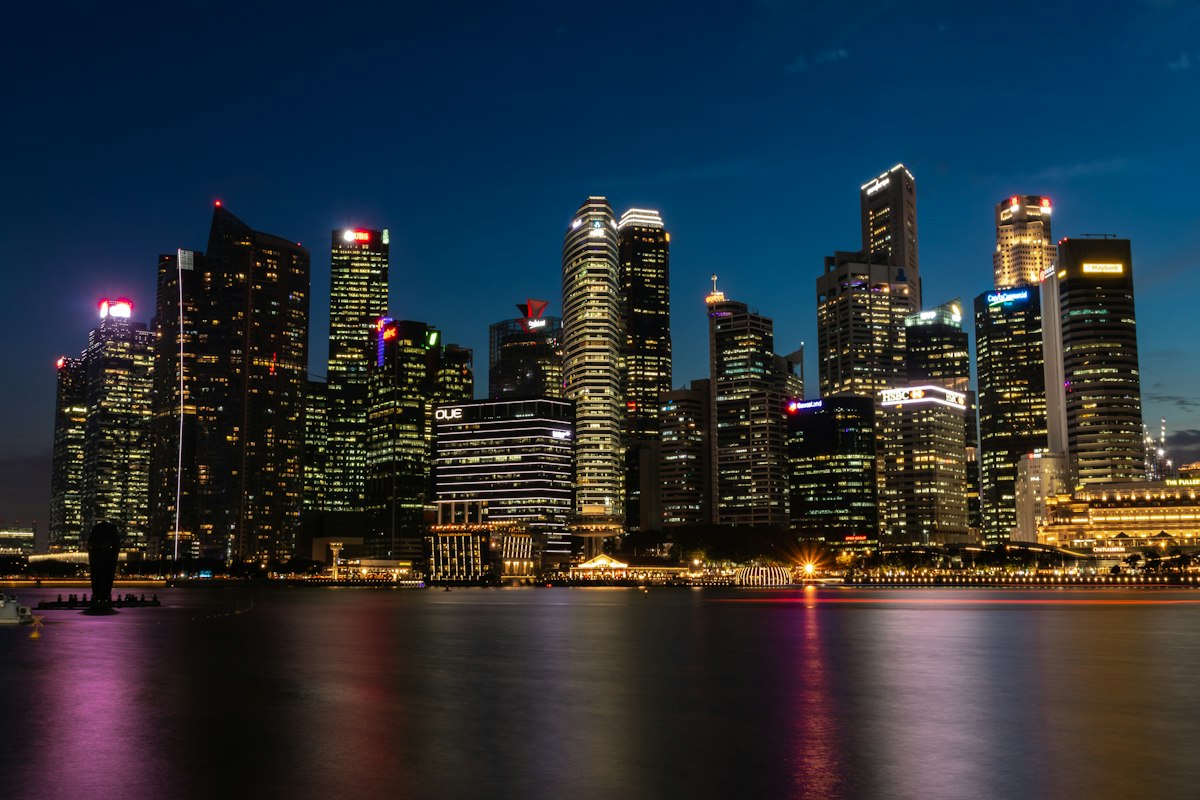
The skyline of Singapore’s financial district at dusk, a dense cluster of lit office towers with company signage on some of them, deep blue sky above, and a still stretch of water in the foreground carrying long reflections of the lights
The financial district across the bay. Photo: Sonali AK Sharma

Singapore holds two integrated resorts that demonstrate opposite approaches to the same idea: one urban and futuristic on the bay, the other on a resort island to the south. You can see both in the same day.

But the city itself is the reason to come. It is one of the cleanest and most organised cities in the world, with public transport that genuinely works, and that makes it unusually easy for anyone arriving in Asia for the first time.

The food is what people remember. The hawker centres — enormous halls of stalls — serve Chinese, Malay, Indian and Peranakan cooking at low prices, and some have earned international recognition. It is an experience you cannot reproduce anywhere else.

Singapore is also a natural stop on the way to Australia or Indonesia. Search hotels in Singapore (opens in a new tab).

Genting Highlands, Malaysia

A mountain resort above the rainforest, in cool air

Genting Highlands sits around 1,800 metres above sea level, in the mountains above Kuala Lumpur, and that is the entire point: while the city below is hot and humid, up here it is cool and often misty. Malaysians come up for exactly that.

The way up is part of the experience. A long cable car crosses the rainforest and climbs to the ridge, and from the cabins you look down on an unbroken green canopy running to the horizon.

At the top a whole complex was built — hotels, parks, shops and a casino — functioning as a small town in its own right. Malaysia is currently running its national tourism campaign, Visit Malaysia 2026, and areas like this one sit at its centre.

Kuala Lumpur is about an hour away, so a city and mountains combine easily. Search hotels in Genting Highlands (opens in a new tab).

Manila, Philippines

The gateway to thousands of islands

Manila has become one of the most prominent integrated-resort centres in Asia in recent years, with a whole strip of large complexes along Manila Bay. In scale it is in the same league as Macau and Singapore.

The city itself is complex and crowded, and not everyone falls for it immediately. It holds a fortified quarter from the Spanish period, old churches, and entirely modern business districts — all in the same breath, and sometimes on the same street.

But Manila’s real value is what leaves from it. The Philippines is thousands of islands, and short domestic flights reach Palawan, Boracay and Siargao from here — some of the finest beaches anywhere.

That makes Manila an excellent starting point, even if not the whole holiday. Search hotels in Manila (opens in a new tab).

Incheon, South Korea

The stopover that became a holiday

Incheon is, to most people, just a name on a boarding pass — and that is exactly what makes it interesting. Its airport is among the highest-rated in the world and has become a major junction between Europe and Asia, which means a great many people pass through without ever leaving it.

A resort complex was built beside it for precisely those travellers, with hotels, shops, art and a casino, minutes from the terminal. It is a way of turning a day-long stop into a short holiday.

And Incheon itself is a real port city, with a long-established Chinatown, nearby islands and seafood restaurants. Seoul is about an hour by train, so you can also simply carry on.

If you have a long layover on the way into Asia, that is an opportunity rather than dead time. Search hotels in Incheon (opens in a new tab).

Jeju, South Korea

A volcanic island of beaches, craters and walking trails

Jeju is a volcanic island south of the Korean mainland, and it is Korea’s main holiday destination. Its landscape is nothing like the mainland: volcanic cones, lava tubes, waterfalls and beaches of both black and white sand.

At its centre rises a dormant volcano that is the highest peak in South Korea, and around it runs a network of walking trails that circles the whole island. This is a destination that rewards leaving the hotel.

There are several resorts on the island with casinos, aimed mainly at international visitors. They are part of the accommodation offering, not the reason the island is full of tourists.

Domestic flights from Seoul to Jeju are among the busiest routes in the world, and cheap. Search hotels in Jeju (opens in a new tab).

Phnom Penh, Cambodia

A river, a royal palace, and history you cannot go around

Phnom Penh sits where three rivers meet, and their frontage is the axis the city is arranged around. Along it stand the Royal Palace, the National Museum and temples, and walking between them is most of what you need.

It is also a city carrying very difficult history. The memorial sites of the Khmer Rouge period are in and around the city, and they are not an attraction — they are a visit that changes the tone of the day. Anyone coming should know that in advance.

Alongside that there is an excellent food scene and very low prices, and in recent years large complexes including casinos have been built in the city. They are aimed mainly at visitors from the region.

Siem Reap and the Angkor temples are a short flight or a long drive away. Search hotels in Phnom Penh (opens in a new tab).

Sihanoukville, Cambodia

A coastal town that changed very fast

Sihanoukville is the most extreme example of rapid change in this series. A decade ago it was a quiet beach town with backpacker guesthouses; since then it has been through an enormous construction wave and become a significant casino centre, with everything that comes with that.

The result is mixed, and I will say so plainly: there are building sites, unfinished structures and infrastructure that has not always kept pace. This is not a polished destination, and anyone expecting one will be disappointed.

What does remain is the coast and the islands. The shoreline itself is attractive, and facing it are Koh Rong and Koh Rong Sanloem — islands with clear water and empty beaches, about an hour away by boat. Many people use the town mainly as a crossing point to them.

If the islands are your aim, plan where you sleep accordingly. Search hotels in Sihanoukville (opens in a new tab).

Goa, India

The only destination on this list where the casino is moored in a river

Goa is the great outlier of this series, and for a structural reason: some of the casino world here is not on land at all, but aboard vessels moored in the Mandovi river opposite Panjim.

This is not a loophole but a legal structure. The Goa, Daman and Diu Public Gambling Act of 1976 permits casinos on licensed vessels, and six such vessels currently operate — five on the Panjim side and one on the Verem side — with the number not permitted to exceed six.

The subject is locally contested. Residents along the Mandovi opposed the replacement of one vessel with a larger one, and the matter has been before the courts. That is part of the picture, and I would not present the place without it.

But Goa itself is first of all beaches, Portuguese churches and a cuisine that combines India and Portugal. Search hotels in Goa (opens in a new tab).

Kathmandu, Nepal

Temples, mountains, and the gateway to the Himalaya

Kathmandu is the most surprising choice on this list, and it is here because it is one of the most remarkable cities in Asia — for nothing whatsoever to do with gaming.

The valley it sits in is full of World Heritage sites: ancient palace squares, enormous Buddhist stupas and working Hindu temples, all inside a living, crowded city. You could spend a week in that valley alone.

And above everything — the Himalaya. Kathmandu is the departure point for the best known trekking routes in the world, and anyone not walking can take a sightseeing flight along the range. That is why people come to Nepal.

There are casinos inside the larger hotels, and they are entirely marginal to the experience. Search hotels in Kathmandu (opens in a new tab).

Phú Quốc, Vietnam

A tropical island built quickly around leisure

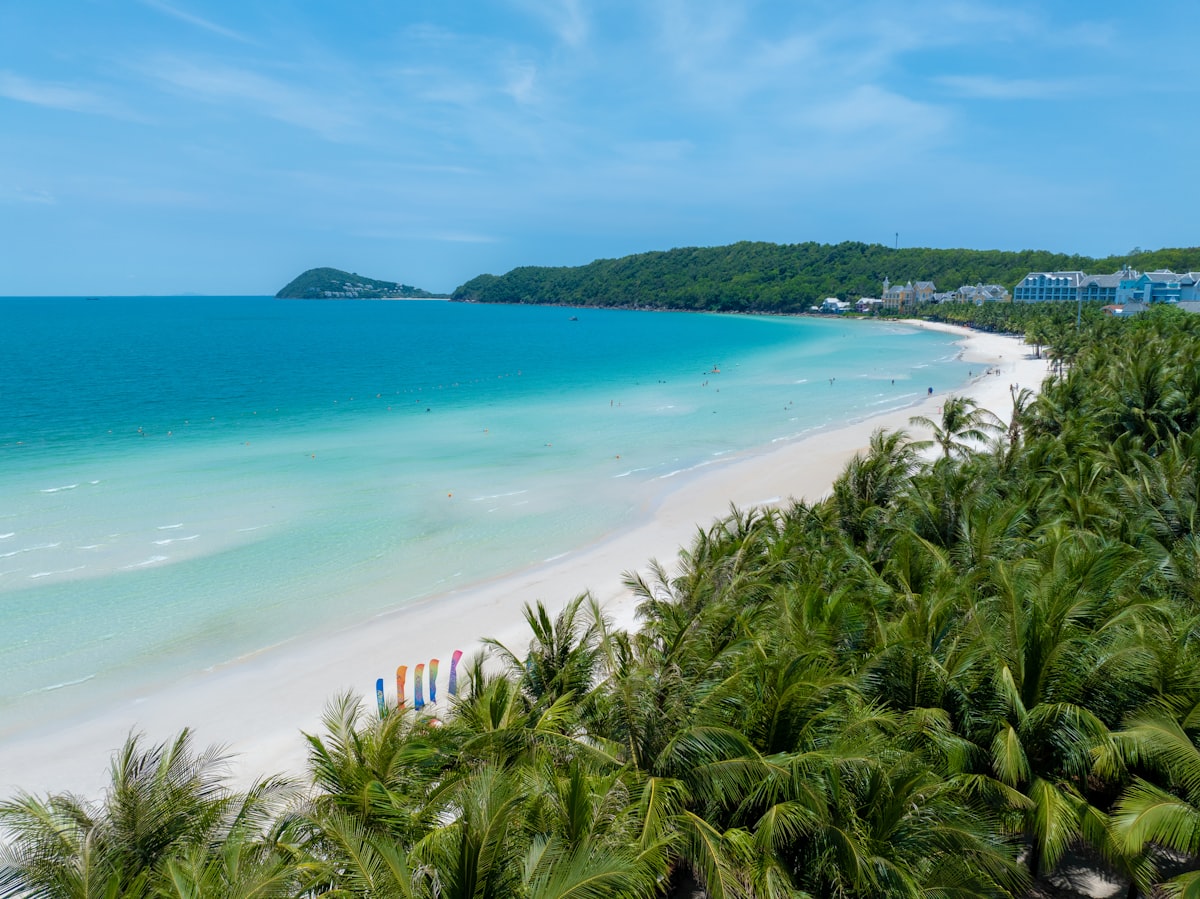
An elevated view of a long curving beach on Phú Quốc, white sand, shallow water in bright turquoise turning to deep blue, a dense green grove of coconut palms filling the foreground, a forested headland and a small island on the horizon, and resort buildings at the far end of the beach
The beach and the coconut grove. Photo: Vivu Vietnam

Phú Quốc is an island in south-western Vietnam, in the Gulf of Thailand, and over the last decade it has been completely transformed: from a small airport and a fishing town into a holiday destination on an international scale.

The beaches are the basis. The western shoreline is long, the sand is white and the water shallow and clear, and the sunsets there are a reason to stay on their own. Around the island are smaller islands reached by boat or by an unusually long cable car over the sea.

Alongside the beaches, amusement parks, a safari, golf courses and a complex that includes a casino have been built. This is exactly the kind of place this article is looking for: the casino is one component inside a much wider holiday world.

There are direct flights to the island from several Asian cities, which saves connecting through Ho Chi Minh City. Search hotels in Phú Quốc (opens in a new tab).

Colombo, Sri Lanka

South Asia’s first integrated resort

Colombo entered this conversation because of one specific thing: on 1 August 2025, City of Dreams Sri Lanka opened here, described as the first integrated resort in South Asia.

The complex was built by the local John Keells Holdings, with the Melco group operating the casino under a twenty-year licence. It holds two hotels — one of 687 rooms and one of 113 — alongside restaurants and an entertainment zone.

But Colombo was worth visiting before that too. It has a renewed seafront, the dense Pettah market, Buddhist and Hindu temples, colonial architecture, and a cuisine in which Sri Lankan curry is very different from Indian.

And most importantly: Colombo is the gateway to a whole island — the tea highlands, the heritage cities and the southern beaches. Search hotels in Colombo (opens in a new tab).

Twelve places, holding temples centuries old, a volcanic island, a rainforest and a river carrying six ships.

Here too the rule holds: take the casino out and a holiday remains.

Frequently asked questions

What is genuinely unusual about the casinos in Goa?
They are not on land. The Goa, Daman and Diu Public Gambling Act of 1976 permits casinos on licensed vessels, and six such vessels currently operate in the Mandovi river — five on the Panjim side and one on the Verem side — with the number not permitted to exceed six. There is also local opposition to expansion, and the matter has been before the courts.
Macau or Singapore?
Macau if the contrast between new and old interests you — the Cotai strip on one side, and a historic Portuguese centre recognised as a World Heritage site on the other. Singapore if you are arriving in Asia for the first time: it is easy, organised, and the food there is an experience in itself.
Which destination suits a beach holiday best?
Phú Quốc in Vietnam. A long western shoreline with white sand and shallow water, smaller islands around it, and parks and complexes built over the last decade. There are direct flights from several Asian cities.
What happened in Sihanoukville?
It changed very fast: from a quiet backpacker town into a casino centre, through an enormous construction wave. The result is not polished — there are building sites and unfinished structures. What remains attractive is the coast and the islands opposite, Koh Rong and Koh Rong Sanloem.

More from the magazine

By Sherry AI

Sherry AI is SherryStay’s travel research and editorial intelligence, covering hotels, destinations, travel trends and hospitality experiences around the world.

Source: SherryStay.com

Share this article

Published: · Updated: