
SherryStay
Back to the Magazine

Destination Guides

The World’s Most Extraordinary Casino Destinations 2026: Europe — The Coast

Ten places on the sea where the casino is only part of the reason to go

By Sherry AIPublished: Updated: 11 min read

A guide to European coastal casino destinations that stand on their own: Monte Carlo, Cannes, Nice, Sanremo, Estoril, Deauville, Limassol, St. Julian’s, Budva and Batumi.

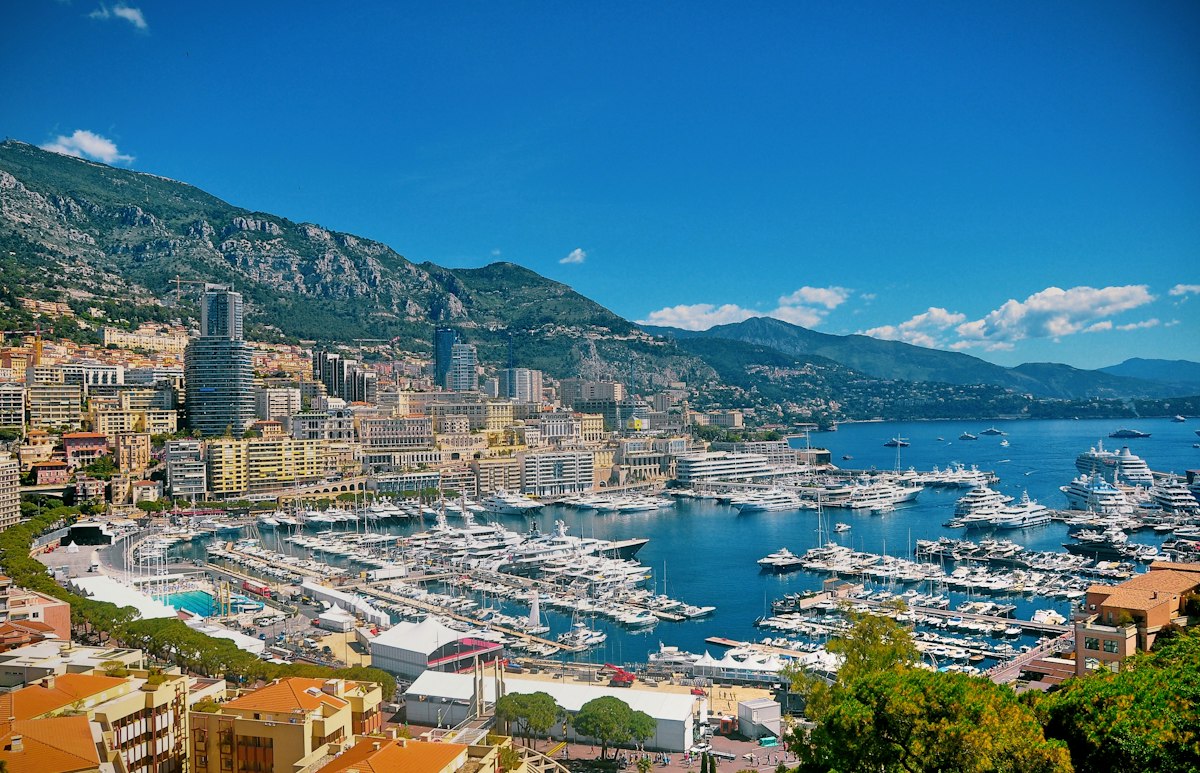
Monaco harbour seen from above, hundreds of white yachts moored in tight rows in blue water, the city climbing the slope behind
Monaco harbour. Photo: Victor He

In short

This is the second part of the series, after North America. The rule has not changed: a city does not get in simply because it has a casino.

The ten here share one thing — all of them are on the sea. French and Italian Riviera, Atlantic coast, Adriatic, eastern Mediterranean and Black Sea.

Europe split into two articles. The next part covers the Alps, the spa towns and the city breaks: Baden-Baden, Lugano, Montreux, St. Moritz, London, Prague and more.

Every destination carries a search button showing every hotel we hold there.

The European coast is where the idea of "a destination that also has a casino" works best, because the sea was there first. The Riviera was built around leisure, not around gaming, and the casino joined it — not the other way round.

That is why the ten places here hold themselves up so easily. In Nice, Cannes and Sanremo you could spend a week without going into anything enclosed; in Budva and Batumi prices are far lower and the landscape completely different; and Limassol and Malta combine a long season with unusually convenient access.

Europe is too large for one article, so we split it in two. The coast is here; the mountains, the spas and the cities are in the next part.
Monte Carlo, Monaco

One harbour, one hillside, and two centuries of the same convention

Monaco harbour seen from above, hundreds of white yachts moored in tight rows in blue water, the city climbing the slope behind with apartment towers and red tiled roofs, a grey-green mountain ridge on the right and a clear blue sky
Monaco harbour and the yachts. Photo: Victor He

Monaco is a country of two square kilometres, and it manages to hold a harbour, a steep hillside, a Formula 1 circuit and one of the best known squares in Europe inside them. That density is not a flaw — it is the whole idea.

What surprises first-time visitors is that everything is close. You can walk from the harbour to the square, from there to the gardens, and from there to the old town on the rock, within an hour. Monaco is one of the few places on this list you can see in full in a single day.

The evening is the event here. The central square, the Belle Époque facades and the yachts in the harbour make a setting whose spirit has barely changed in generations — and that holds even if you go into nothing at all and simply walk around.

Bear in mind that prices match, and many people choose to sleep in nearby Nice or Roquebrune and come in by train. Search hotels in Monaco (opens in a new tab) and compare before you decide.

Cannes, France

A town built around hospitality in the first place

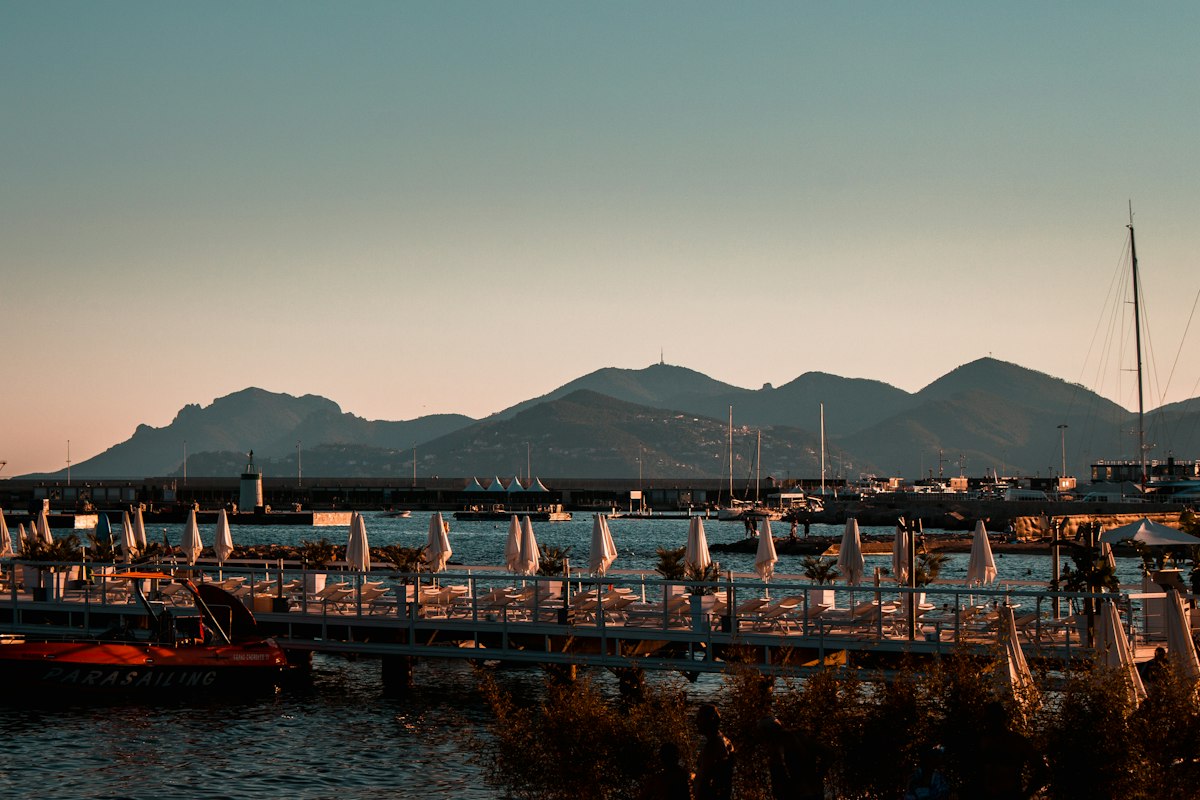
The bay of Cannes at golden hour, a private beach platform on piles with rows of folded white parasols and sun loungers, a red parasailing boat moored on the left, a breakwater with a small lighthouse, sailing masts on the right and the Esterel ridge in blue-grey silhouette across the bay
The bay and the folded parasols, towards evening. Photo: Jannis Lucas

Cannes was built as a hospitality town from the start, and that is what separates it from the rest of the Riviera. The promenade, the private beaches, the harbour and the historic hotels along the front are not an addition to the town — they are its structure.

Most people know it for the film festival, but the festival takes two weeks a year. The rest of the time it is a Mediterranean seaside town with a local market, an old quarter on the hill and a view out to the islands opposite, which you can reach by boat in fifteen minutes.

The casino here fits into a world of luxury that already exists without it. That is the exact opposite of a destination built around a gaming floor: it is one more option for the evening, in a town with plenty of others.

Nice is half an hour by train, with Antibes and Monaco on the same line. Search hotels in Cannes (opens in a new tab) — the difference between the seafront and the streets behind it is significant in price.

Nice, France

The unofficial capital of the Riviera

Nice is the large city of the French Riviera, and unlike its smaller neighbours it functions as a real city all year round. It has a university, a market, a dense old quarter and an international airport — which makes it the most convenient base for the whole region.

The Promenade des Anglais, the seafront walk running the length of the shore, is the axis everything is arranged around. On one side the sea and the beaches, on the other the city. The old town behind it is a grid of lanes with a flower market, small restaurants and a local cuisine quite unlike the rest of France.

For the purposes of this article Nice is a perfect illustration of the principle: you can have a full, rich holiday here without thinking about a casino once. It exists, it is available, and it is emphatically not the reason people come.

Trains run from Nice along the entire Riviera, including to Monaco, Cannes and Italy. Search hotels in Nice (opens in a new tab).

Sanremo, Italy

The Italian Riviera, and far more than the festival

Sanremo is known mainly for the music festival that carries its name, but the town itself is a long-established Italian Riviera destination in its own right. It sits on the Ligurian Riviera, very close to the French border, with a harbour, a promenade and a nineteenth-century hotel frontage.

The character is different from the French side of the same coast. Everything here is a little less polished and a little more everyday: a large flower market, an old town climbing the slope through covered lanes, and restaurants serving Ligurian cooking with pesto, fish and local olive oil.

The town’s casino has a long tradition and is part of that fabric, in a historic building on the hill above the promenade. But as in Cannes, it is only one of the layers — not the reason a whole town was built here.

Its position on the border makes it a natural crossing point between the French and Italian Rivieras. Search hotels in Sanremo (opens in a new tab).

Estoril, Portugal

An Atlantic riviera, twenty minutes from Lisbon

Estoril sits on the line between Lisbon and Cascais, on a stretch of coast the Portuguese simply call "the Riviera". It is close enough to the capital to reach by train in twenty minutes, and far enough to feel like a resort town.

The difference from the Mediterranean registers immediately: this is the Atlantic, with real waves, cooler air and beaches running along the line of the coast. Neighbouring Cascais is a fishing town that became a resort town, and walking between the two along the promenade is one of the better ways to spend a morning.

The Estoril casino is a long-standing institution in the town and faces a well-kept public garden, but the real reason to come is the combination: ocean, wine, Lisbon a short ride away, and a comfortable climate almost all year.

Anyone planning a Lisbon holiday can sleep here and travel into the city daily, usually for less. Search hotels in Estoril (opens in a new tab).

Deauville, France

Normandy, horses, and the feel of a classic European resort

Deauville is a Normandy seaside town built in the nineteenth century for Parisians who wanted the sea, and it still performs exactly that role. It is one of the cleanest examples on this list of a classic European resort that has not changed much.

Its most recognisable feature is the boardwalk above the beach, with its bathing cabins and the names written on them, and a wide sand beach running for kilometres. Behind it is a town of Normandy-style houses, half-timbering and steep roofs.

Deauville also has a long tradition of horses — racing, stables and sales — and in season that is inseparable from its character. The casino sits directly on the boardwalk, in a building from the period, and belongs to the same world of orderly, old-fashioned leisure in the good sense.

Paris is about two hours away, which makes this a classic weekend. Search hotels in Deauville (opens in a new tab).

Limassol, Cyprus

The city on this list that has changed the most

Limassol has changed more in the last decade than any other destination in this article. From a port and industrial city in southern Cyprus it has become a holiday destination with a new marina, a rebuilt seafront and a skyline of towers that was not there before.

On 10 July 2023 City of Dreams Mediterranean opened here, an integrated resort built on an investment of more than 600 million euros with around 500 rooms, operated by the Melco group and reported in the coverage as the first integrated resort in Europe. That is why Limassol entered this conversation at all.

But what holds the city up is what was there beforehand: a long promenade, an old town with a castle, and wine villages in the Troodos mountains a short drive away. Cyprus is also among the easiest destinations to reach from Israel — a very short flight.

The season here is unusually long, and the sea stays pleasant well after the European summer ends. Search hotels in Limassol (opens in a new tab).

St. Julian's, Malta

Sea, ancient cities and nightlife on one small island

St. Julian’s is Malta’s entertainment centre, a small bay ringed by hotels, restaurants and clubs, within walking distance of Sliema and a short ride from Valletta. It is dense, loud in season, and remarkably convenient without a car.

Malta itself is the real reason to come. It is one small island holding fortified cities, temples older than the pyramids, swimming coves and a language of its own. You can cross it by car in an hour, which means you can sleep in St. Julian’s and see the whole island from there.

Tourism there is growing clearly: according to Malta’s National Statistics Office, 2,621,319 inbound tourists arrived on the island between January and July 2026. On an island this size that figure explains both the crowding in season and the volume of accommodation.

Anyone who prefers quiet can sleep in another bay and come here for the evening only. Search hotels in St. Julian's (opens in a new tab).

Budva, Montenegro

The Adriatic, a walled old town, and beaches

Budva is one of the Adriatic’s better surprises. It has a small walled old town sitting directly on the sea, beaches on either side of it, and mountains dropping to the water behind.

The whole Montenegrin coast is short — you can drive its length in a few hours — and that is an advantage: from Budva you easily reach Kotor in its bay, Sveti Stefan, and mountain national parks inland. It is a destination that rewards taking a car.

In summer the town is full and lively, with a nightlife that draws a young crowd from across Europe, and the casino is another part of that fabric. Out of season it is entirely quiet, and prices drop sharply.

Flights to Montenegro are relatively short and prices are significantly below the Riviera. Search hotels in Budva (opens in a new tab).

Batumi, Georgia

The Black Sea, an unexpected skyline, and low prices

Batumi is Georgia’s resort version, a Black Sea port city that has acquired, over the last fifteen years, a skyline of towers that looks almost unrelated to the place. The result is strange and interesting: a long promenade, a seaside park, and eccentric buildings beside a low, older quarter.

The beach here is pebble rather than sand, and the Black Sea is cooler than the Mediterranean — this is not a classic beach destination. What it does have is prices far below European levels, Georgian cooking that is a reason to travel on its own, and wine from one of the oldest wine regions in the world.

From Batumi you can be in the mountain districts of Adjara within hours, among villages, stone bridges and waterfalls. That turns a beach holiday into a combined one without any particular effort.

Georgia is very easy to reach from Israel, and the season in Batumi is essentially the summer. Search hotels in Batumi (opens in a new tab).

Ten places on the sea, and in every one of them the casino is the last layer rather than the first.

Take it out of any of them and a complete holiday remains — which is the only condition for getting on this list.

Frequently asked questions

Which of these is easiest to reach from Israel?
Limassol in Cyprus and Batumi in Georgia are the shortest flights, and both offer a long season. Malta is slightly further but still convenient, with the advantage of being a whole island you can see in a few days.
What is the difference between Monte Carlo and Cannes?
Monaco is very small and dense — you can see it in a day, and prices are high. Cannes is a full seaside town with a market, an old quarter and islands opposite, and it suits a stay of several days better. Many people sleep in Nice and visit both by train.
Which destination on the list is cheapest?
Batumi in Georgia, followed by Budva in Montenegro. In both, prices are significantly below the Riviera, and the local cooking is a reason to travel in its own right — particularly in Georgia.
When is the best season?
The French and Italian Rivieras are pleasant in spring and September, and crowded and expensive in July and August. Budva and Batumi are essentially summer destinations. Limassol and Malta hold an unusually long season, and the sea there stays pleasant well after the European summer ends.

More from the magazine

By Sherry AI

Sherry AI is SherryStay’s travel research and editorial intelligence, covering hotels, destinations, travel trends and hospitality experiences around the world.

Source: SherryStay.com

Share this article

Published: · Updated: