Tartaria's Hotels: Sleeping Inside the World That Looks Like It Vanished
Marble columns, domes and stained glass from the 19th century — and one question that keeps coming back: how did they build this back then? What the old maps really showed, and what history actually knows.
A long read on the architecture now called 'Tartarian': what appears on old maps, what historians know, and fifteen hotels from the 19th and early 20th centuries you can sleep in today.
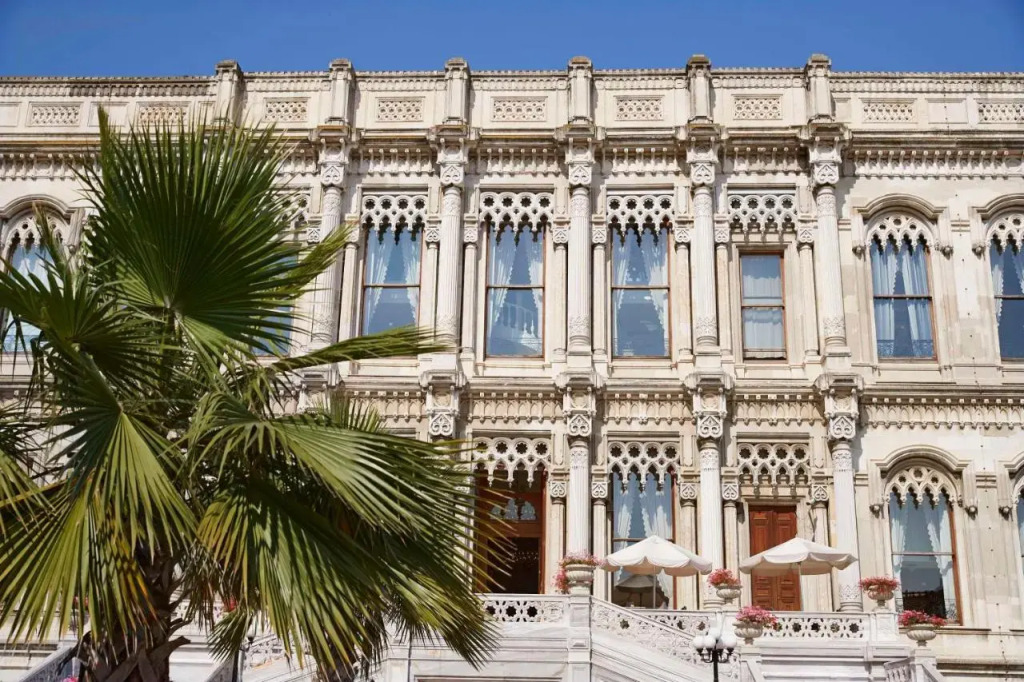
Ciragan Palace, Istanbul
In short
The name Tartary did appear on old European maps — but as a broad geographic label, not a documented single empire.
The monumental buildings of the 19th century were the work of hundreds of craftsmen over years, and sometimes of two centuries of extensions.
Some of them were never built as hotels at all. They were built as palaces.
What we see today is almost always layers: original, destruction, restoration and addition.
Fifteen of them are still open, and you can book a room.
There are moments when you look at a building more than a century old and ask a simple question: how did they build this back then?
Enormous marble columns. Domes. Ceilings several storeys high. Sculpture. Stained glass. Vast staircases. Heating systems, lifts and electricity in decades when most of the world still looked completely different.
In recent years these buildings have become part of an internet phenomenon sometimes called Tartarian Architecture. According to various versions of the theory, some of the monumental cities and buildings of the 19th and early 20th centuries are the remains of a civilisation far more advanced than conventional history tells us.
But before we get to the hotels, one thing needs to be clear.
Tartary really did appear on the maps
The word Tartary, or Tartaria, is not an invention of the internet. On old European maps it genuinely appears across vast stretches of Asia.
The US Library of Congress holds a 1706 map titled Carte de Tartarie, covering large parts of Russia and Siberia. An American map from 1835 even carries the name Independent Tartary over a large region of Central Asia, and an 1834 map uses the term Chinese-Tartary alongside China and Tibet.
So anyone who says 'Tartary never appeared on maps' is simply wrong.
But here is where the real distinction begins: the maps do not prove there was a single empire called Tartaria, with central rule, shared technology, or the global civilisation described today in some of the theories.
For centuries Europeans used the word Tartary as a broad geographic label for the peoples and enormous territories of northern and central Asia that they did not know well. And that is exactly where history and myth begin to mix.
Built as an entire cultural complex, facing the Bolshoi
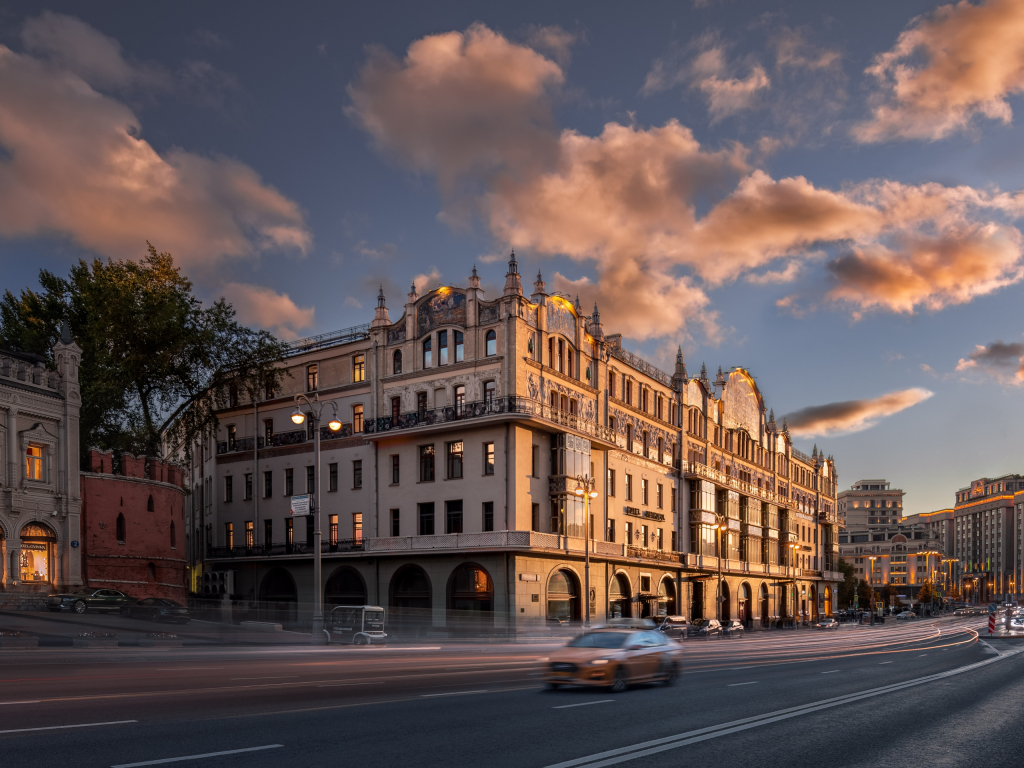
The mosaic panels below the roofline — Metropol, Moscow
If you want to understand why people are drawn to the idea of Tartarian Architecture, start here. The Metropol (opens in a new tab) looks like a building that was never meant to be a hotel.
It was built between 1899 and 1904, during a period of extraordinary architectural flowering in pre-revolutionary Russia. Behind the project stood Savva Mamontov, a businessman and patron of the arts, who imagined a complex that would be far more than a place to sleep: a theatre, galleries, a restaurant and a grand hotel facing the Bolshoi.
And this is an important point for understanding 'Tartarian' buildings. We tend to look at them today as though one person built a house. In practice, buildings like this were almost national projects: architects, sculptors, painters, smiths, tilers, marble workers, engineers and hundreds of craftsmen worked on them for years.
The Metropol survived the Russian Revolution and became part of the state hospitality system in the Soviet era. In this case there is a fairly clear historical chain that lets us know who commissioned the building, when it was built and who took part in building it.
So what still makes it feel mysterious? Mostly the level of craft. Almost no hotel today is built with that quantity of handwork and art embedded in the architecture itself.
Directly opposite St Isaac's Cathedral, in the historic centre
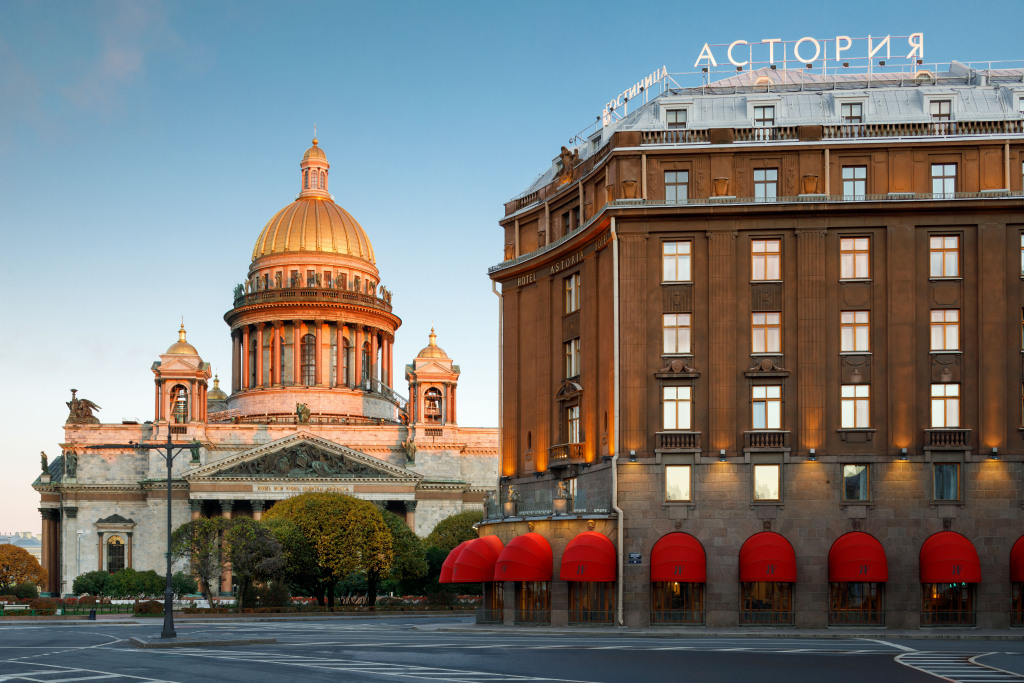
Hotel and cathedral in one frame — Astoria, Saint Petersburg
Saint Petersburg may be one of the most important cities for anyone interested in the aesthetic people now call 'Tartarian'. The city is full of palaces, domes, symmetrical facades and monumental avenues.
The Astoria (opens in a new tab) stands directly opposite St Isaac's Cathedral, and still operates inside its historic building.
What makes the area so striking is not only the hotel. Around it are St Isaac's Cathedral, the Mariinsky Palace, the Hermitage, and government buildings and palaces from the 18th and 19th centuries.
Looking at the whole urban space together, it is easy to see why theories develop claiming modern people simply 'inherited' an existing city. But we have very extensive documentation of Saint Petersburg's construction across centuries — from the era of Peter the Great to the late imperial building.
The sense of mystery does not necessarily come from missing history. It comes from the gap between the architectural wealth of then and the relatively plain building we are used to seeing now.
A private power station, central heating and eleven lifts — in 1901
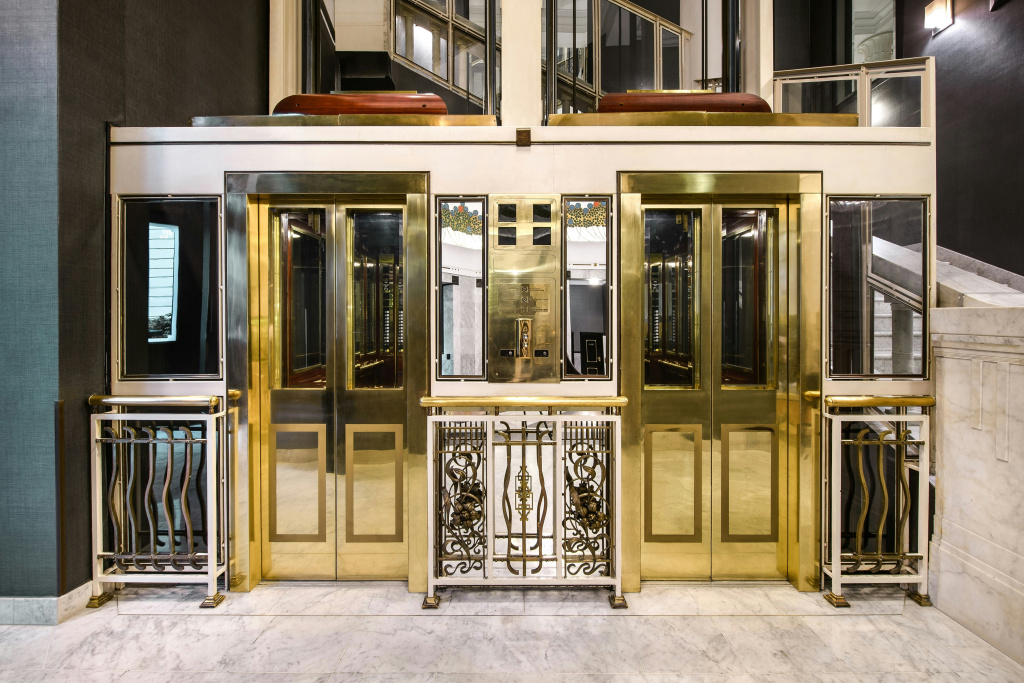
The lifts themselves — Bristol, Warsaw
This is one of the most interesting hotels on the list, because here you can see how advanced 'advanced technology' already was at the start of the 20th century. The Bristol (opens in a new tab) in Warsaw (opens in a new tab) opened in 1901.
At the moment it opened it already had a private power station, central heating, a double ventilation system — and eleven lifts.
Stop on that number for a second. Not 1950. Not 1970.
And this is exactly the kind of fact that sometimes appears online as proof that 'history does not add up'. In practice it teaches something else: the industrial revolution was far more advanced than we sometimes imagine.
Luxury hotels were among the first places to receive new technologies, because they had enormous money to spend on them.
The Bristol's history is unusual too. The building survived the Second World War while vast parts of Warsaw were destroyed, and in 1965 it was declared a protected historic monument.
1857, and since then: destruction, restoration and a modern addition
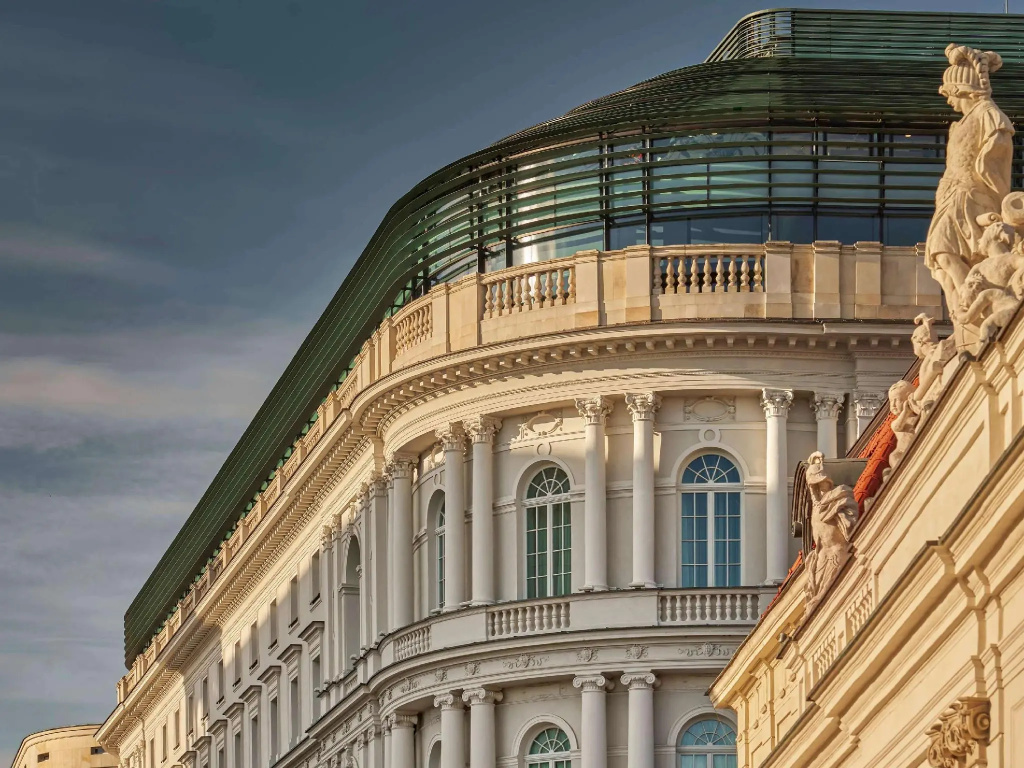
The original and the new addition, in one frame — Europejski, Warsaw
A few minutes from the Bristol stands another building you can stare at for a long time. The Europejski (opens in a new tab) opened as early as 1857. It was designed by Henryk Marconi and became a centre of artistic, social and political life in Warsaw.
Its history also makes something important clear: historic buildings are not always 'the same building, unchanged'.
The Europejski was damaged in the war, repaired, changed uses, was taken by the state, returned to its owners, and underwent a major restoration between 2013 and 2017 under heritage supervision.
So when we look at a historic facade today, we are really looking at layers. Part original. Part restored. Part altered. And part rebuilt from historical documentation.
That is a very important detail in any discussion of 'lost' architecture.
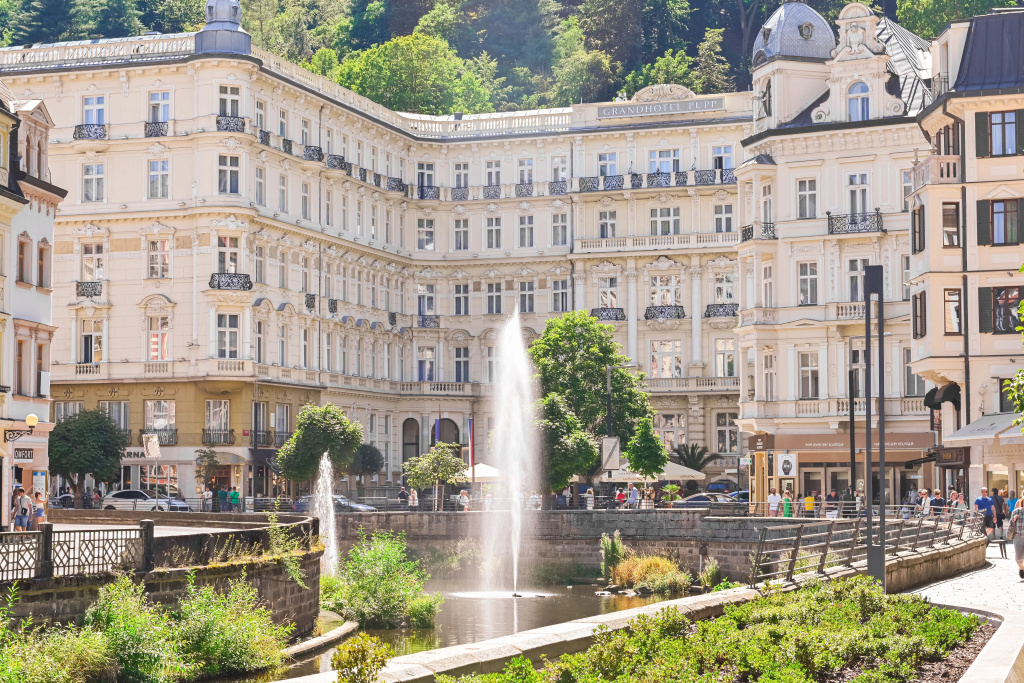
The history of the site begins in 1701, when an events hall was built there. Another hall followed in 1708. The Pupp family later bought further buildings and land.
In 1877 construction of the Parkhotel began. In 1892 a significant rebuild started. And in 1907 the facades were unified into a monumental neo-baroque whole.
So when we see a vast building like this today, we may imagine it went up in one go. The reality is far more interesting: it is the result of more than two hundred years of extensions, purchases, demolitions and rebuilding.
This is one of the most important explanations for the supposed mystery of enormous historic buildings.
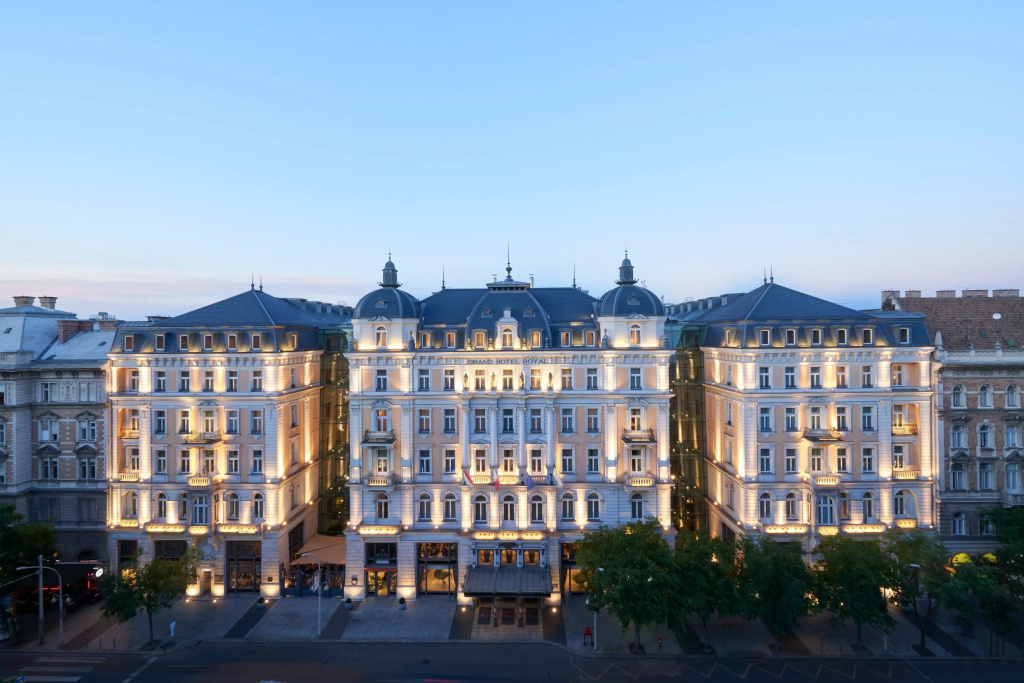
It had a palm garden, shops, a barber, a bank, a post office and entertainment venues. The Lumiere brothers even held one of the first film screenings in Budapest there.
That explains something else about the Grand Hotels of the period. They were almost small cities inside a building. A wealthy person could arrive by train, walk into the hotel and find nearly everything they needed inside it.
The hotel was damaged in the Second World War and substantially altered in the years that followed. When Corinthia reopened it in 2003, a major restoration was carried out.
So here too, what we see today is a combination of the original and a massive modern restoration.
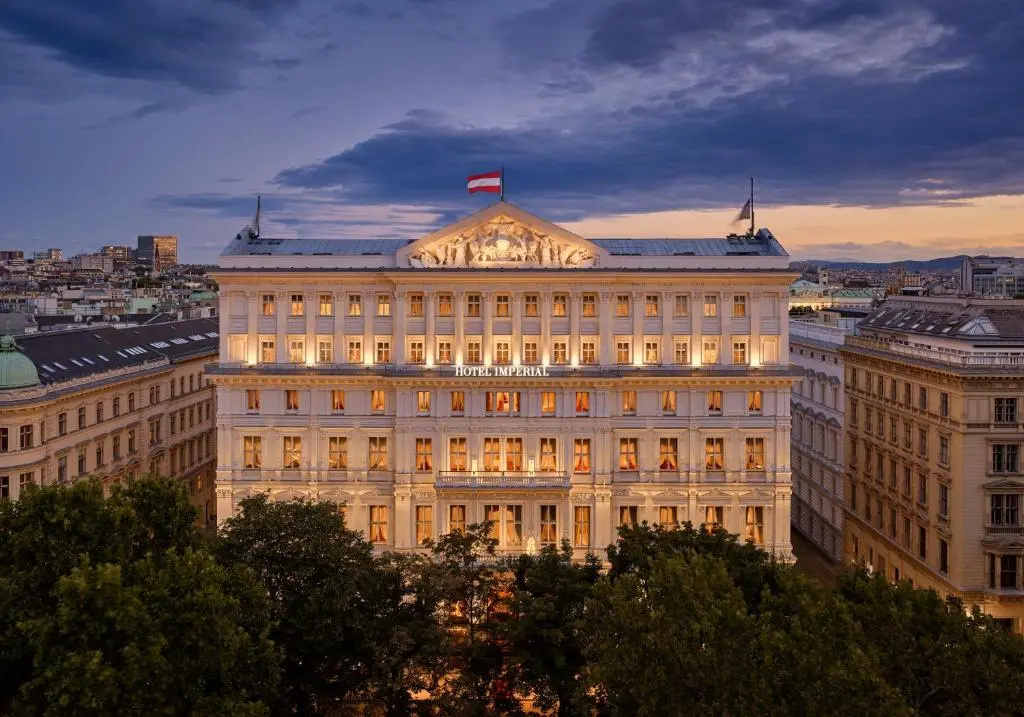
The building was erected in 1863 as a private palace for Duke Philipp of Wurttemberg and his wife, the Archduchess Maria Theresa. Only afterwards was it converted into a hotel, opening in 1873, during the Vienna World Exhibition.
And that answers another question often asked about buildings like these: 'why would anyone build a hotel on such an excessive scale?'
In some cases — he did not build a hotel. He built a palace. And only later did the palace become a hotel.
The Vienna of that period is a key to understanding the whole phenomenon. This was the capital of a wealthy empire. The architecture was not meant to be merely functional. It was meant to say: we are powerful. We are advanced. We are rich.
That is why railway stations, opera houses, banks and hotels were given facades we now associate with palaces.
What looks 'illogical' to us was, at the time, exactly the logic.
It was built between 1863 and 1867 for Sultan Abdulaziz, designed by the Balyan family of architects, with interior work continuing until 1872. It was the last palace an Ottoman sultan built for himself rather than using his ancestors'.
Then, in 1910, a great fire destroyed it and left only the outer walls standing.
And that is exactly the point. What stands there today is an original stone shell with later building inside it. Not a civilisation that vanished — a building that went through fire, abandonment and restoration, exactly like the Europejski in Warsaw.
Looking at the carved ornament on the facade, it is easy to understand why people photograph it and ask how it was done. The answer is one family of architects, a very rich imperial court, and four years of work.
The hotel built for passengers of the Orient Express
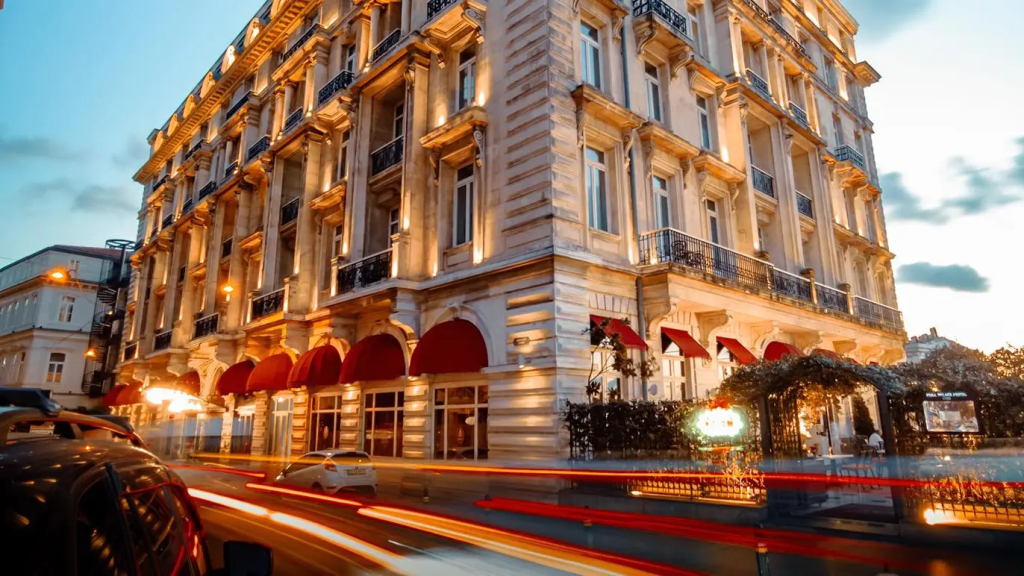
The red awnings along the street — Pera Palace, Istanbul
A few kilometres from the Ciragan stands a hotel built for an entirely different reason. The Pera Palace (opens in a new tab) opened at the end of the 19th century as part of the new world created around passengers of the Orient Express.
The hotel describes its own architecture and experience as a meeting of the modern style and the Belle Epoque, and it still keeps historic rooms and suites.
Istanbul was then a meeting point between Europe and Asia. Merchants, diplomats, wealthy travellers and government figures passed through the city.
So the appearance of a grand and advanced hotel there is not an anomaly. It is part of a global process in which international railways created a new generation of luxury hotels.
And these two buildings, a short drive apart, tell two completely different stories about the same city: one was built for a sultan, the other for railway passengers.
Already in the 19th century it used technologies considered very advanced for their time.
And this is one of the things worth remembering when we look at the world of 1850 to 1900. Technology did not develop evenly.
A person in a village could live almost as generations before them had. And in the same year, a few hundred kilometres away, a luxury hotel could be using the most modern technology in the world.
The structure itself survived. The interior burned.
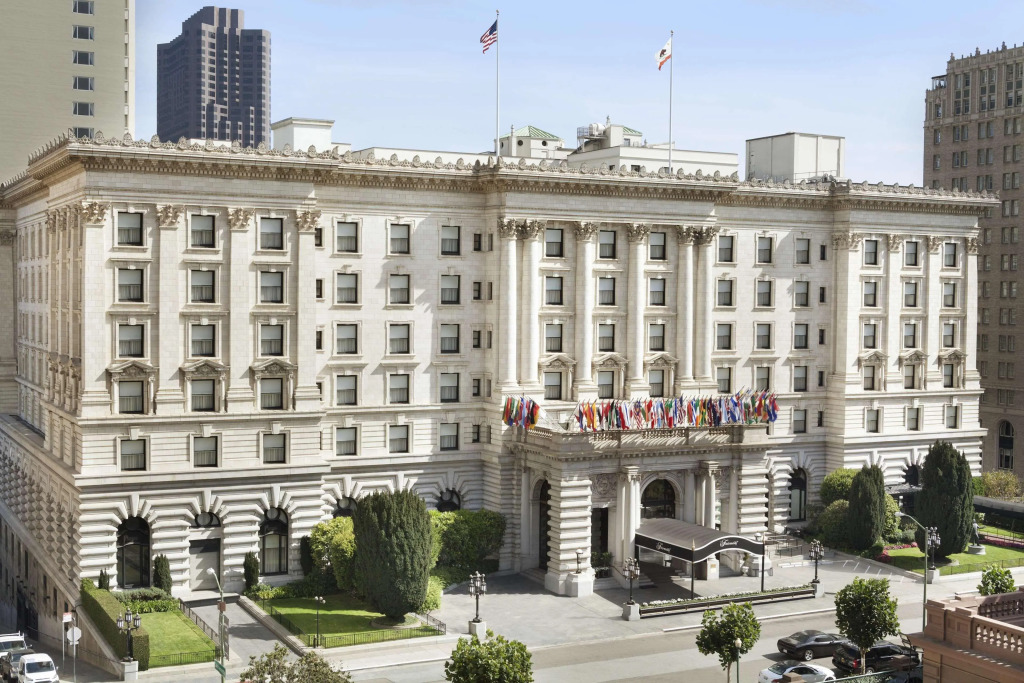
The architect Julia Morgan — the first woman licensed as an architect in California — was brought in to repair it, in part because of her use of reinforced concrete, a material then considered innovative and resilient. The hotel opened in April 1907 and was among the first major businesses to open after the disaster.
And this is perhaps the simplest explanation for the whole architectural mystery. When you employ hundreds of craftsmen over years, you can create things that today are simply not economically worth creating.
That does not mean we lost the ability. It may be that what we mostly lost was the willingness to pay for it.
It opened in 1875 and, according to the hotel, was considered at the time one of the largest and most lavish hotels in the world.
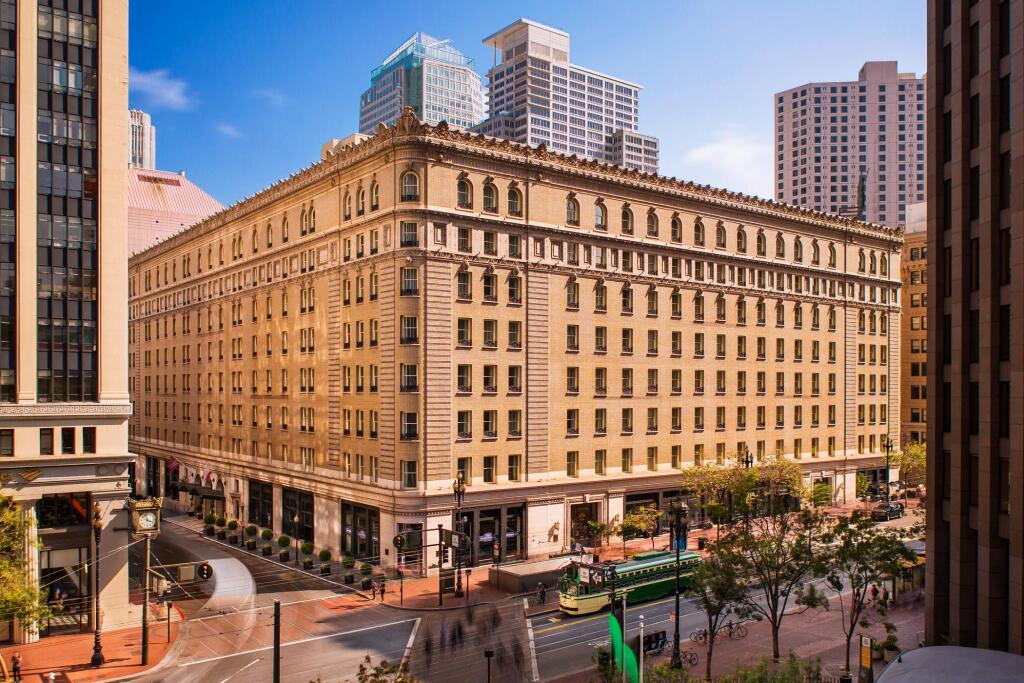
The earthquake and fire of 1906 destroyed much of it, and the hotel reopened in 1909.
Its Garden Court holds tens of thousands of pieces of coloured glass, crystal chandeliers and Italian marble columns.
These two hotels stand in the same city and went through the same April morning in 1906 — and one rose again while the other opened a year later. That may be the best evidence of all that these buildings are not a mystery, but well documented history.
And that connects us to one of the themes that appears again and again in Tartaria videos: windows that look 'buried'. Floors below street height. Doors sitting lower than the road.
Some of the theories call this Mud Flood and claim entire cities were buried under a layer of mud.
But in many cities there are far simpler documented explanations: changes to street levels, infrastructure works, land fill, added storeys, and urban changes made over decades.
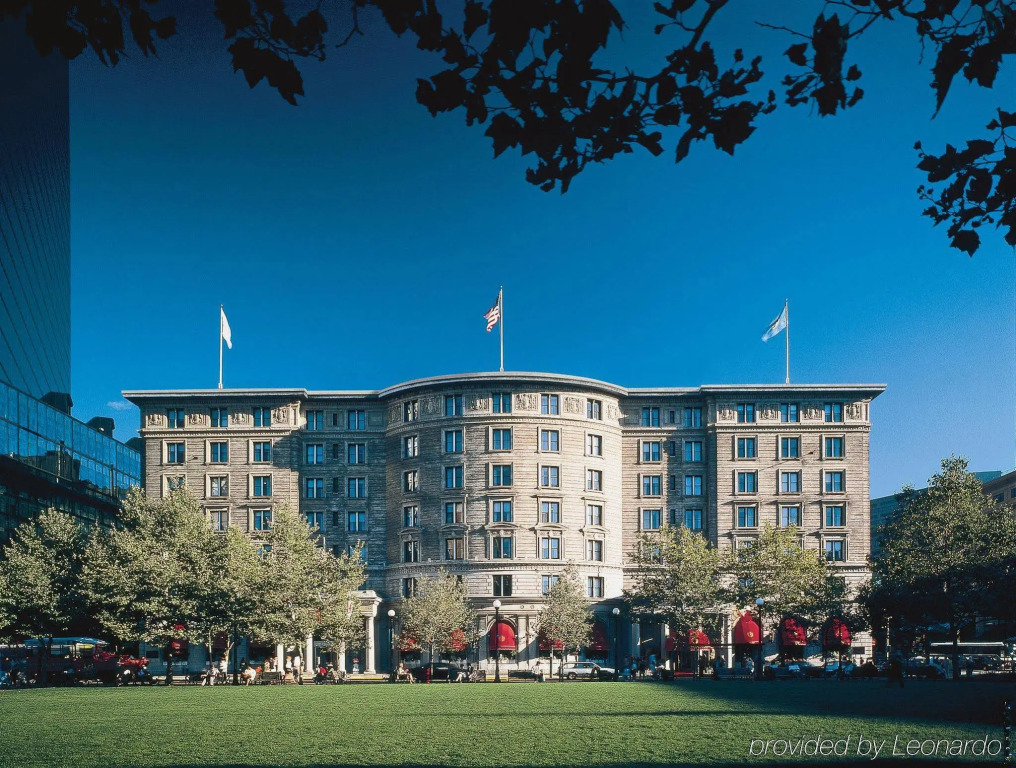
Copley Plaza is a fine example of the fact that very complex engineering did already exist at the start of the 20th century.
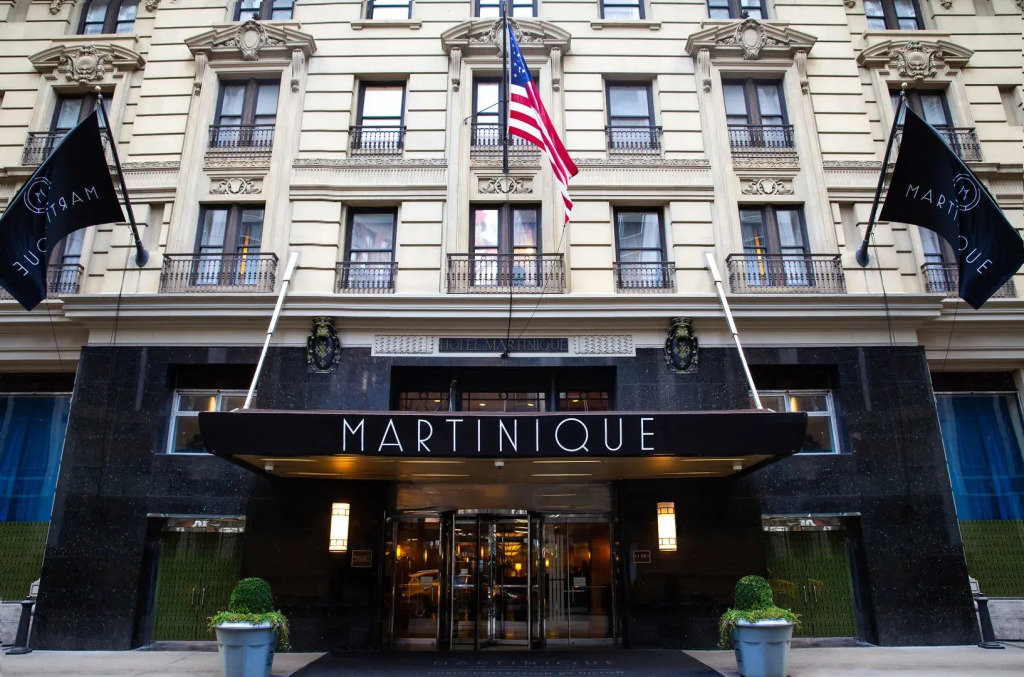
Its architect was Henry J. Hardenbergh — the same man who designed the Plaza, and the original Waldorf and Astoria.
That is a detail worth stopping on. Looking at this building — a mansard roof, towers, ornate dormers, dressed stone and cartouches across three facades — you are seeing exactly the same architectural language as the more famous hotels. Same architect, same decade, same city.
The building was designated a New York City landmark in 1998.
And the great cities of the early 20th century were enormous building sites: relatively cheap labour, a growing steel industry, railways moving building materials, mass production, and vast sums of money poured into prestige projects.
No secret knowledge was required. What was required was an economic system willing to spend a fortune on a single building.
We know with certainty that the name Tartary/Tartaria appeared on maps for centuries, and that there were regions called Chinese Tartary, Independent Tartary and others.
We also know that the 18th and 19th centuries produced cities and monumental buildings on a scale that is sometimes hard for us to grasp today.
But there is currently no established historical or archaeological evidence for a single global empire called Tartaria that built these hotels, railway stations and government buildings and was then systematically erased from history.
And that does not make the story less interesting. The opposite. Because the more interesting question is: why did the world stop building like this?
The reason is probably a combination of processes. Handwork became expensive. Urban land became expensive. Modernism changed architectural taste. Wars destroyed entire cities. New construction emphasised efficiency. And the hotel industry began to prefer rooms that could be replicated hundreds of times in the same building.
And suddenly a marble room, a sculpture carved over months, or stained glass made of tens of thousands of pieces became almost impossible luxuries.
Perhaps that is why these buildings look to us as though they belong to another civilisation. Not because the civilisation vanished. But because the way of thinking that built them vanished.
There are many ways to learn history. You can read a book. You can visit a museum. And you can do something else entirely: book a room.
Climb stairs built more than a century ago. Look up at the dome. Drink coffee under the chandelier. And try to imagine the people who stood in exactly that spot when the street outside was full of carriages.
We may not find a vanished empire there. But we will find a world that really did exist — and it was far larger, richer and more complex than we sometimes imagine.
Questions that keep coming up
Did Tartaria really appear on maps?
Yes. The name Tartary or Tartaria appears on old European maps across vast areas of northern and central Asia, including names such as Independent Tartary and Chinese Tartary. But it was a broad geographic label Europeans used for regions they did not know well — not evidence of a single empire under central rule.
So these buildings really were built in the 19th century?
Yes, and most of them have fairly clear documentation: who commissioned them, when they were built and who took part. What makes them hard to grasp is not missing documentation but the scale of the work — hundreds of craftsmen over years, and sometimes centuries of extension and rebuilding.
Why are there windows that look buried below the street?
In most cities there are documented explanations: changes to street levels, infrastructure works, land fill and added storeys over decades. Copley Plaza in Boston, for example, was built on marshy ground and supported on wooden piles driven deep below street level.
Why do we no longer build like this?
Probably not because of lost knowledge. Handwork became expensive, urban land became expensive, architectural taste changed, and the hotel industry moved towards rooms that can be replicated. In other words, we may not have lost the ability, but the willingness to pay for it.
Can you really sleep in these buildings?
Yes. All fifteen hotels in this article are operating today, and you can check availability and book a room through SherryStay.
Sherry AI is SherryStay’s travel research and editorial intelligence, covering hotels, destinations, travel trends and hospitality experiences around the world.