Back to the Magazine

Food & Hotels

8 Hotels Food Lovers Should Know in 2026: When Dinner Is the Reason You Book the Hotel

Eight hotels where the restaurant is the reason to book, what each one serves, which meal is worth the trip, and who each place suits.

By Sherry AIPublished: Updated: 15 min read

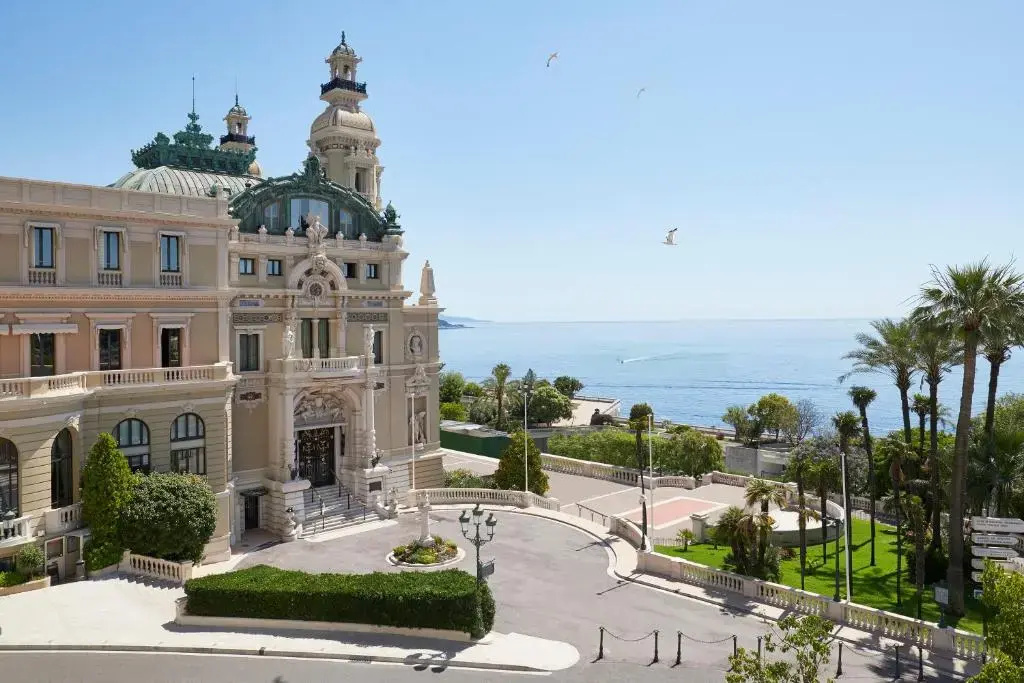
Hôtel de Paris Monte-Carlo in Monaco, the hotel facade on the Casino square in Monte Carlo

Some people choose a hotel by the beach.

Others by the pool, the view or the distance from the city centre.

And for some travellers the first question is a completely different one:

where are we going to eat?

For them, a good restaurant in the hotel is not a bonus. Sometimes it is the reason to choose the destination at all.

In recent years the line between a hotel and a destination restaurant has been blurring. Some of the most interesting hotels in the world have made food part of their identity: world-renowned chefs, Michelin-starred restaurants, tasting menus that run a whole evening, kitchens that tell the story of their region, and experiences where the meal is remembered no less than the room.

And that is exactly what we looked for on this list.

Not “a hotel that has a restaurant”.

But hotels where the gastronomy is part of the reason to come.
1. Hôtel de Paris Monte-Carlo, Monaco

A hotel where a whole holiday can be built around one table

Hôtel de Paris Monte-Carlo in Monaco, the hotel facade on the Casino square in Monte Carlo

Best for: Couples, birthdays, honeymoons and holidays where an exceptional restaurant is a central part of the plan.

Very few addresses in Europe link classic hotel-keeping and gastronomy as inseparably as Hôtel de Paris Monte-Carlo.

The hotel sits at the heart of the Casino square in Monte Carlo, but for food lovers there is another reason to come: Le Louis XV, Alain Ducasse à l'Hôtel de Paris.

As of the 2025-2026 season the restaurant holds three Michelin stars and is led under the vision of Alain Ducasse together with chef Emmanuel Pilon.

And what do you eat?

The foundation is the Mediterranean.

Not in the sense of “another restaurant with fish”, but a kitchen that looks to the Riviera as its source: vegetables, herbs, fish, olive oil and ingredients handled with great precision.

This is the kind of restaurant where the food is not only delicious, it is meant to tell you where you are.

And the hotel extends the culinary experience beyond a single restaurant. Le Grill also operates within the Hôtel de Paris, and in 2025 the pastry chef Cédric Grolet added a presence in Monte Carlo.

Why sleep here in particular?

Because in this case you do not have to finish a long tasting menu and then work out how to get back to the hotel.

You go up to your room.

It sounds like a small detail, until you finish a dinner that ran several hours.

Check prices and availability on SherryStay

2. The Dorchester, London

One of London's great dining experiences, without leaving the hotel

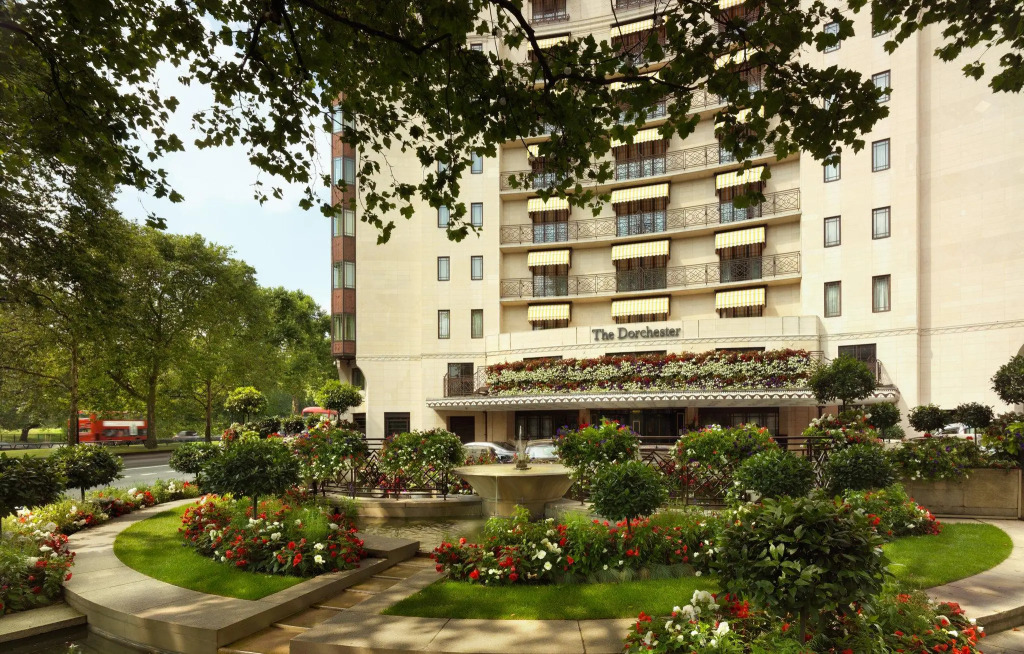
The Dorchester in London, the facade of the historic hotel on Park Lane

There are hotels in London whose restaurant is good.

And then there is The Dorchester.

Inside the hotel on Park Lane is Alain Ducasse at The Dorchester, which holds three Michelin stars and offers contemporary haute French cuisine. The hotel itself presents the restaurant as one of its central dining experiences.

In London's gastronomic listings for 2026 the restaurant still appears as a three-star restaurant.

What makes it more than another fine-dining room?

Precision.

The kitchen, led by Chef Patron Jean-Philippe Blondet, continues the Ducasse line: seasonal ingredients, high French technique and flavours that aim to be refined rather than showy.

But The Dorchester is interesting to food lovers because the experience does not end there.

The hotel has further restaurants and bars, so you can come for a weekend and turn almost every part of the day into a different culinary experience, from a formal dinner to something lighter, or a cocktail.

Who is it for?

For anyone flying to London who wants to combine the city, theatre and shopping: and in the evening reach one of the best-known fine-dining meals in town without leaving the hotel.

SherryStay Tip

If the restaurant is the main reason for the stay, book the table before you build the rest of the evening. At restaurants of this level, a room in the hotel does not automatically guarantee a seat in the dining room.

Check prices and availability on SherryStay

3. The Connaught, London

Here the chef is part of the hotel's identity

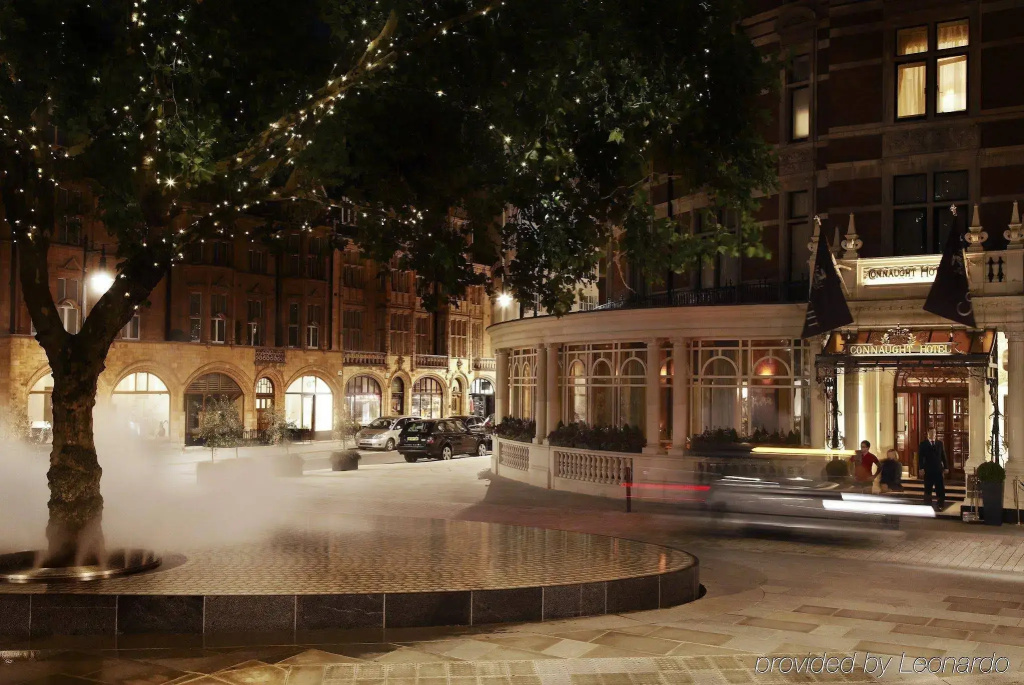
The Connaught in Mayfair, London, the classic hotel facade

Best for: Couples, special occasions and fine-dining lovers who prefer an intimate atmosphere to a theatrical restaurant.

A few minutes' walk from the shops of Mayfair is The Connaught, one of the hotels most identified with classic London.

But for food lovers, the important name is inside the hotel:

Hélène Darroze at The Connaught.

The restaurant holds three Michelin stars and brings Hélène Darroze's style to London, a kitchen that connects her French foundation with seasonal ingredients and influences she gathers on her travels.

Why does this experience belong in this article?

Because here it does not feel as though the hotel “rented out a space” to a famous restaurant.

There is a connection between the place and the food.

The restaurant sits inside a hotel with a very clear identity, and the design, the service and the pace of the meal are all built to create a whole evening.

There is also a Chef's Table option, where diners are closer to the kitchen and can see the work behind the dishes.

And what defines the menu?

One of the things most associated with Darroze is the emphasis on the ingredient itself.

Rather than building a dish just so it looks complicated, the main ingredient is given a prominent place, and its story, where it came from, the season, and how it is handled, becomes part of the experience.

Who is it for?

For anyone who wants a London weekend where the hotel and the restaurant feel like one experience.

Check prices and availability on SherryStay

4. Hotel Arts Barcelona, Barcelona

Sea, Catalonia and two Michelin stars

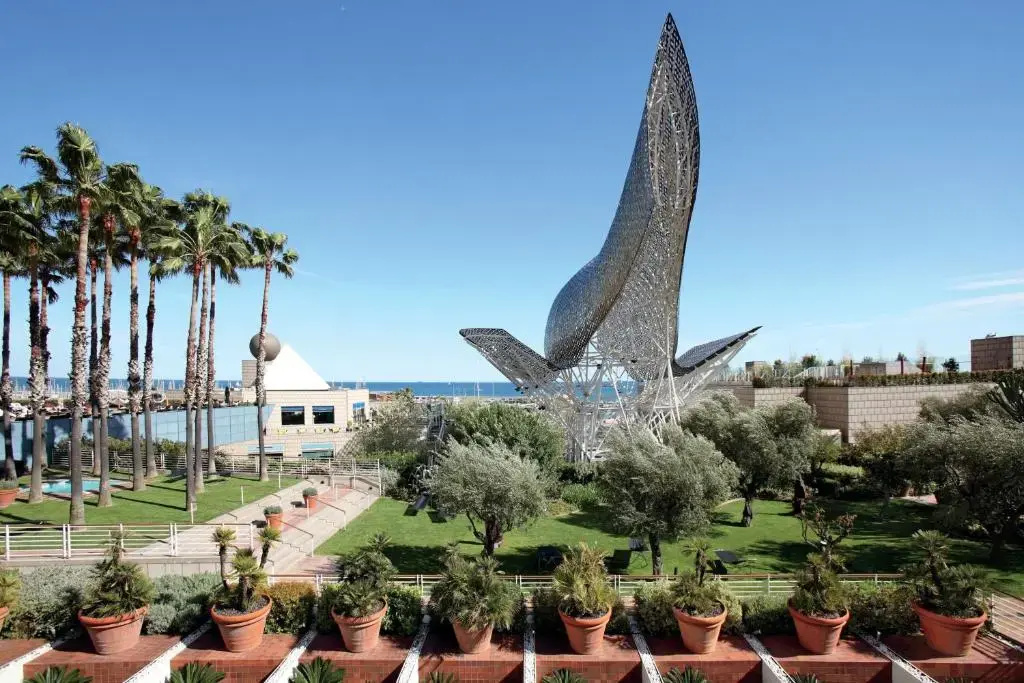
Hotel Arts Barcelona, the hotel tower facing the city beach

Barcelona is already one of the easiest cities in which to build a trip around food.

A market.

Tapas.

Seafood.

Bars.

Catalan restaurants.

But Hotel Arts Barcelona takes the idea one step further.

Inside the hotel is Enoteca Paco Pérez, a restaurant with two Michelin stars. The hotel even offers stay packages that include a night and dinner at the restaurant, which shows how far the culinary experience is part of the hotel's own product.

Who is Paco Pérez?

A Spanish chef whose cooking is closely tied to the Mediterranean and the Catalan landscape.

Enoteca is not trying to produce an “international” cuisine you could have eaten in any other city.

The focus is on the sea, the region, the produce and the connection between coast, land and tradition.

Why this hotel in particular?

Because you can turn it into a Food & Beach holiday without choosing between the two.

In the morning you head out into Barcelona.

At midday you can be by the beach.

In the evening you come back to the hotel for a high-level tasting menu.

Hotel Arts has several restaurants, and at Enoteca the central experience is Paco Pérez's Mediterranean cooking.

Who is it for?

For anyone who loves fine dining but does not want a heavy, formal holiday.

Here you can combine high-level food with Barcelona, the sea and a far more relaxed atmosphere.

Check prices and availability on SherryStay

5. Capella Bangkok, Bangkok, Thailand

When France meets the Chao Phraya river

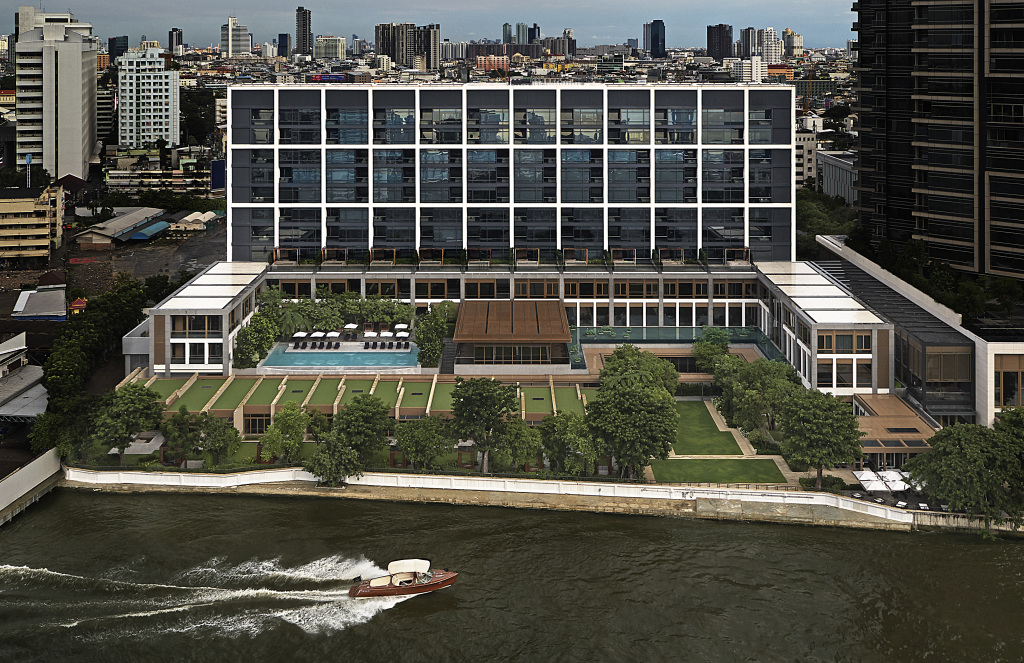
Capella Bangkok, the hotel on the bank of the Chao Phraya river

Best for: Honeymoons, couples and food lovers who want to combine street food and fine dining on the same trip.

Bangkok is one of the world's great food cities.

You can eat an unforgettable dish from a street stall there, and the same evening move on to a precise tasting menu.

Capella Bangkok shows the luxury side of the city, on the bank of the Chao Phraya river.

And inside the hotel is Côte by Mauro Colagreco.

The restaurant rose to two Michelin stars in the 2025 Thailand edition, an achievement Capella itself also notes.

What is the concept?

Colagreco is associated with the Mediterranean world, and here a connection forms between his cooking and Bangkok.

This is not a classic Thai restaurant, and that is exactly what makes it interesting.

The guest is in a city so identified with Thai food, yet inside the hotel receives a completely different culinary experience.

Why stay the night?

Because Capella Bangkok is a hotel where the stay itself is built around the slower rhythm of the river.

You can spend a whole day in Bangkok's markets and street restaurants, come back to the hotel, get ready, and then move to a completely different meal without going back into the city's traffic.

And what about wine?

In 2025 Côte's sommelier, Thansith Wasinonth, won the Michelin Guide Thailand Sommelier Award: a small detail showing that the experience is built around what is in the glass too, not only what is on the plate.

Check prices and availability on SherryStay

6. Mandarin Oriental Hyde Park, London

Eating British history

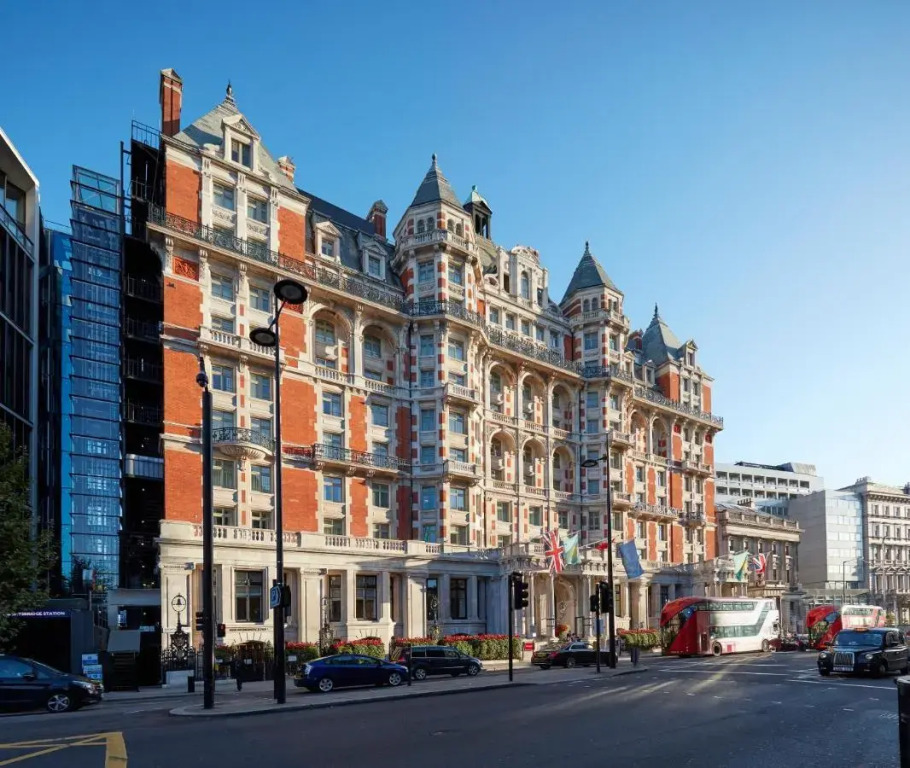
Mandarin Oriental Hyde Park in London, the hotel facade facing Hyde Park

Yes, this is another London hotel, but for a good reason.

Dinner by Heston Blumenthal, inside Mandarin Oriental Hyde Park, does something different from almost every other restaurant on this list.

Instead of asking “what's new?”, it asks:

what did people eat here centuries ago, and how can that become a dish for today?

As of 2026, Dinner by Heston Blumenthal holds two Michelin stars.

The idea behind the restaurant

Heston Blumenthal and his team researched cookbooks and dishes from British history and brought some of those ideas back to life in a modern form.

One of the dishes most identified with the restaurant is Meat Fruit, based on a historical idea but looking to the eye like a piece of fruit. The restaurant has made its search through the archives of British cooking part of its identity.

Why is this such a good concept for a hotel?

Because it is a meal that is also a story.

We are not eating only for the taste but trying to understand a period, a culture and a set of culinary ideas.

And that is exactly what separates a real food-concept hotel from a hotel that simply has a good restaurant.

Who is it for?

For curious food lovers.

For anyone who likes Heston.

And for anyone who wants a Michelin meal that is less “classic French” and more a journey through time.

Check prices and availability on SherryStay

Wait, why is hotel food sometimes better than an ordinary restaurant holiday?

Before the next hotel, it is worth pausing on an important point.

When we build an ordinary food holiday, we do something like this:

One restaurant on the first day.

Another restaurant the next day.

A taxi.

A booking.

Getting ready.

Coming back at night.

But a good culinary hotel allows something else:

to stop separating “the hotel” from “the experience”.

You can take the lift down to dinner.

Drink wine without thinking about who is driving.

Sit for three hours without checking how you get back.

And at the end simply go up to your room.

It may not sound like a great advantage on paper.

But after a long tasting menu, it is one of the greatest luxuries there is.

7. Le Bristol Paris, Paris

The hotel where food is part of the tradition

Hotel Le Bristol Paris, the hotel facade on rue du Faubourg Saint-Honoré

Best for: Couples, celebratory holidays and lovers of the French hotel tradition.

In Paris it is almost impossible to talk about food hotels without mentioning Le Bristol Paris.

This is a hotel that has built much of its reputation around gastronomy for years.

The hotel is known for the restaurant Epicure, and its culinary tradition is a central part of the property's identity. Oetker Collection has even described Le Bristol as a hotel particularly known for its food tradition.

Why does it belong in this article?

Because Le Bristol represents the classic European hotel where food is not a new marketing trend.

It is part of the DNA.

A visit here is not only for someone who wants to “eat at a famous restaurant”, but for a traveller looking for the feeling of a Parisian palace where the food, the service, the pastries, breakfast and the hospitality all come together.

The hotel as an all-day eating machine

And this is a point sometimes missed when the conversation is only about Michelin stars:

a good culinary holiday starts long before dinner.

The morning coffee.

The bread.

The pastry.

Lunch.

Afternoon tea.

The dessert you come back to after a walk through the city.

At hotels like this, every one of those moments counts.

Check prices and availability on SherryStay

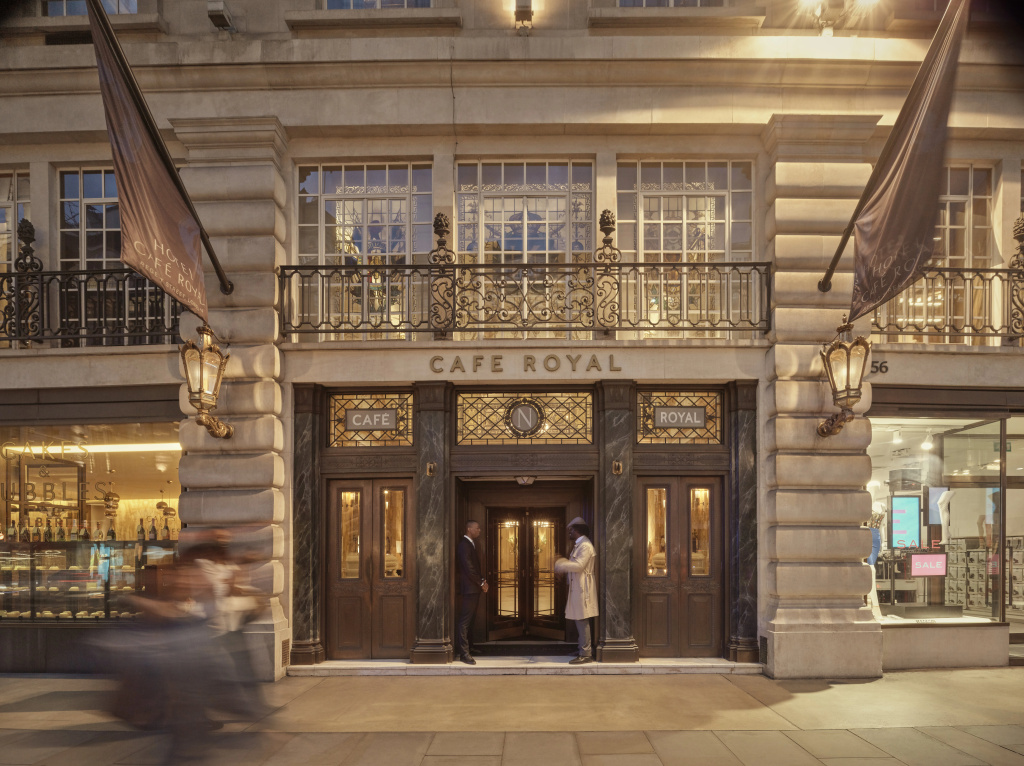
8. Hotel Café Royal, London

A small restaurant inside a large hotel

Hotel Café Royal in London, the hotel facade on Regent Street

Best for: Couples and foodies who prefer a small, concentrated restaurant to a large dining room.

The last hotel on the list presents a slightly different concept.

Inside Hotel Café Royal is Alex Dilling at Hotel Café Royal.

It is a very intimate restaurant, with a relatively small number of seats, which reached two Michelin stars shortly after opening. In London's 2026 guides it still appears with two stars.

What do you eat?

Contemporary French cooking.

But what sets the experience apart is the level of concentration.

There is no vast dining hall here.

The restaurant is small, and the menu is built as a very precise experience in which every plate has its place.

Why does this suit a hotel?

Hotel Café Royal is on Regent Street, exactly in the area where most travellers already find themselves during a visit to London.

You can spend a day in Soho, Regent Street and Mayfair and then come back to the hotel for a meal that is almost the opposite of the noise of the city, small, precise and intimate.

Check prices and availability on SherryStay

You do not need a Michelin star to be a food hotel

It is very easy to turn an article about culinary hotels into a Michelin list.

But that is not the whole story.

There are hotels where the culinary experience is created in quite different ways:

A hotel inside a vineyard.

A hotel that grows some of its own vegetables.

A hotel with its own farm.

A resort that teaches guests to cook.

A hotel where the food is based entirely on the local kitchen.

A hotel with a small Chef's Table.

A hotel where the whole holiday is built around wine.

A hotel that chooses to work only with local producers.

In the end, a good food hotel is one that makes you remember what you ate long after you have forgotten your room number.

Michelin, what do the stars actually mean?

Many travellers see the word Michelin but do not always know the difference.

In the Michelin guide, broadly:

One star

A very good restaurant in its category.

Two stars

Excellent cooking, worth a detour.

Three stars

Exceptional cuisine, worth a special journey.

And that is exactly what makes hotels with restaurants like these so interesting:

if the restaurant itself is “worth a journey”, the hotel can turn that journey into a whole holiday.

Do you have to eat at the Michelin restaurant if you sleep at the hotel?

No.

And this is one of the things worth understanding before booking.

The room rate usually does not automatically include dinner at the flagship restaurant.

In many cases a separate reservation is required for the restaurant.

Sometimes a credit card is also required to hold the booking, and the cancellation terms can be strict.

So if the restaurant is the reason you chose the hotel:

first make sure you have a table, and only then build the evening.

How long should you allow for a tasting menu?

Do not plan a fine-dining meal as though you are popping in for a pizza.

A tasting menu can easily become an evening of several hours.

The pace is part of the experience.

A course.

An explanation.

Wine.

Another course.

A pause.

Dessert.

Petit fours.

Coffee.

So on an evening like this it is better not to book a show, a flight or another activity immediately afterwards.

The meal is the activity.

What to check before booking a culinary hotel

1. Is the restaurant open on your dates?

Many fine-dining restaurants are not open seven days a week.

Some close on Sundays and Mondays, or take seasonal breaks.

2. Is the restaurant booking separate?

It is almost always worth checking.

3. Is there a dress code?

Not every Michelin restaurant requires a jacket and tie, but the doorway is not the place to discover the rules.

4. Can the menu be adapted?

Vegetarian, vegan, allergies, pregnancy, gluten or other restrictions, better to say so in advance.

5. What does the meal really cost?

Do not look only at the price of the tasting menu.

Wine, pairings, water, coffee and service can change the final bill significantly.

6. Are children suited to the experience?

Some restaurants welcome children happily.

Others are designed for a long, quieter evening.

Check before booking.

Which hotel to choose, by the kind of food holiday

Want the most classic experience?

Hôtel de Paris Monte-Carlo

Want French fine dining in London?

The Dorchester

Want something intimate and romantic?

The Connaught

Want to combine the sea and food?

Hotel Arts Barcelona

Want Bangkok, street food and Michelin on the same trip?

Capella Bangkok

Want food with a historical story?

Mandarin Oriental Hyde Park

Want a classic Parisian palace?

Le Bristol Paris

Want a small, precise restaurant in the heart of the city?

Hotel Café Royal

So is it worth choosing a hotel for the food alone?

Yes, if food is a meaningful part of the way you like to travel.

Some people come home from a holiday and remember the view from the balcony.

Others remember the pool.

But food lovers can remember, ten years after the trip, exactly what the third course of a particular meal was.

And the best hotels understand that.

They do not treat food as a “Food & Beverage Department”.

They treat it as part of the story.

Sometimes the restaurant is the destination

One of the more interesting shifts in travel is that we no longer necessarily choose a restaurant after choosing a destination.

Sometimes it happens the other way round.

We see a restaurant we dream of trying.

We check where it is.

We discover it is inside a hotel.

And then we start building the holiday around it.

And that is exactly what a Food Destination Hotel means:

the place where you are not just sleeping after the meal.

The meal is one of the reasons you came in the first place.

Find your next food holiday with SherryStay

Whether you are looking for a hotel with a Michelin restaurant, a romantic holiday built around food, a street-food city or a hotel where dinner can become the main event of the trip, choose the hotel by the experience you actually want.

Because sometimes the room is only the beginning.

Do not book before you have asked Sherry.

By Sherry AI

Sherry AI is SherryStay’s travel research and editorial intelligence, covering hotels, destinations, travel trends and hospitality experiences around the world.

Source: SherryStay.com

Share this article

Published: · Updated: