Back to the Magazine

Destination Guides

The Complete Digital Nomad Guide for 2026: How to Work From Anywhere, What It Costs, and Where to Live

What if next month’s home does not have to be the one you are in now? A practical guide to working remotely from abroad: what to settle before you fly, how to build a monthly budget, and ten destinations where we checked two hotels each against our own inventory.

By Sherry AIPublished: Updated: 30 min read

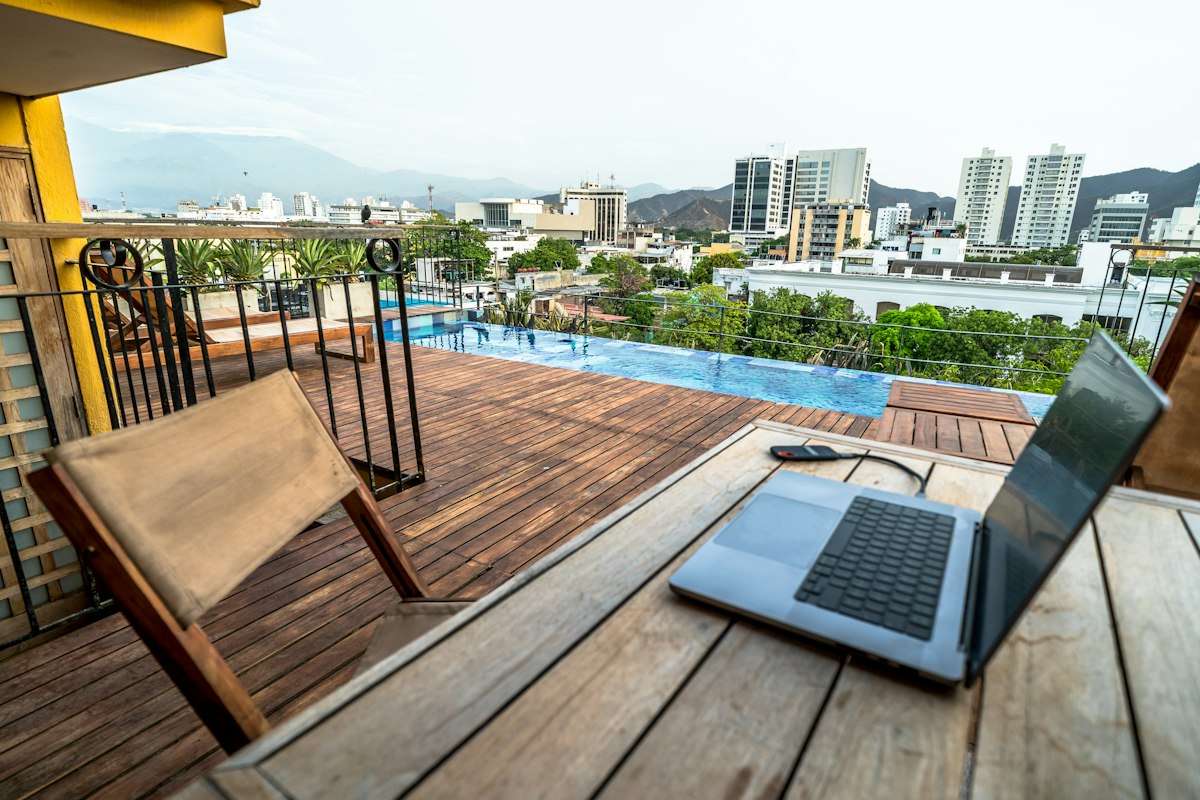
A wooden balcony with a canvas chair and an open laptop on a low table, a swimming pool, low-rise city buildings and green hills behind it
Photo: Marc Wieland / Unsplash

The short answer

Digital nomadism is not a holiday with a laptop. It is a full working routine that happens somewhere else, which means reliable internet, somewhere you can sit for eight hours, and entry rules you checked yourself.

Do not start with a year. Start with one month in one destination while you keep working as normal. After a month you will know whether this life actually suits you.

For a nomad the room is also the office. On a three-night holiday you do not care that there is no desk; over a working month it is a daily problem.

The budget is not just the room. Accommodation, food, transport, coworking, a local SIM, insurance, laundry and the unexpected all count.

The cheapest destination on earth is not the right one. A cheap place with weak internet, or where every errand needs a taxi, is an expensive place.

Settle four things before you fly: permission from your employer to work from another country, travel insurance that covers a long stay, cloud backup with alternative account access, and a backup connection (local SIM or eSIM).

Visas and tax are not a topic for social-media advice. The rules differ by country and change, and being abroad does not automatically end your obligations at home.

The ten destinations in this guide: Chiang Mai, Da Nang, Bali, Tbilisi, Batumi, Kuala Lumpur, Bansko, Lisbon, Las Palmas and Medellín.

In each one we checked two hotels against our own inventory, all passing the same filter: Wi-Fi, a desk in the room, a laundry option, and a price you can live with over time.

The gap between destinations is real: the same check returned a room with a desk at $24 a night in Da Nang, and a starting price of $147 a night in Lisbon.


You open your laptop in the morning. You work a few hours. You go out for lunch. And when the working day ends you could be on a beach in Thailand, in a café in Georgia, facing the sea in Vietnam or in a small flat in a European city.

Without taking a sabbatical. Without necessarily leaving your job. And without being wealthy.

This is digital nomadism, and it stopped being a fringe phenomenon a long time ago. But before the excitement, one thing should be clear: this guide is not here to sell a dream. It is here to explain how it actually works — what it costs, what to check before you book, and where to sleep when your room is also your office.

Digital nomadism is not a holiday with a laptop

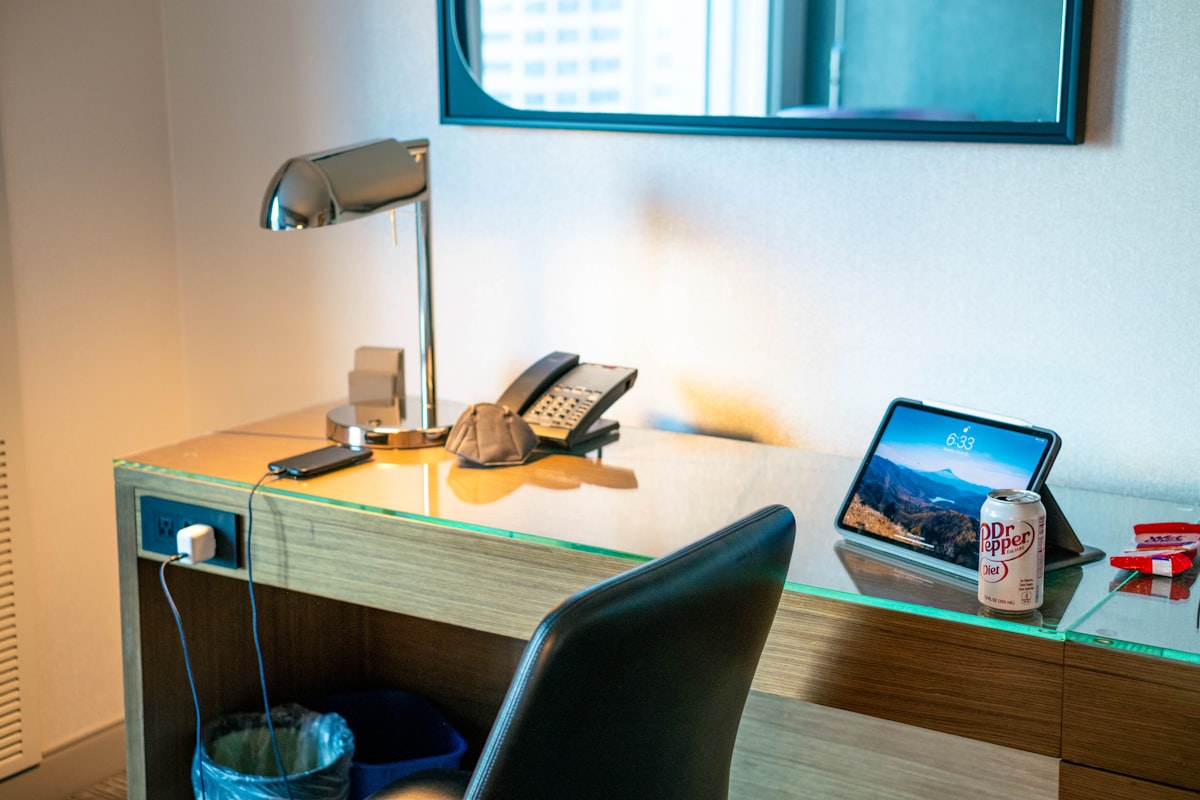
A hotel room desk with an adjustable reading lamp, a telephone, a tablet on a stand, a black office chair and a window looking out over the city
Photo: Tomeo Sonner / Unsplash

Making this work takes far more than a good view. It takes internet. It takes somewhere you can work from for eight hours a day. It takes knowing how long you are allowed to stay in a country. It takes insurance, backups and payment methods that work. And it takes choosing where to live based on your actual life, not on a photograph.

What separates digital nomadism from a long trip is not the distance or the duration. It is that your income travels with you.

So what is a digital nomad?

A digital nomad is someone whose work does not depend on a fixed physical location, so they can work over the internet while living or travelling in different countries.

That can be a developer, a designer, a consultant, a business owner, a marketer, a writer, a video editor, a social media manager, someone selling online, or an employee who has been cleared to work remotely. The profession matters less than the structure: if your income does not depend on an address, you can do this.

How to start properly: a month, not a year

Best for: Anyone unsure whether this life suits them at all, who does not want to dismantle their life to find out.

The common mistake is to plan a whole year immediately. The smarter route is to pick one destination, book somewhere for 30 nights, keep working as normal, and see how it feels.

After a month you have real answers: whether you can concentrate, whether the time difference gets in the way, whether you feel alone, whether the budget holds, and whether you want to carry on. Those are questions you cannot answer in advance from your living room.

What does it actually cost?

A brown leather wallet, folded euro notes and scattered coins on a round wooden tray beside a small green plant
Photo: Jakub Żerdzicki / Unsplash

It depends heavily on the destination, and that is where the real advantage lies: instead of choosing where to live based on where you work, you choose it on the ratio of quality of life to price.

But do not look only at the nightly rate. A real monthly budget covers accommodation, food, transport, coworking, a local SIM or eSIM, insurance, laundry, a gym, restaurants, going out, flights, visas where they apply, and the unexpected.

A practical tip: think in total monthly cost, not price per night. A $25 room that needs a taxi for everything can cost more than a $40 room you can walk everywhere from.

The biggest mistake: treating the hotel as somewhere to sleep

For a digital nomad the room is also an office, which changes what matters entirely. On a three-night holiday you may not care that there is no desk. Over a working month it becomes a daily problem — long hours on a bed or a dressing table is a recipe for back pain.

What is actually worth checking before you book

Wi-Fi, a real desk and chair, quiet, air conditioning, enough power sockets, the location, a washing machine or laundry service, a kitchenette if you are staying a while, access to coffee and food, and somewhere else to work when the room stops helping.

It is also worth asking about long-stay policy: plenty of hotels quote a completely different rate for two weeks or a month than the nightly price the first search shows you.

What you must settle before you fly

Work

If you are an employee, confirm your company even allows working from another country. Not every remote-work policy means any country in the world, and the restriction is often about tax, insurance or regulation rather than goodwill.

Insurance

Travel insurance matters most when you are abroad for a long stretch. Note that some policies cap the number of consecutive days, and a policy bought for a week will not necessarily cover two months.

Backups

Do not go abroad for a month with one computer carrying your entire business and no backup. You want cloud backup, two-factor authentication, organised passwords, alternative access to your accounts, and a phone number that can still receive verification codes when you are on a different SIM.

A backup connection

Even if the hotel promises Wi-Fi, have a local SIM or an eSIM. If the internet drops ten minutes before an important call, you need a fix in seconds — not a conversation at reception.

What about visas?

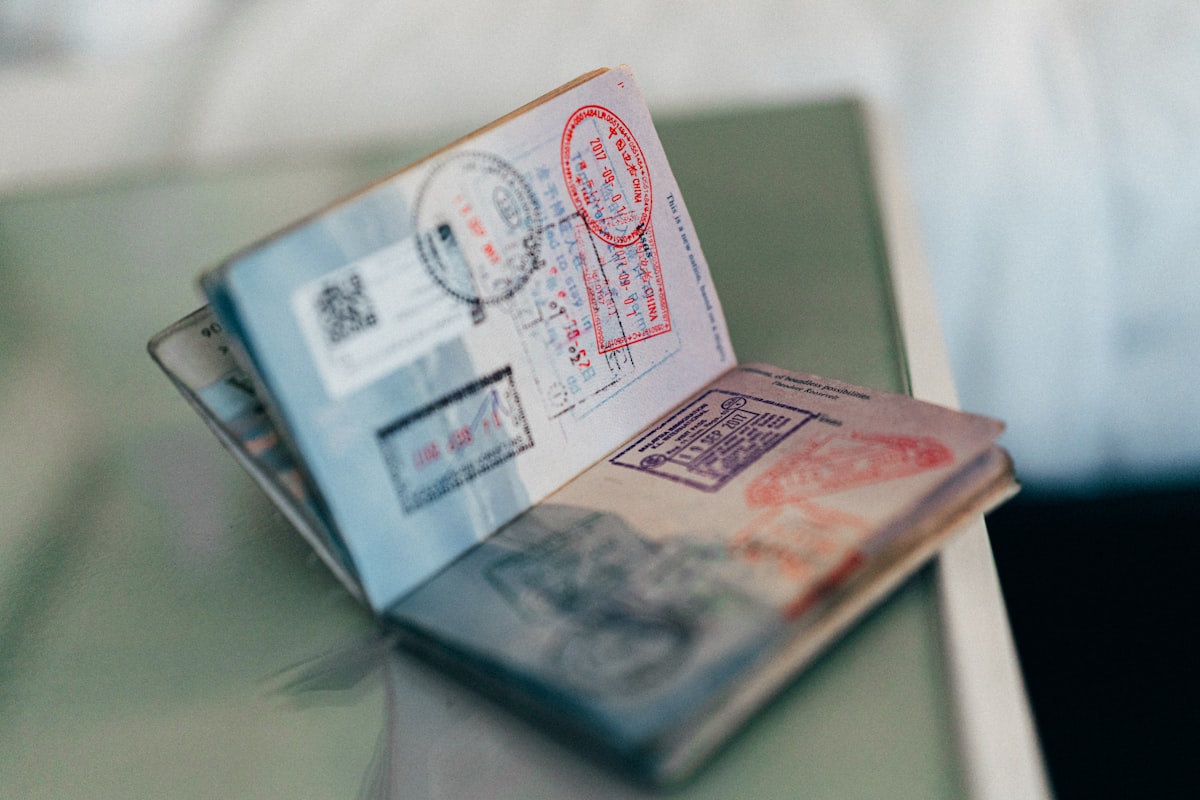
An open passport resting on a green notebook, its pages covered in red and blue entry and exit stamps
Photo: Kit (formerly ConvertKit) / Unsplash

This is not a place for social-media advice. The rules differ by country, they change, and they depend on your passport.

Some countries offer dedicated digital nomad routes, some allow a long stay but not necessarily work, and in others the conditions are more involved. Before committing to a destination, check against the official source how long you may stay, what you may do in terms of work, whether a visa is required, what income threshold applies if there is a dedicated route, whether insurance is required, and whether there are tax implications.

Note the wording: check, do not assume. An online guide — including this one — is a starting point, not an authority.

Israeli passport holders can start from our visa and entry-authorisation guide, then verify against the destination’s official source.

And what about tax?

This is the subject most nomads ignore, which is exactly why it deserves advice.

Being in another country does not automatically end your obligations at home, and working from abroad can raise questions of tax residency, where income is generated, and days of presence. Anyone planning this long term needs an accountant who handles international matters — not a forum thread.

How to choose a destination: seven questions

Do not choose from a photograph. Ask seven questions, then open a flight search.

1. What does a month cost?

Not just the hotel. Everything, including the transport you do not yet know you will need.

2. Is the internet good?

Read recent reviews of the specific area and the specific property, not a national average. Infrastructure can vary enormously between neighbourhoods in the same city.

3. What is the time difference?

If your clients are in one timezone and you are in Asia, your working day may start in the afternoon and end at night. Sometimes that is excellent — the whole morning is yours. Sometimes it destroys your social life.

4. Is there a community?

Some people are happy working alone. Others need a nomad community, meetups and coworking. Know which you are before you pick a quiet town.

5. What is the weather like?

An unusually cheap destination can be cheap precisely because it is rainy season, extreme heat or heavy air pollution. Check the specific month, not the annual average.

6. Is it easy to get around?

If every trip out needs a 40-minute taxi, both the price and the quality of life change. This is exactly where a slightly more expensive hotel in a better location pays for itself.

7. Would I want to live there on an ordinary day?

This is the most important question. Not on the beach day — on the day it rains and you have six hours in front of a screen.

The ten destinations, and the hotels we checked in each

For every destination we picked two hotels from SherryStay inventory, all passing the same filter: Wi-Fi, a desk in the room according to the room detail the supplier reports, a laundry option, and a price you could live with over time. Clicking a hotel name opens its page with prices and availability for your dates.

The prices here were checked against our own inventory on 26 August 2026, for two nights between 10 and 12 October 2026, one adult, in US dollars. They exist to give a sense of scale between destinations — not to be the price you will see on your dates.

Distances given here (coffee, transit, beach) are straight-line distances from our own location data, not walking routes.

1. Chiang Mai, Thailand: starting cheap and easy

A golden chedi seen through an ornate temple gateway in Chiang Mai, a few visitors at its base and blue sky with clouds
Photo: Nat Weerawong / Unsplash

Best for: Anyone who wants to spend less, wants a ready-made community, works mostly from a screen, and does not need the sea.

Worth knowing: During the agricultural burning season (roughly February to April) air quality in Chiang Mai is a genuine consideration, not a footnote. Check your specific month before committing to a whole one.

Chiang Mai has spent years as one of the places most closely identified with digital nomadism, for simple reasons: manageable prices, cheap and good food, cafés, coworking, an international community and flats. You can live well there without spending like you would in a large Western city.

It is also a forgiving destination for beginners. The infrastructure for nomads already exists, and you are not the first person trying to explain why you need stable internet.

Two hotels from our inventory

Amora Hotel Tapae Chiang Mai, four stars on Chaiyapoom Road in the Changmoi area, about $48 a night in our check. This is the one to pick if you want to be in the middle of things: Brewginning Coffee is 123 metres away, and Wat Chedi Luang and the Night Bazaar are both under a kilometre. The room has a desk, and the hotel has free Wi-Fi, a gym, a pool, a restaurant, a business centre and a laundry service — most of what a month needs, without leaving the building.

At Pingnakorn Riverside Hotel Chiangmai, four stars on Charoen Rat Road along the Ping river, also about $48 a night. This is the opposite choice: quiet, the river, a pool, 24-hour reception and soundproofed rooms — particularly good if you are on calls all day. Worth knowing in advance: the nearest cluster of cafés is about a kilometre away, so this is a hotel you leave for coffee rather than one you fall out of into a café.

Not the full list: Search every hotel in Chiang Mai — those dates are a sample, set your own.

2. Da Nang, Vietnam: sea, city, and prices you can live with

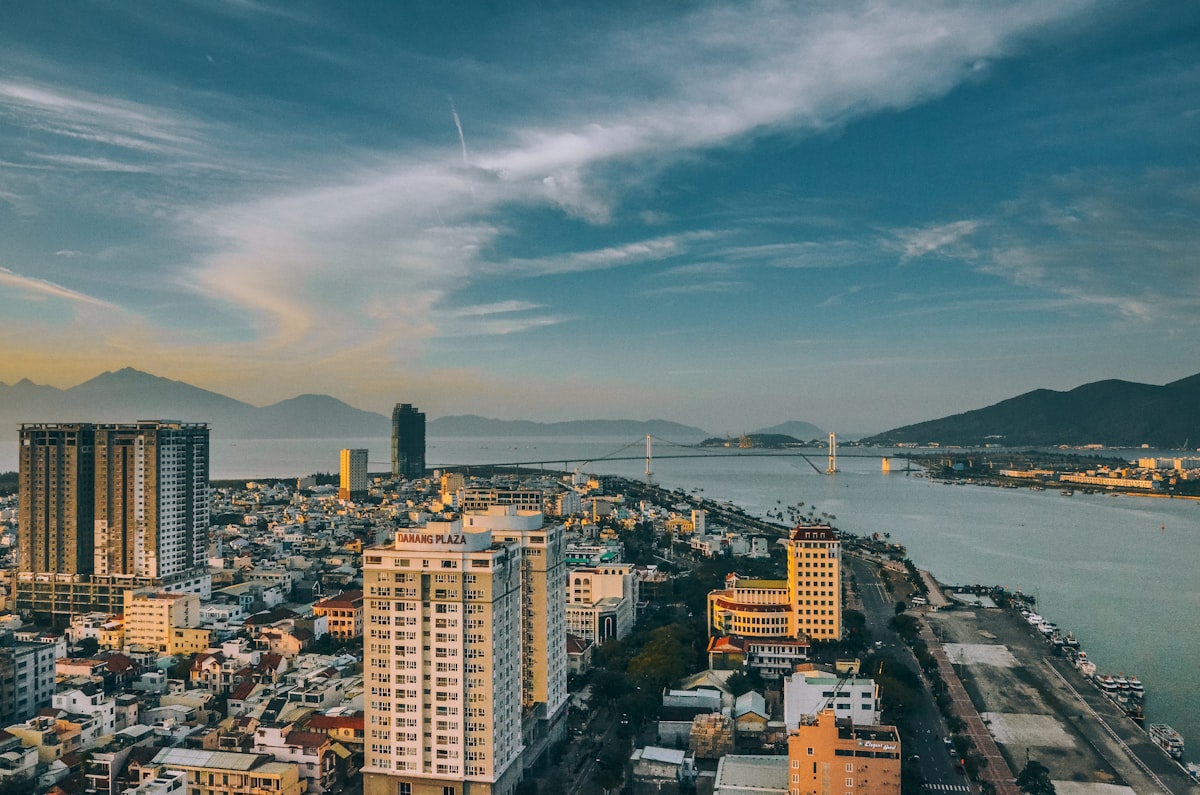
An elevated view over Da Nang: dense apartment blocks in the foreground, the bay and its bridge, and green mountains on the horizon
Photo: Anh Nguyen / Unsplash

Best for: Couples, nomads who work long hours, anyone who wants the sea, and anyone after a high quality of life at a low price.

Da Nang is one of the more interesting options for anyone who wants to be by the sea without living on a small island. There is a functioning city, a beach, cafés, flats, and easy access to the rest of Vietnam — including a weekend in Hoi An.

On price it is the cheapest destination on this list by a clear margin. In the same check where Lisbon started at $147 a night, Da Nang returned rooms with a desk for under $25.

Two hotels from our inventory

Nhat Minh Hotel and Apartment, four stars on Tran Bach Dang Street on the beach side, about $24 a night including breakfast, with free cancellation. The name is honest: this is a hotel-and-apartment format, built for longer stays. My Khe beach is around 380 metres away and the specialty coffee shop XLIII is about 250 metres. The room has a desk, and the hotel has free Wi-Fi, soundproofing, air conditioning, a gym, a pool and a business centre.

Stay Hotel, four stars in the Hai Chau district — the city centre rather than the coast — at about $31 a night including breakfast and free cancellation. This is the choice for living in the city: a bus stop about 400 metres away, the beach about a kilometre and a half. There is a desk in the room, free Wi-Fi, soundproofing, 24-hour reception, an on-site café and restaurant, a pool and a gym.

Open the destination guide

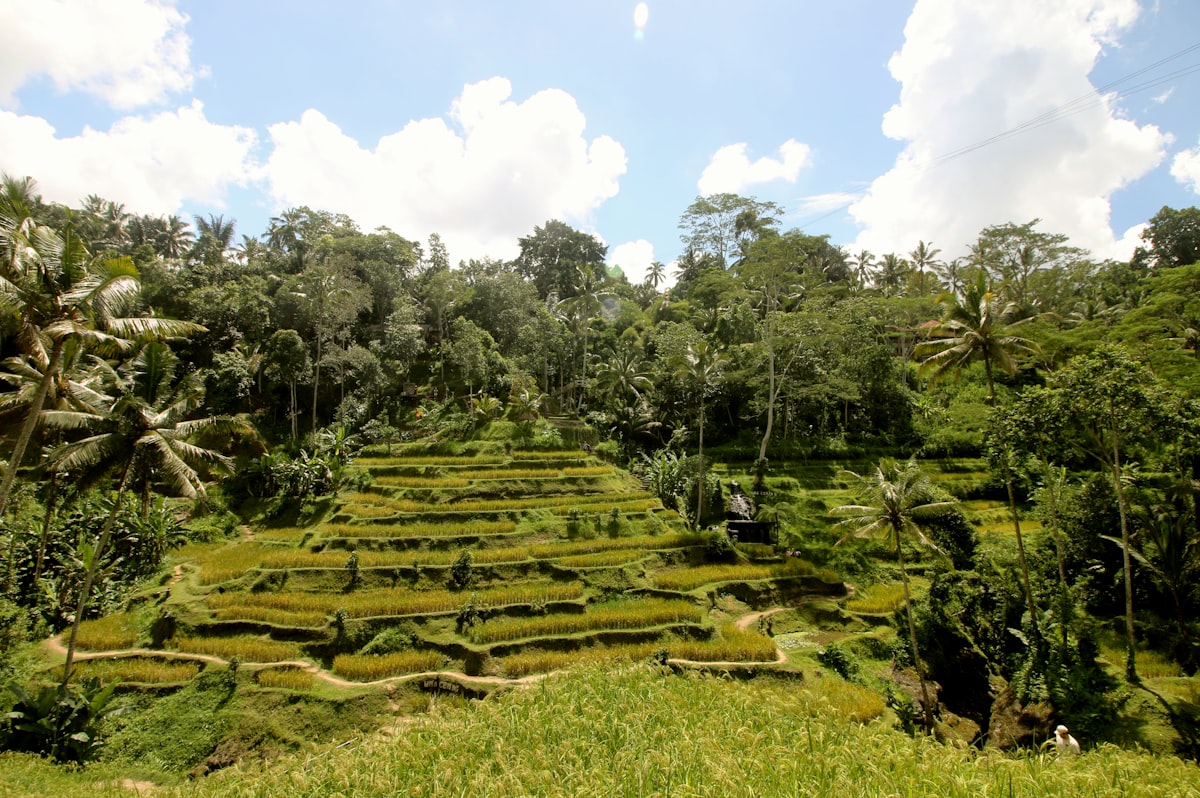
3. Bali, Indonesia: not “a hotel in Bali” but which area

Green terraced rice paddies on a slope near Ubud in Bali, coconut palms and jungle around them and large white clouds above
Photo: Edmund Lou / Unsplash

Best for: Anyone who wants a large ready-made community, a fitness and wellness routine, and does not mind a popular destination.

Bali is not a secret any more, but it remains one of the central stops in the nomad world: cafés, coworking, fitness, yoga, healthy food, beaches and social life.

The common mistake here is searching for “a hotel in Bali”. The island is large and its areas are completely different in character: Canggu offers strong community and nomad life close to the coast, Ubud is quieter and inland, and Seminyak is more touristic and developed. Choose by the routine you want, not by the island.

Two hotels, one in each area

Valstar Hotel Canggu, four stars on Jalan Raya Babakan in Canggu, about $35 a night including breakfast and free cancellation. The most relevant detail for nomads: the MIEL Specialty Coffee coworking space is about 1.3 kilometres away, and nüde cafe Babakan just 266 metres. The room has a desk, and the hotel has free Wi-Fi, soundproofing, air conditioning, a pool, a gym and 24-hour reception. Worth knowing: the beach itself is about 3.5 kilometres away, so this is not a walk-to-the-sea hotel.

Villa Kirani Ubud, four stars on Jl. Sri Wedari in the Junjungan area of Ubud, about $33 a night. This is the quiet version: a suite with a kitchenette and a desk, air conditioning, soundproofing, a restaurant and 24-hour reception, with a gym about 280 metres away. It suits a month of concentration, and suits less anyone who wants the whole community downstairs.

Open the destination guide

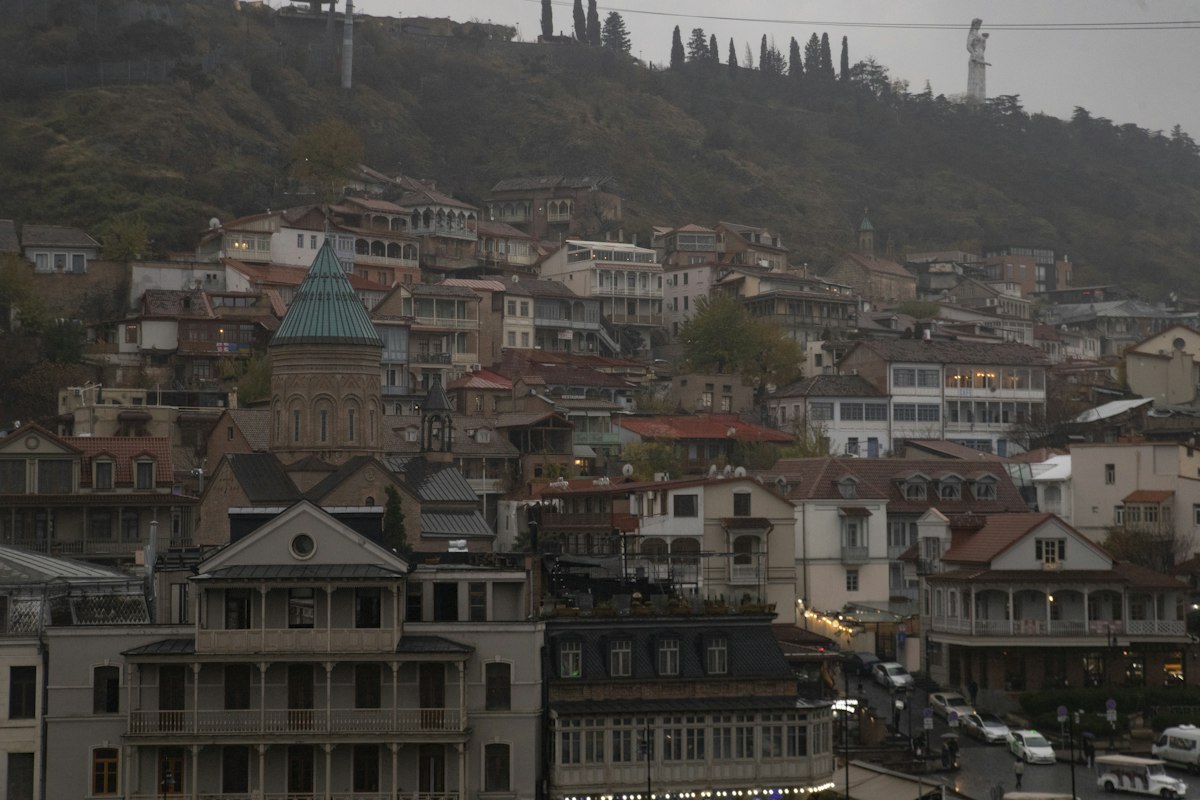
4. Tbilisi, Georgia: close, relatively cheap, and easy to start with

Tbilisi old town houses climbing a hillside, a church dome among them and the Mother Georgia statue on the ridge above
Photo: Maria Baranova / Unsplash

Best for: Anyone running a first one-month experiment, anyone working European or Middle Eastern hours, and anyone who prefers a city to a coast.

Tbilisi is particularly interesting for anyone who does not want to fly to the other side of the world just to find out whether this life suits them. There are flats, cafés, restaurants, internet, nightlife and an urban rhythm you can live in.

Its real advantage is that it allows a one-month experiment without a long flight, and without a time difference that turns your working day into your night.

Two hotels from our inventory

New Tiflis Hotel, four stars at 75 Davit Aghmashenebeli Avenue, about $68 a night including breakfast. The detail that makes it interesting for nomads: Fabrika, one of the venues most identified with the Tbilisi scene, is about 350 metres away, and Rustaveli metro station about 900 metres. The room has a desk and a kitchenette, and the hotel has free Wi-Fi, soundproofing, air conditioning, a restaurant and 24-hour reception.

ApartHotel Otin, four stars on Ochamchire Street in the Saburtalo district, about $35 a night with free cancellation. This is effectively a one-bedroom apartment with a kitchen, a washing machine inside the unit and a desk — the format best suited to a full month, at half the price of the hotel above. Medical University metro is about 700 metres away and the Caffeine by WorkIn café about 740 metres. Worth knowing: Saburtalo is a residential district, not the old town. That is precisely the advantage if you came to work, and a drawback if you came to sightsee.

Open the destination guide

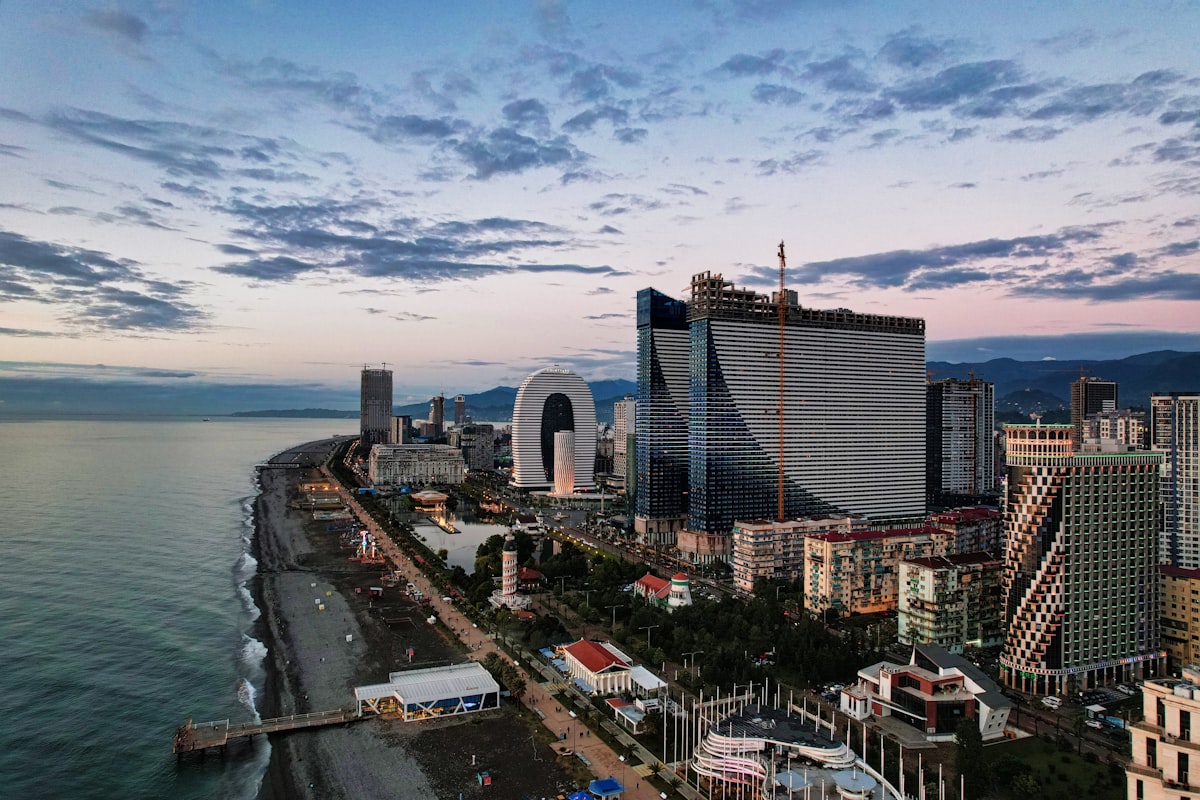
5. Batumi, Georgia: sea, flats and manageable prices

An aerial view of the Batumi skyline at dusk, residential towers along the shoreline and the Black Sea to the left
Photo: Max / Unsplash

Best for: Anyone who wants sea and a low price within Europe, and anyone considering a long stay in an apartment rather than a room.

Batumi is a good answer for anyone who wants Georgia but also the sea. In the right months you can combine work with the promenade, restaurants and a beach, and there is a great deal of new construction and mid-term rental stock — which explains why so many of the hotels there are effectively apartment towers.

That is exactly why season and location matter here. A property that looks excellent on price can be far from where you actually want to live, and winter on the Black Sea is not summer on the Black Sea.

Two hotels from our inventory

Aqua Batumi Hotel & Apartments, three stars on Lech and Maria Kaczynski Street, about $40 a night with free cancellation. The room is a studio with a balcony, a kitchenette, a washing machine inside the unit and a desk — a combination that is hard to find at this price. The sea is about a kilometre away and Submarine Coffee about 380 metres. There is free Wi-Fi, soundproofing, air conditioning, a pool, a restaurant and an on-site café.

Orbi City Hotel Official D Block, four stars at 7b Sh. Khimshiashvili Street, about $48 a night. This is one of the Orbi towers, the classic long-stay address in Batumi. The room has a kitchenette and a desk, there is free Wi-Fi and air conditioning, and the Aquapark beach is about 525 metres away with cafés between 200 and 350 metres. Worth knowing: unlike the hotel above, no soundproofing is reported here — in a large residential tower that is a real consideration if you are on calls all day.

Open the destination guide

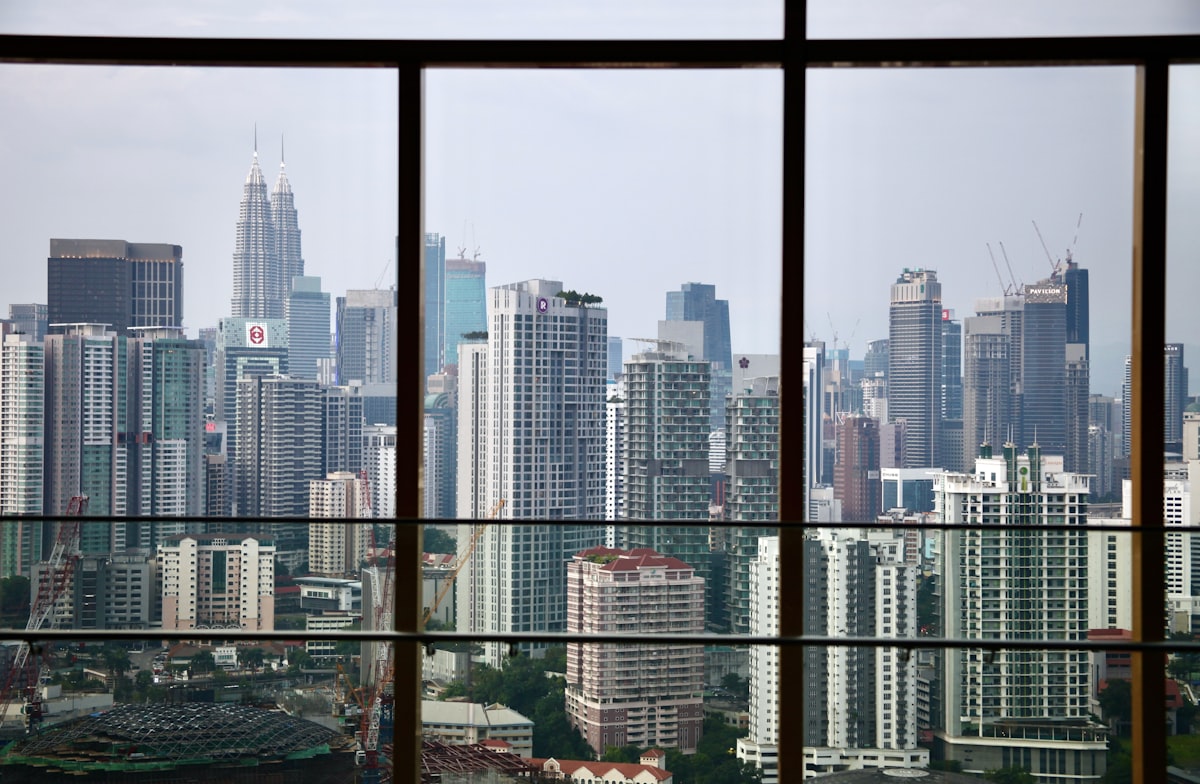
6. Kuala Lumpur, Malaysia: a big city with excellent infrastructure

The Kuala Lumpur skyline through a large dark-framed window, residential towers and the Petronas Twin Towers in the distance
Photo: Casper Westera / Unsplash

Best for: Anyone who works long hours, wants a modern building with facilities, and plans to fly around the region.

Kuala Lumpur suits anyone who wants urban convenience: malls, restaurants, modern flats, public transport that works, internet, buildings with pools and gyms, and easy access to flights around Asia.

It is a particularly good choice for anyone who prefers a functioning city to an island or a beach town, and plans to use weekends to travel the region.

Two hotels from our inventory

Easy Hotel Kl Sentral, three stars on Jalan Tun Sambanthan in Brickfields, about $35 a night. On transport this is probably the best-placed hotel in the entire guide: KL Sentral, the city's transport hub, is about 220 metres away and the rail entrance about 40. The room has a desk, and the hotel has free Wi-Fi, soundproofing, air conditioning, a gym, a shared kitchen and a laundry service.

Scarletz Suites KLCC by Mykey, four stars on Jalan Yap Kwan Seng in the KLCC area, about $40 a night. The unit is a studio with a kitchenette and a desk, in a building with a pool, a gym and a business centre — the classic Kuala Lumpur tower-apartment format. KLCC LRT station is about 310 metres away, KLCC Park about 750, and there is a café about 50 metres from the door.

Not the full list: Search every hotel in Kuala Lumpur — those dates are a sample, set your own.

7. Bansko, Bulgaria: not only a ski resort

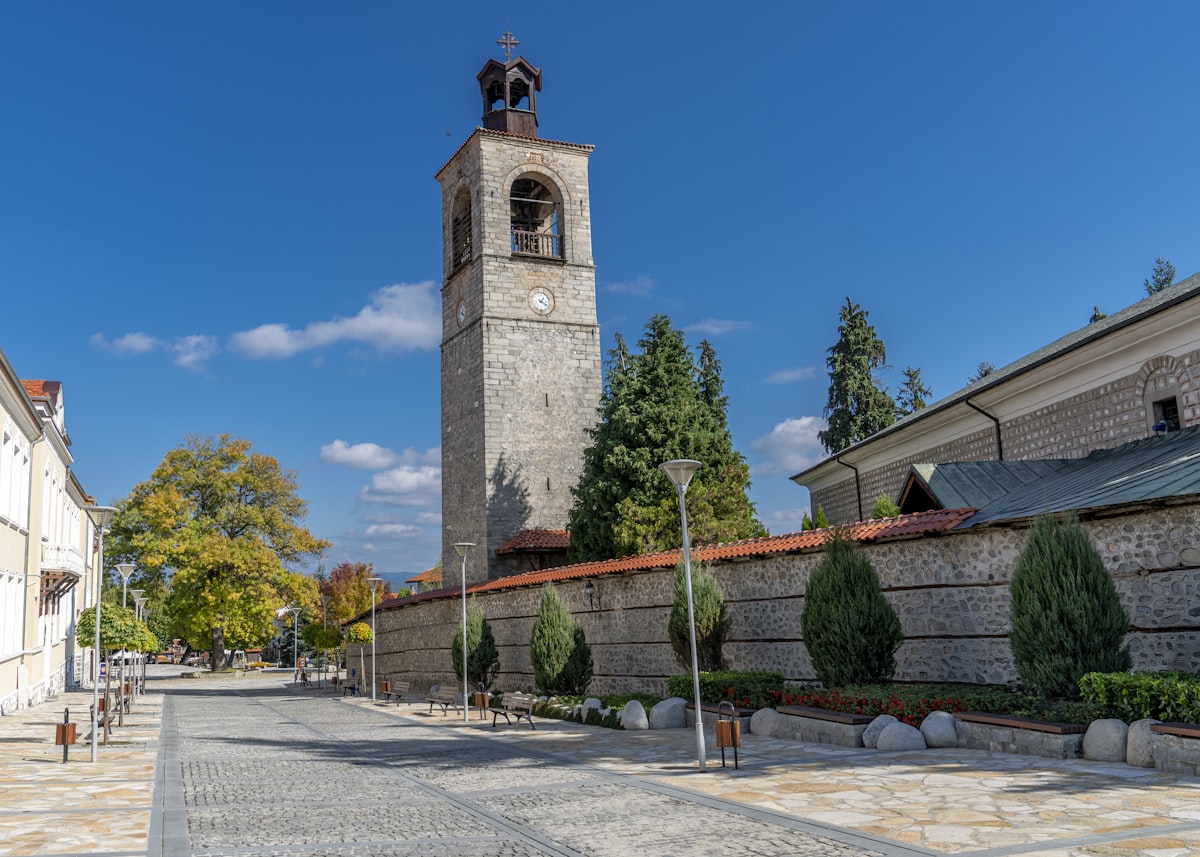
The stone clock tower of the Holy Trinity church in Bansko, a paved square and autumn trees under a deep blue sky
Photo: Ivan Ivanov / Unsplash

Best for: Anyone who likes mountains, wants quiet, and is looking for a small community rather than a large scene.

Bansko has become an interesting nomad destination in recent years precisely outside the ski season, when prices are easier and there is a nomad community, coworking, nature and restaurants in a setting far smaller than a city.

It is an excellent choice for anyone who needs neither sea nor metropolis, and wants Europe without London or Lisbon prices. Note that inventory here is comparatively thin: in the same check Bansko returned 40 priced hotels, against 185 in Chiang Mai.

Two hotels from our inventory

Kap House Hotel, three stars at 77 Pirin Street, about $45 a night with free cancellation. For a nomad this is the strongest location in Bansko: Black Honey Specialty Coffee is 92 metres away, New Coffee World about 163, and the gondola about 277. The room has a desk, and the hotel has free Wi-Fi, a pool, a restaurant, a café and a laundry service. Worth knowing: no air conditioning is reported — in the mountains in summer that is usually fine, but worth confirming for your dates.

Saint George Palace Bansko Aparthotel, four stars at 5 Kosherinata Street, about $56 a night with free cancellation. This is an aparthotel: a studio with a kitchenette and a desk, in a building with a pool, a spa, a gym, a business centre and air conditioning — a format built for a long stay. Worth knowing: it sits further out, with the nearest cafés a kilometre or more away and the gondola about 1.2 kilometres.

Not the full list: Search every hotel in Bansko — those dates are a sample, set your own.

8. Lisbon, Portugal: more expensive, and still works

A yellow Lisbon tram rounding a curve in the street, people on the pavement, pink blossom trees and a pale stone building behind
Photo: Mehmet Bozgedik / Unsplash

Best for: Anyone who prefers Europe to Asia, is willing to pay for quality of life, and is not trying to maximise savings.

Lisbon is no longer the cheap destination it once was, and that is not an impression — it is what our check showed. On the same dates where Da Nang returned rooms with a desk from $24 a night and Chiang Mai from $48, the cheapest hotel in Lisbon itself meeting the same criteria cost $147 a night. Six times Da Nang.

And it still attracts nomads, for quality of life, internet, community, weather, food, proximity to the sea and an international airport. Anyone willing to pay more gets a European city that is very easy to live in — just put the real number in the budget before you fall in love.

Two hotels from our inventory

Czar Lisbon Hotel, four stars at 103 Avenida Almirante Reis, about $149 a night. That avenue is one of Lisbon's main arteries, and the café Do Beco Estefânia is about 200 metres away; Intendente and Alameda metro stations are between 800 and 870 metres. The room has a desk, and the hotel has free Wi-Fi, soundproofing, air conditioning, a gym, a restaurant and a business centre.

SANA Metropolitan Hotel, four stars on Rua Soeiro Pereira Gomes, about $147 a night including breakfast. It sits in the Sete Rios area — a transport junction rather than a café street: the station is about 820 metres away, the Gulbenkian museum about a kilometre, and the nearest cafés a kilometre or more. In exchange you get soundproofing, air conditioning, a gym, a business centre, a restaurant and a laundry service — at roughly the same price as the one above.

Not the full list: Search every hotel in Lisbon — those dates are a sample, set your own.

9. Las Palmas, Canary Islands: Europe with sea almost all year

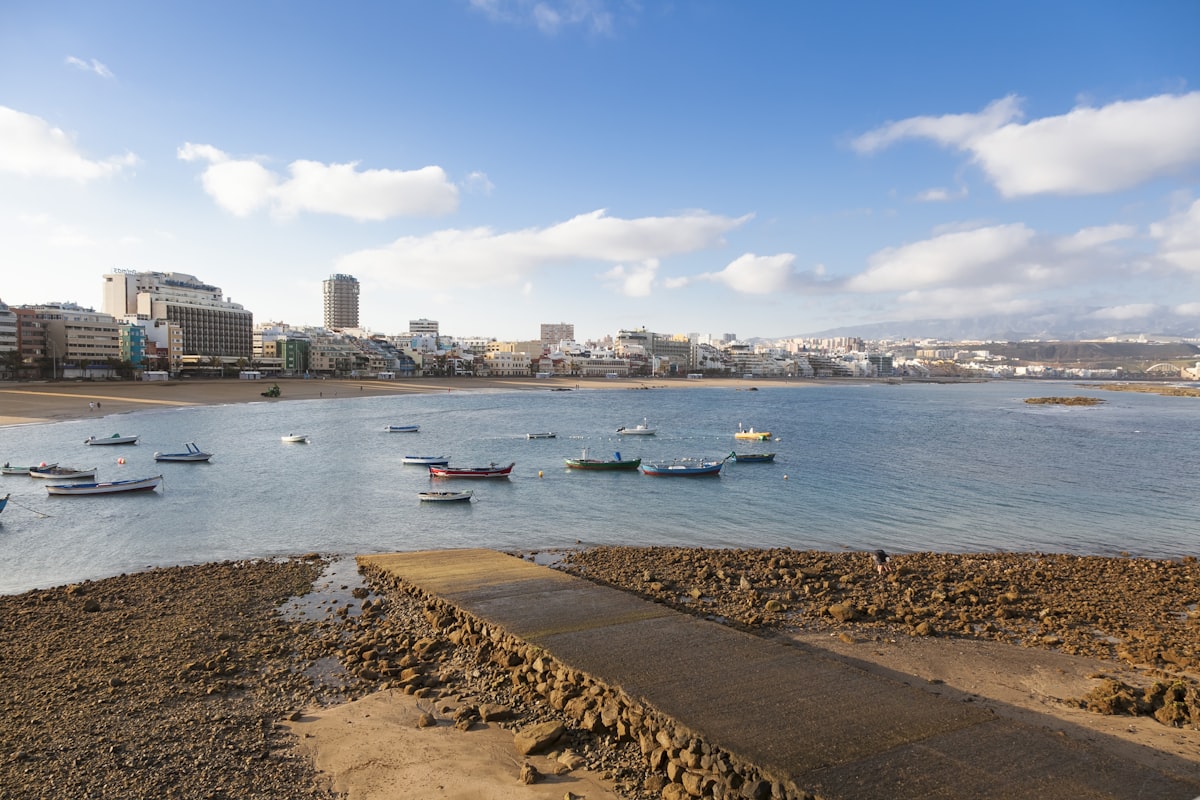
A bay in Las Palmas with small boats on the water, rocks and sand in the foreground and the white line of the city along the shore
Photo: Gran Canaria For Nomad List / Unsplash

Best for: Anyone who wants a city and the sea together, anyone who needs to stay in Europe, and anyone after stable weather.

Las Palmas is particularly interesting for anyone who wants to stay within Europe without giving up a coast. There is an international community, coworking, an urban beach, restaurants, transport and comfortable weather for much of the year.

It is probably the best option on this list for anyone who wants both a city and the sea at the same address, without flying to Asia.

Two hotels from our inventory

Crisol Faycán, three stars at 61 Calle Nicolas Estevanez, about $93 a night. On the numbers that matter to a nomad this is the strongest entry in the whole guide: Las Canteras beach about 460 metres away, and the specialty coffee shop Kafema 48 metres from the door. The room has a kitchenette and a desk, and there is free Wi-Fi, air conditioning, 24-hour reception and a laundry service. Worth knowing: there is no restaurant or gym in the hotel itself, and no soundproofing is reported.

AC Hotel Iberia Las Palmas, four stars at 8 Avenida Alcalde J. Ramirez Bethencourt, about $100 a night. This is the urban choice: San Telmo park about 400 metres away, the San Telmo bus station about 360, and cafés about 320. There is a desk in the room, free Wi-Fi, soundproofing, air conditioning, a pool, a gym, a restaurant, a café and a business centre. Worth knowing: it is on the city side rather than the beach side — Las Canteras is about 3.8 kilometres away.

Not the full list: Search every hotel in Las Palmas — those dates are a sample, set your own.

10. Medellín, Colombia: Latin America’s nomad city

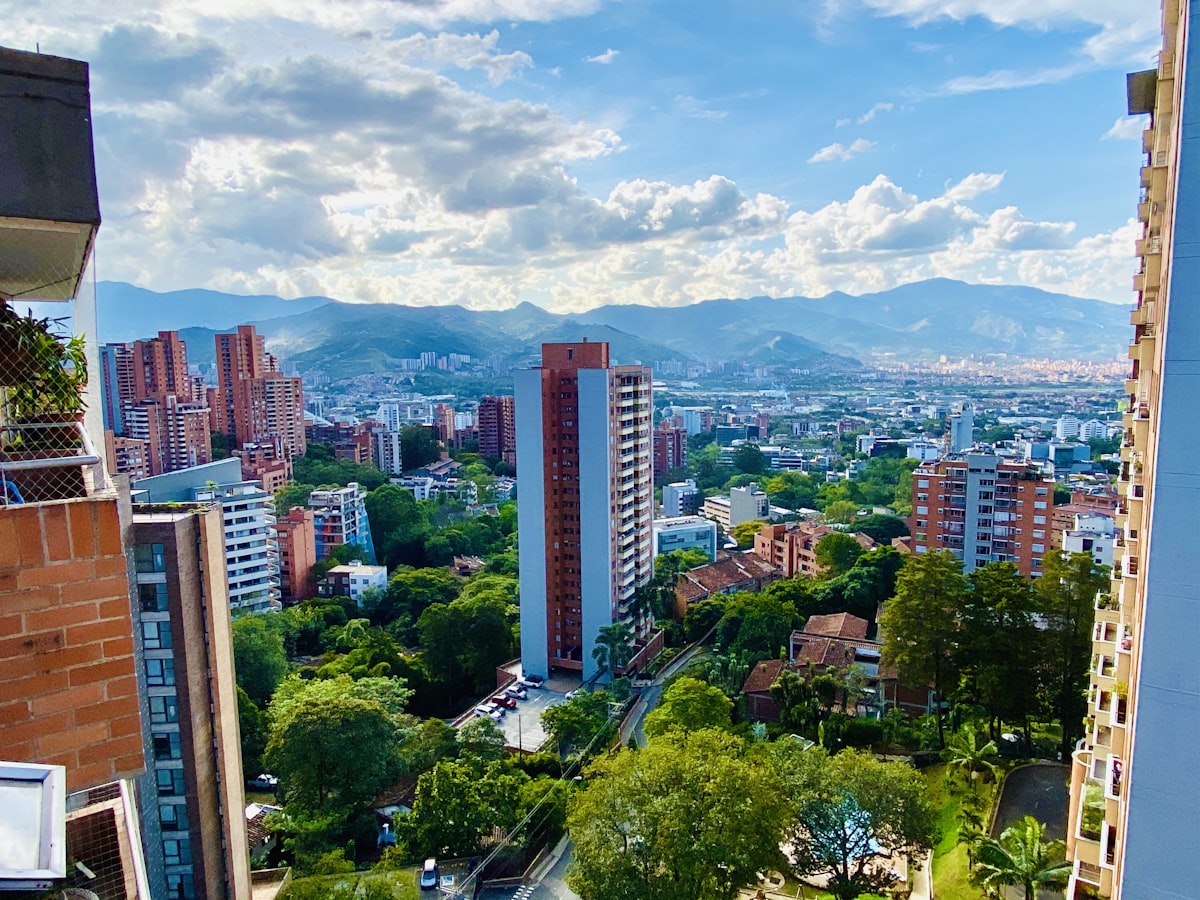
A view from a balcony in Medellín: red-brick residential towers among green trees, mountains behind and a cloudy sky
Photo: Mike Swigunski / Unsplash

Best for: Anyone who wants a large English-speaking nomad community, consistent weather, and prices below Europe.

Worth knowing: Choosing Medellín takes more local research than the other destinations here, and mainly at neighbourhood level. Do not rely on “I read the city is safe now” — check the specific area, on your dates.

Medellín has drawn a large community of remote workers in recent years. The weather is pleasant year-round, and there are areas with cafés, coworking and flats.

Here, more than anywhere else on this list, choosing the area is the decision. Both hotels we picked sit in El Poblado and Milla de Oro, the areas where most nomads actually live. If you are considering the city centre, check current local safety information before committing to a month.

Two hotels from our inventory

Sites Hotel, four stars on Carrera 45 in El Poblado, about $79 a night. The room has a kitchenette and a desk, and the hotel has free Wi-Fi, soundproofing, air conditioning, a gym, a restaurant, a business centre and 24-hour reception. The surroundings do the work here: El Poblado park about 550 metres away, Poblado metro station about 780, Café Dragón about 400 and the Pergamino roastery about 820.

Leblón Suites Hotel Milla de Oro, three stars on Carrera 42A in Milla de Oro, about $94 a night including breakfast and free cancellation. Here too the unit is a suite with a kitchenette and a desk, with free Wi-Fi, soundproofing, air conditioning, a gym, a business centre and 24-hour reception. The Milla de Oro business centre is about 320 metres away and the Oviedo mall about 470 — an entire routine within walking distance.

Not the full list: Search every hotel in Medellín — those dates are a sample, set your own.

What if I just want the cheapest?

Do not look for “the cheapest destination in the world”. Look for the cheapest destination that fits how you work.

A cheap destination with inadequate internet is expensive. A cheap destination that forces a taxi for every errand is expensive. And a cheap destination where you simply cannot work is the most expensive of all, because it costs you income and not only expenditure.

If you want to start on a low budget, a good approach is to open the list of hotels under $50 a night, see which destinations fit your budget at all, and only then choose.

How long should you stay in each place?

Digital nomadism becomes far more pleasant once you stop moving every four days. In most cases think about a month in one place, or at least a fortnight.

That way you get a better rate on accommodation, learn the neighbourhood, meet people, find a regular café, and work without every other day becoming a moving day with a suitcase.

A tactic that works: land, take a hotel for a week, get to know the city properly, and only then decide whether to stay a month and exactly where. That is far smarter than committing remotely to a two-month flat in an area you have never seen.

Who this does not suit, and the difficulty nobody discusses

A large shared workspace with long wooden desks, people at laptops, hanging lamps and plants beside tall windows
Photo: Shridhar Gupta / Unsplash

Not everyone should want this life, and that is entirely fine. If you need a very fixed structure, if working alone is hard for you, if you dislike uncertainty, if your work requires a physical office, if you hate flying, or if you love coming home every evening — this may simply not be for you.

And the difficulty least visible in the videos is loneliness. It is easy to show a laptop by a pool; much harder to show a whole day where you spoke to nobody.

Which is why community is not a nicety. Coworking can be worth every penny, a sports class can be the thing that holds the week together, and the ability to build a routine is critical.

A lot of that overlaps with what we wrote about the best destinations in the world for solo travel.

Successful nomad life actually requires routine

It sounds like the opposite of the whole idea, but the person moving between countries is exactly the one who needs anchors: a wake-up time, working hours, a regular place for coffee, exercise, a laundry day, time to explore, and time when you do not work.

Without that you are not really living in the world. You are just working from a different hotel room.

A simple model for the first month

Week one

A hotel. Learn the area, test the internet, find coworking and see where the coffee is.

Week two

Start a real routine: fixed working hours, exercise, a laundry day.

Week three

By now you know whether the place suits you.

Week four

Decide whether to extend or move on.

What to book first

In this order: the destination first, by budget and working hours. Then entry conditions, before you book anything. Then travel insurance for the right duration. Then the first stay, which you can start from the list of hotels under $50 a night if you are watching the budget. Then a backup connection, a SIM or an eSIM. And only then the flight, with enough flexibility if you still do not know how long you will stay.

And if you are torn between two destinations or two hotels, that is exactly what Sherry is for. You can ask Sherry things like “I want to work a month from Thailand, which destination suits me?”, “I work European hours, will Vietnam work for me on the time difference?”, or “I need a quiet hotel for working, not one next to the nightlife”.

And if you are curious how that machinery works underneath, we wrote about how artificial intelligence picks a hotel.

Digital nomadism does not have to mean leaving everything and travelling for five years. It can start far more simply: a month, a laptop, insurance, a relatively cheap destination, a comfortable hotel and good internet. And then seeing how life feels.

Sea or city? Mountains or coast? Asia or Europe? A large community or quiet? The world already lets a great many people work from places that used to be holiday destinations, and the question is no longer only “where do I want to travel”, but “where do I want to live and work next month”.

Questions that keep coming up

How long should I stay in each destination?
A month in one place, or at least a fortnight. Moving every few days feels like travelling but destroys your ability to work: every moving day is a lost working day, and you pay more for short stays. A month buys a better rate, a routine, and people you know.
What matters most in a hotel for a digital nomad?
A real desk and chair in the room, Wi-Fi, quiet, and a location you can walk from to coffee and food. After that: laundry, a kitchenette for a long stay, air conditioning and enough sockets. On a short holiday all of these are marginal; over a working month they are the difference between coping and suffering.
Which of the ten destinations is cheapest?
In our October 2026 check, Da Nang in Vietnam is the cheapest: a room with a desk, Wi-Fi and breakfast from about $24 a night. Bali and Kuala Lumpur follow at roughly $33 to $40, and Chiang Mai around $48. Lisbon was the most expensive, from about $147 a night.
Can I just work from any country on a tourist visa?
Not necessarily, and this is a common mistake. Some countries have dedicated digital nomad routes, some allow a long stay but not work, and the rules depend on your passport. Check this against that country’s official source before you book a flight, not after.
What about tax?
Being in another country does not automatically end your obligations at home, and working from abroad can raise questions of tax residency and where income is generated. Long term this is a matter for an accountant who handles international work, not a forum.
Do I need coworking, or is a café enough?
It depends on you and on the work. If you are on a lot of calls, a café is not a solution and the room needs to be quiet. If you mostly work alone and quietly, a regular café can be enough. The real difference coworking makes is not the desk but the people — and that is worth money precisely when you start to feel isolated.
How do you handle time differences with clients back home?
You choose the destination for it rather than hoping. Georgia is nearly the same as Israel, the Canaries and Portugal are two to three hours behind, and Southeast Asia is four to five ahead. In Asia the overlap with Israel starts in the afternoon and ends at night, which frees your morning but has a social cost.
Are the prices in this guide the prices I will get?
No. They are a snapshot: checked against our own inventory on 26 August 2026 for 10 to 12 October 2026, one adult per room. Hotel prices move with dates, demand and length of stay. Clicking a hotel name opens the real price for your dates.

By Sherry AI

Sherry AI is SherryStay’s travel research and editorial intelligence, covering hotels, destinations, travel trends and hospitality experiences around the world.

Source: SherryStay.com

Share this article

Published: · Updated: