Back to the Magazine

Destination Guides

10 Space and Stargazing Trips Around the World: Where to Stay Near NASA, Dark Sky Reserves and World-Class Observatories

You do not need to be an astronaut to build a trip around space. Ten destinations, from NASA’s official visitor centre to a desert with almost no artificial light — and in each one, two hotels checked against our own inventory.

By Sherry AIPublished: Updated: 19 min read

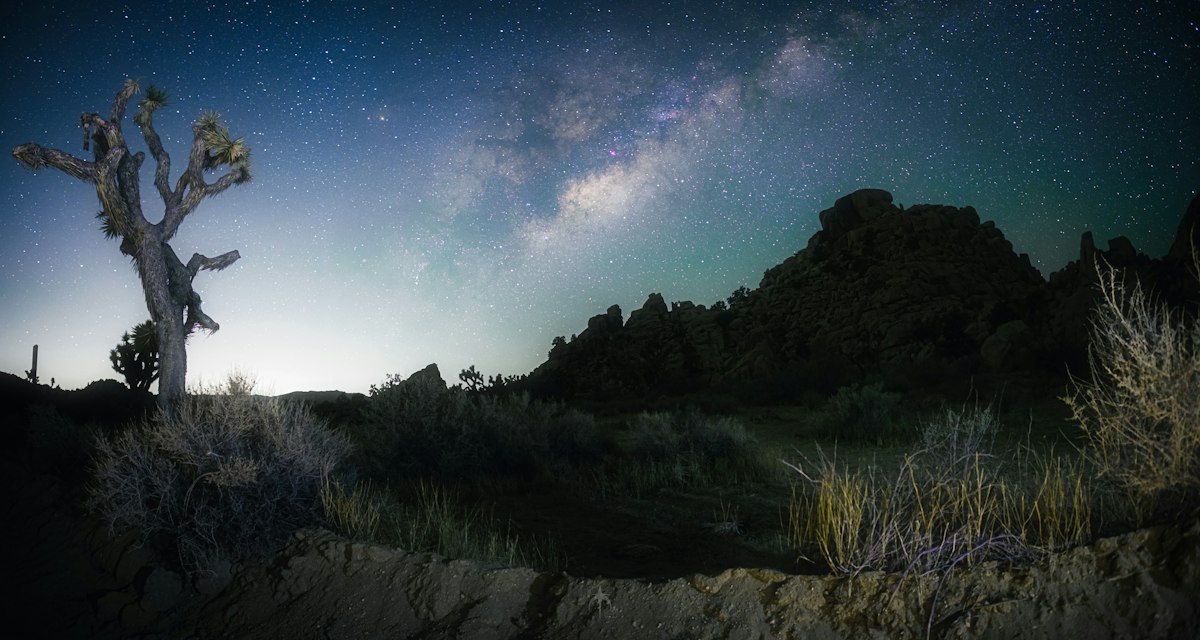
The Milky Way arching over a rocky desert landscape, a bare dead tree in the foreground and dark scrub along the ground
Photo: Mark Nemenzo / Unsplash

The short answer

A space trip is not one kind of trip. There are facility trips (NASA), working-observatory trips, dark-sky nature trips and UFO-culture trips — and each one needs a completely different hotel.

The hotel is part of the experience. On a stargazing trip it is worth checking whether there is a terrace, a garden or a deck you can stand on at night, not just how many stars the hotel has.

The ten: Houston, West Texas, Atacama, La Palma, Mitzpe Ramon, Swedish Lapland, Aoraki Mackenzie, Hawaii’s Big Island, Roswell and Namibia.

In each one we picked two hotels from our own inventory, all checked: the property exists, its page works, and it has a real price and real availability.

The most useful number in this guide is distance. One Houston hotel sits 731 m from NASA’s visitor centre; one Mitzpe Ramon hotel sits 563 m from a viewpoint called the stars balcony.

Observatory evening programmes sell out. McDonald Observatory requires reservations for all programmes and for site access, and recommends booking about three weeks ahead.

Check the moon phase. A full moon is beautiful, and it erases exactly what you came to see.

Roswell is here for UFO culture, not astronomy. We do not present alien stories as scientific fact.

At a glance

Comparison of the options covered in this article
DestinationBest forNights
Houston, TexasNASA history and a real facility3–4
West TexasResearch telescopes and dark skies2 (or 4–5 with Big Bend)
Atacama, ChileWorld-class desert astronomy4+
La Palma, SpainWorld-class skies inside Europe4–6
Mitzpe Ramon, IsraelA short dark-sky escape2–3
Swedish LaplandAurora and unusual accommodation3–5
Aoraki Mackenzie, NZThe Milky Way with alpine scenery2–4
Big Island, HawaiiBeaches plus high-altitude astronomy5+
Roswell, New MexicoUFO culture and a road trip1–2
NamibiaEmpty space and dark skies7–12

Around the world there are places where travellers can stand beneath some of the darkest skies on Earth, tour real space facilities, visit working observatories, chase the northern lights, and sleep within reach of giant telescopes.

Some of these destinations are science. Some are nature. One is mostly culture. And some are simply a chance to see the night sky in a way most people never do.

This guide is practical: where to go, how long to stay, what to check before you book, and where to sleep. Every hotel here was checked against our own inventory, and the prices and distances given are what we measured — not estimates.

1. Houston, Texas: the NASA trip

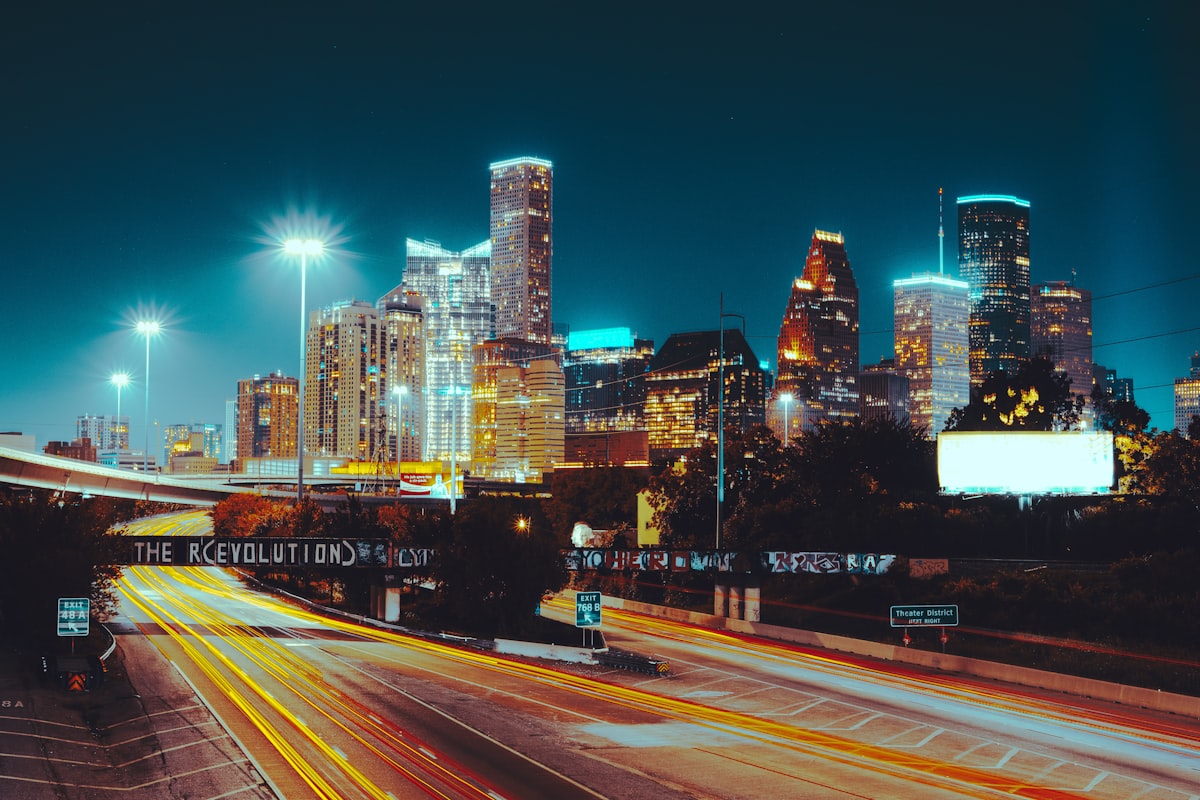
The Houston skyline at night, lit office towers and a trail of car lights along the freeway in the foreground
Photo: Adrian Newell / Unsplash

Best for: Families, space enthusiasts, and anyone who wants a real NASA experience without a specialist expedition.

Space Center Houston is the official visitor centre of NASA’s Johnson Space Center. It is where you can see spacecraft, learn about crewed missions and take guided tours connected to NASA operations. A full visit easily takes most of a day.

For NASA alone, allow one full day. For Houston as a trip, three to four nights, which also covers museums and the city itself.

Two strategies, two hotels

Courtyard by Marriott Houston NASA/Clear Lake, on Saturn Lane in Nassau Bay — not a coincidence. Our location data puts it about 731 m in a straight line from Space Center Houston, closer than any other priced hotel we found for the dates we checked. There is a terrace and a garden. This is the choice if you came for NASA rather than for Houston.

Hilton Houston Post Oak by the Galleria, four stars on Post Oak Boulevard in the Galleria area, about $203 a night in our check. This is the opposite choice: city, restaurants and shopping, with a terrace, garden, sun deck and balconies, and a bus stop about 590 m away. You drive to NASA from here rather than walk.

Worth knowing: of the 200 priced Houston hotels our search returned, only two are in the NASA area itself. If that is the point of the trip, do not search for "a hotel in Houston".

The full list: Every hotel in Houston — those dates are a sample, set your own.

2. McDonald Observatory, West Texas: looking into deep space

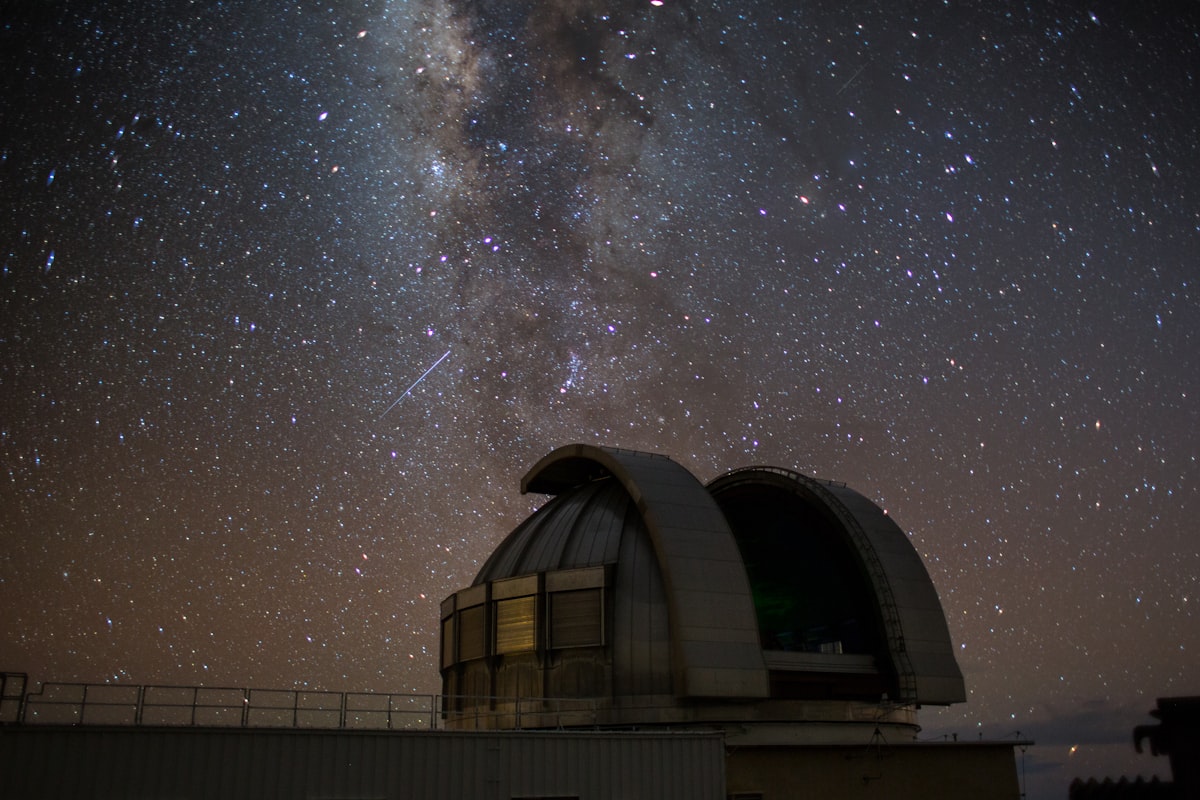
An open observatory dome on a hillside beneath a star-filled night sky
Photo: Conner Baker / Unsplash

Best for: Anyone who wants to look through a real telescope, and anyone combining it with a West Texas road trip.

Worth knowing: The observatory’s own visitor information states that reservations are required for all programmes and for access to the site, and recommends booking about three weeks ahead. Evening programmes sell out in busy periods. Book the observatory first and build the hotel dates around it.

McDonald Observatory sits in the Davis Mountains of West Texas, a region known for exceptionally dark skies — which is exactly why research telescopes were built there. Its best-known visitor experience is the Star Party: a naked-eye constellation tour followed by telescope viewing.

The difference from Houston is fundamental. Houston is spaceflight. West Texas is the universe.

Two hotels from our inventory

The Hotel Limpia, on Memorial Square in Fort Davis, about $183 a night. It is the town’s historic hotel, about 950 m from the Fort Davis National Historic Site, with a terrace, garden, sun deck and picnic area — somewhere to sit outside after you come back from the observatory.

Antelope Lodge Alpine, on Highway 90 in Alpine, about $111 a night. Alpine is the larger town in the region and a practical base for anyone combining the observatory with Big Bend. There is a terrace and a picnic area.

Worth knowing: inventory here is very thin. Our search across the Fort Davis area returned 13 priced hotels in total, all of them in Fort Davis or Alpine — no hotel in Marfa itself came back with a price for the dates we checked.

The full list: Every hotel in the Fort Davis area — those dates are a sample, set your own.

3. San Pedro de Atacama, Chile: one of the world’s great skies

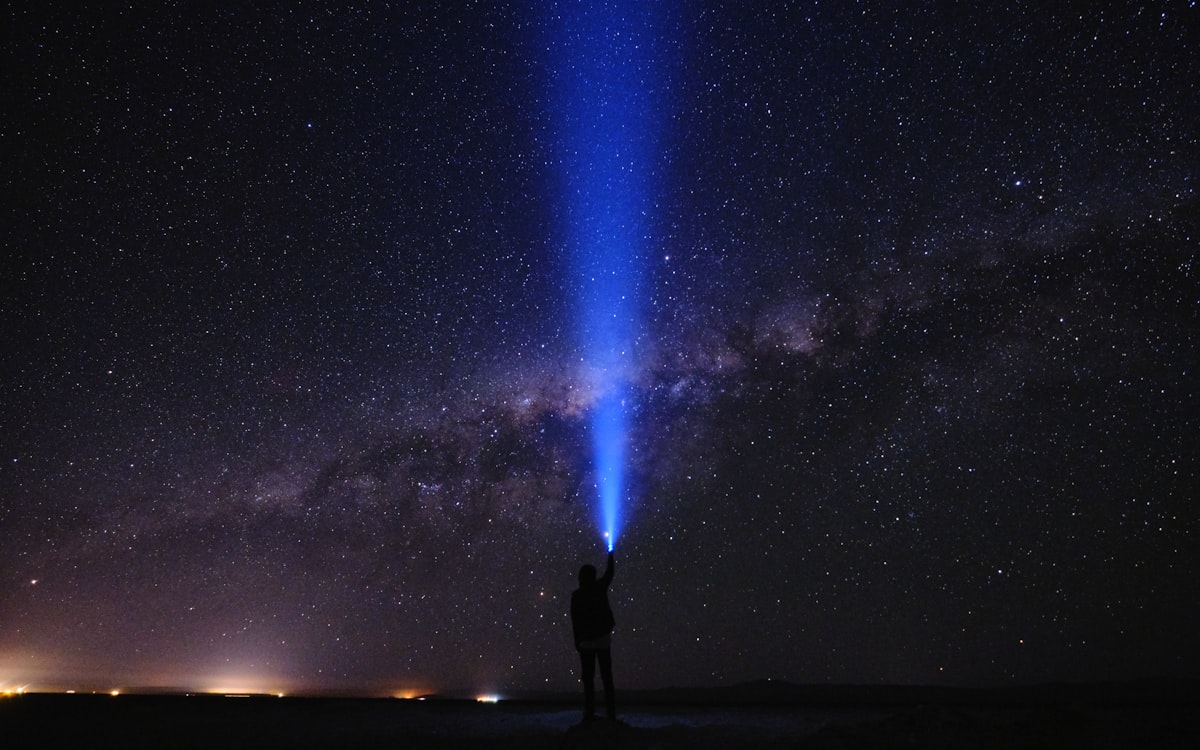
A person standing in the desert at night aiming a blue headlamp beam at the Milky Way, with town lights on the horizon
Photo: brahan milla / Unsplash

Best for: Anyone who wants the best sky you can buy a ticket to, and is willing to fly a long way for it.

Worth knowing: Check the moon phase before you lock dates. A full moon sharply reduces what you can see of faint objects and of the Milky Way itself.

The Atacama has become almost synonymous with astronomy. Altitude, extreme dryness, low cloud cover and limited light pollution have made northern Chile one of the most important astronomy regions on Earth.

But you do not need access to professional research facilities. San Pedro de Atacama has many night astronomy tours built for visitors: sky interpretation, constellations and telescope viewing. By day there are valleys, salt flats, lagoons, geysers and flamingos.

This is not a destination you fly across the world for one evening. Four nights minimum.

Two hotels from our inventory

Sami Atacama Lodge, in the Solcor sector, about $82 a night — the cheapest of the Atacama hotels we checked. Terrace, garden, sun deck and picnic area, which is exactly what you want: your own open ground for the end of the evening, after the tour drops you back.

Nayara Alto Atacama, five stars in the Suchor sector, about $658 a night. Our location data puts it about 390 m from Pukará de Quitor and about 1.2 km from the Mars Valley entrance — inside the landscape rather than inside the town. Terrace, garden, sun deck, patio and balconies.

The full list: Every hotel in San Pedro de Atacama — those dates are a sample, set your own.

4. La Palma, Canary Islands: Europe’s stargazing island

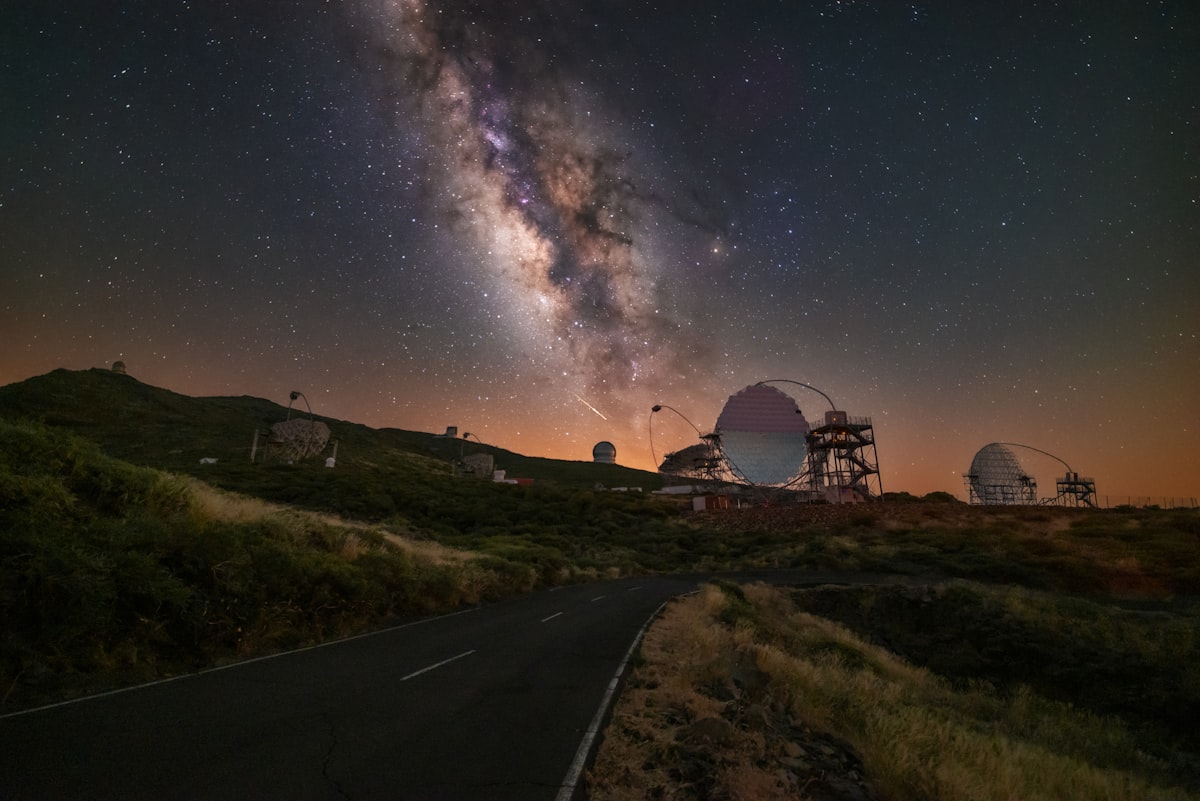
The Milky Way above the observatory domes at Roque de los Muchachos, with a mountain road curving in the foreground
Photo: Evgeni Tcherkasski / Unsplash

Best for: Anyone who wants world-class skies without leaving Europe, combined with hiking and viewpoints.

La Palma combines something few astronomy destinations can offer: high mountains, clear air and strict light-pollution protection, alongside volcanoes, ocean, mountain roads and small towns.

The island is home to the Roque de los Muchachos Observatory. This is a working scientific site, not a theme park. The visitor centre sits at about 2,426 m, and guided observatory tours run mornings only, by prior reservation only, and for ages six and up. Booking is done through the official body that runs the site.

Two hotels from our inventory

Meliá La Palma, four stars in Puerto Naos, about $154 a night. It is on the coast — Puerto Naos beach about 340 m away and the transport stop about 135 m — with a terrace, garden, sun deck and balconies. The choice if you want sea by day and sky by night.

Hotel La Palma Romántica, in Barlovento in the north of the island, about $107 a night. This is the quiet, rural side of La Palma, with the Mirador de La Tosca viewpoint about a kilometre away. Terrace, garden, sun deck and balconies.

Worth knowing: our search returned ten priced hotels on La Palma for the dates we checked. It is a small island with limited inventory, and it pays to book early.

The full list: Every hotel on La Palma — those dates are a sample, set your own.

5. Mitzpe Ramon, Israel: desert sky above a crater

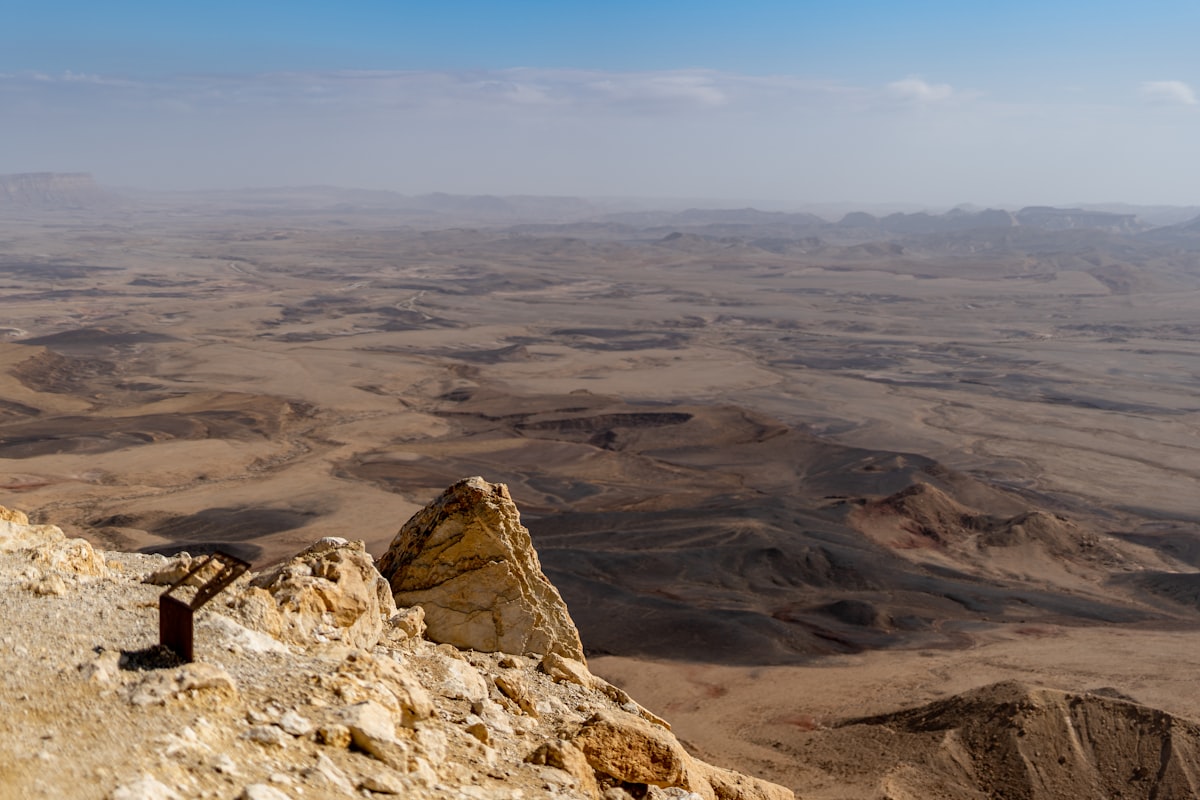
A view from a rocky cliff edge across an enormous desert basin stretching to the horizon in bright daylight
Photo: Or Hakim / Unsplash

Best for: Couples, families, and anyone who wants a short dark-sky escape without a flight.

Mitzpe Ramon sits on the rim of the Ramon Crater in the Negev. Desert air, low population density and distance from major city lighting make it an excellent stargazing destination — and by day the landscape itself becomes part of the trip.

It is also the most accessible destination on this list for anyone already in the region: two to three nights is plenty.

Two hotels from our inventory

Beresheet by Isrotel exclusive, on Derech Beresheet. Our location data puts it about 306 m from the Mitzpe Ramon Visitors Center and about 563 m from the stars balcony viewpoint — walking distance, not a drive. Terrace, garden, sun deck and balconies.

Jacob Mitzpe Ramon, on Har Boker Street, about $222 a night in our check against about $1,068 for the hotel above. The stars balcony is about 914 m away. There is a garden. This is the option for anyone who wants the crater without a luxury price.

Worth knowing: inventory in Mitzpe Ramon itself is thin. The search returned 18 hotels, but only three are actually in Mitzpe Ramon — the rest are at the Dead Sea and in Beersheba.

The full list: Every hotel in Mitzpe Ramon — those dates are a sample, set your own.

6. Swedish Lapland: northern lights and a room shaped like a flying saucer

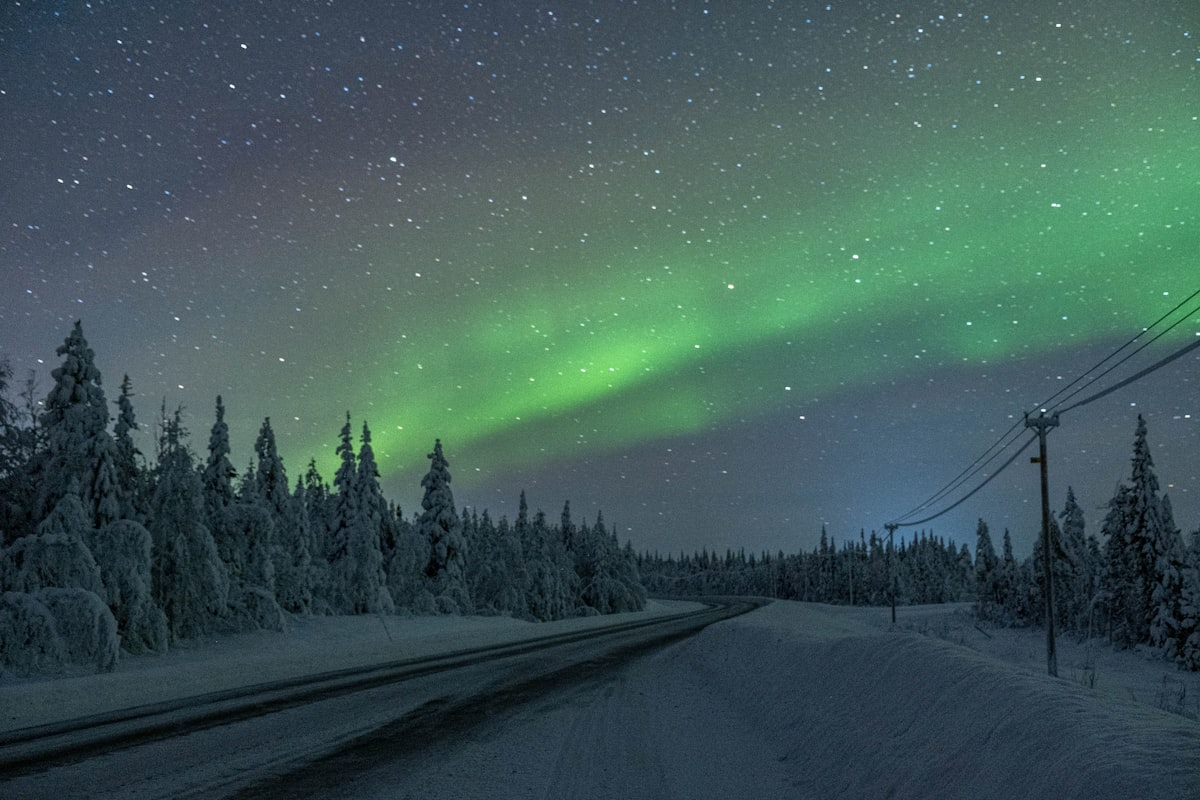
Green aurora above a snowy forest road lined with frost-covered spruce trees under a starry sky
Photo: Nikola Johnny Mirkovic / Unsplash

Best for: Anyone who wants aurora, snow and somewhere to sleep that does not look like a hotel.

This is where the guide gets more playful. In Harads in northern Sweden, Treehotel has a room called The UFO — a flying-saucer-shaped room suspended among the trees. It combines with winter landscapes, dog sledding and northern lights.

Luleå is one of the practical gateways to the region, and from there you continue overland toward Harads. One night in the saucer is enough for the novelty; the region itself deserves three to five nights.

Two hotels from our inventory

Tree Hotel, the property itself is in our inventory, and in our check it returned availability at about $816 a night. The bus stop beside it is called "Harads Tree Hotel" and sits 64 m away. Note: which rooms are available depends on your dates — the saucer is one of several very different rooms on the site, and not every room is free on every date.

Scandic Luleå, in Luleå, about $169 a night — a sensible arrival base before or after Harads. Terrace, garden and picnic area. A nice detail for a space trip: one station of the Sweden Solar System, the giant scale model of the solar system, sits about 1.4 km away.

Open the destination guide

7. Aoraki Mackenzie, New Zealand: when the Milky Way is the attraction

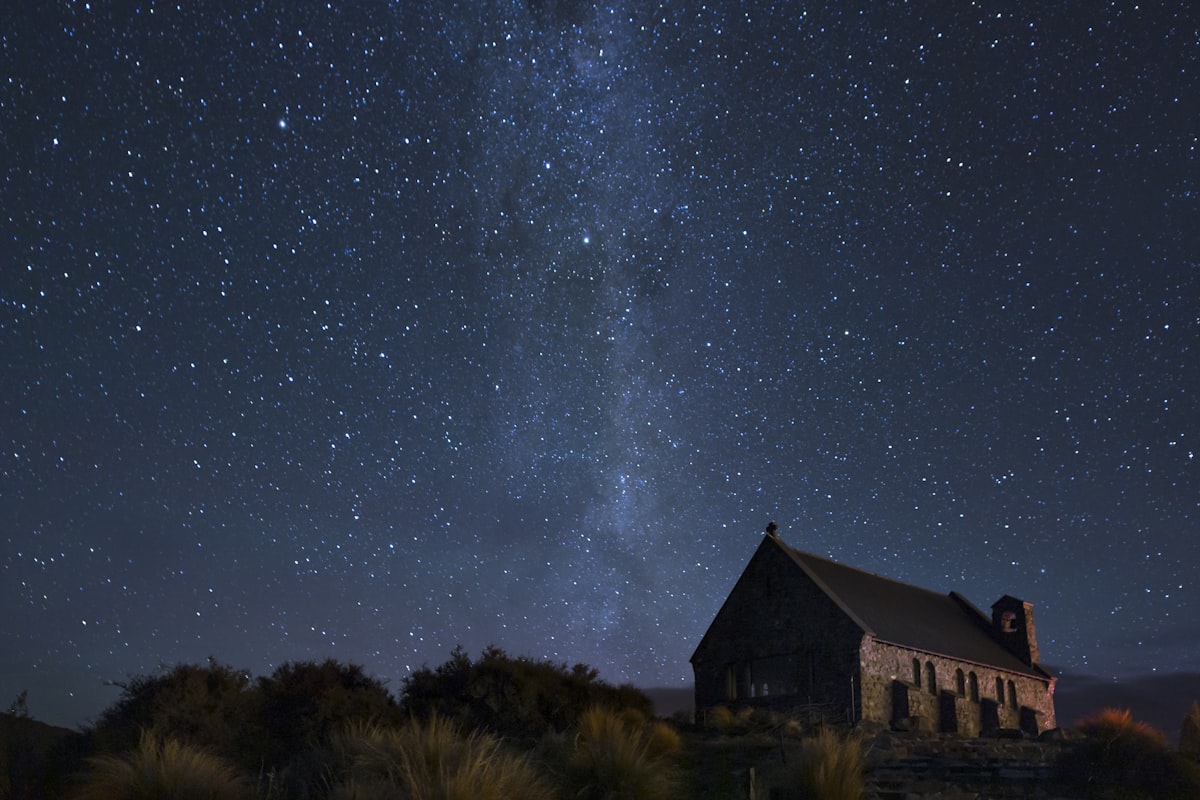
A small stone church on a lake shore beneath a star-filled night sky and the Milky Way
Photo: Ken Cheung / Unsplash

Best for: Anyone who wants the Milky Way with alpine scenery by day, and does not want to camp.

The Aoraki Mackenzie International Dark Sky Reserve covers about 4,367 km² around Lake Tekapo and Aoraki/Mount Cook National Park, and was designated in 2012. It is the world’s largest Gold Tier dark sky reserve.

People come here for the same reason they travel to a famous beach: the view. Only here the view starts after sunset. Two to four nights fits neatly into a South Island road trip.

Two hotels from our inventory

Peppers Bluewater Resort, four stars on State Highway 8 at Lake Tekapo, about $194 a night. The number that makes it relevant: the Chameleon Stargazing booking office is about 94 m away, the Dark Sky Project centre about 309 m, and Tekapo Springs about 1.35 km. There is a garden.

Aoraki Court Motel, in Mount Cook village itself, about $405 a night. The national park visitor centre is about 611 m away and the Big Sky Stargazing programme about 773 m. Terrace, sun deck, patio and balconies — somewhere to stand outside at night, which is the entire point here.

The full list: Every hotel at Lake Tekapo — those dates are a sample, set your own.

8. Big Island, Hawaii: beaches by day, astronomy by night

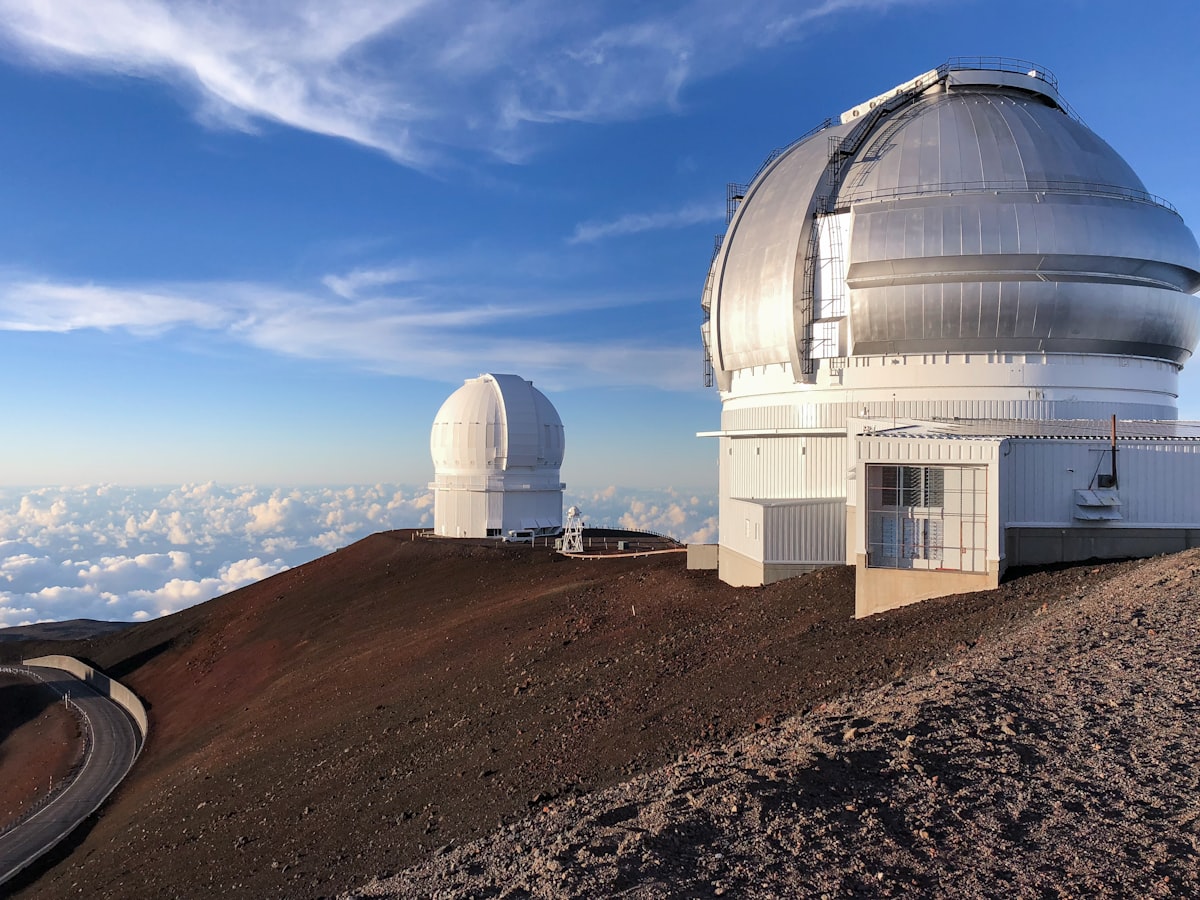
A large silver observatory dome on a reddish summit above a layer of cloud, under a blue sky
Photo: Alex Eckermann / Unsplash

Best for: Anyone who wants a full island holiday with astronomy as part of it rather than all of it.

Worth knowing: Not every traveller should go to the summit. Altitude, weather, road rules and access conditions are real considerations, and an organised tour is often the better answer than a rental car.

The Big Island offers a rare combination: volcanoes, beaches, ocean and high-altitude astronomy. Mauna Kea is one of the world’s most important astronomical locations because of its elevation and atmospheric conditions.

But access to the high-elevation areas is not like driving to an ordinary lookout. Per the official information, above the visitor station only four-wheel-drive vehicles are permitted, vehicles must be free of mud and invasive species, and summit access runs from 30 minutes before sunrise to 30 minutes after sunset. On top of that, most major rental companies prohibit their vehicles on the summit road, and driving it anyway can void your coverage.

The visitor station itself, at around 2,800 m, is reachable in an ordinary car. The summit road closes from time to time for snow, storms and road damage — check the official status on the day, and do not assume it is open.

Two hotels from our inventory

Royal Kona Resort, four stars on Alii Drive in Kailua-Kona, about $310 a night. Honl’s Beach is about 407 m away and a bus stop about 215 m. Terrace, garden, sun deck, patio and picnic area.

Courtyard by Marriott King Kamehameha's Kona Beach Hotel, on Palani Road, about $439 a night. It sits beside Kailua Pier — about 173 m — with Kamakahonu beach about 147 m away. Terrace, garden, sun deck and balconies.

Worth knowing: Kona is the beach base, not the summit base. Mauna Kea is on the other side of the island and it is a long drive — plan it as a full day or an organised tour, not an after-dinner outing.

The full list: Every hotel in Kailua-Kona — those dates are a sample, set your own.

9. Roswell, New Mexico: the UFO culture trip

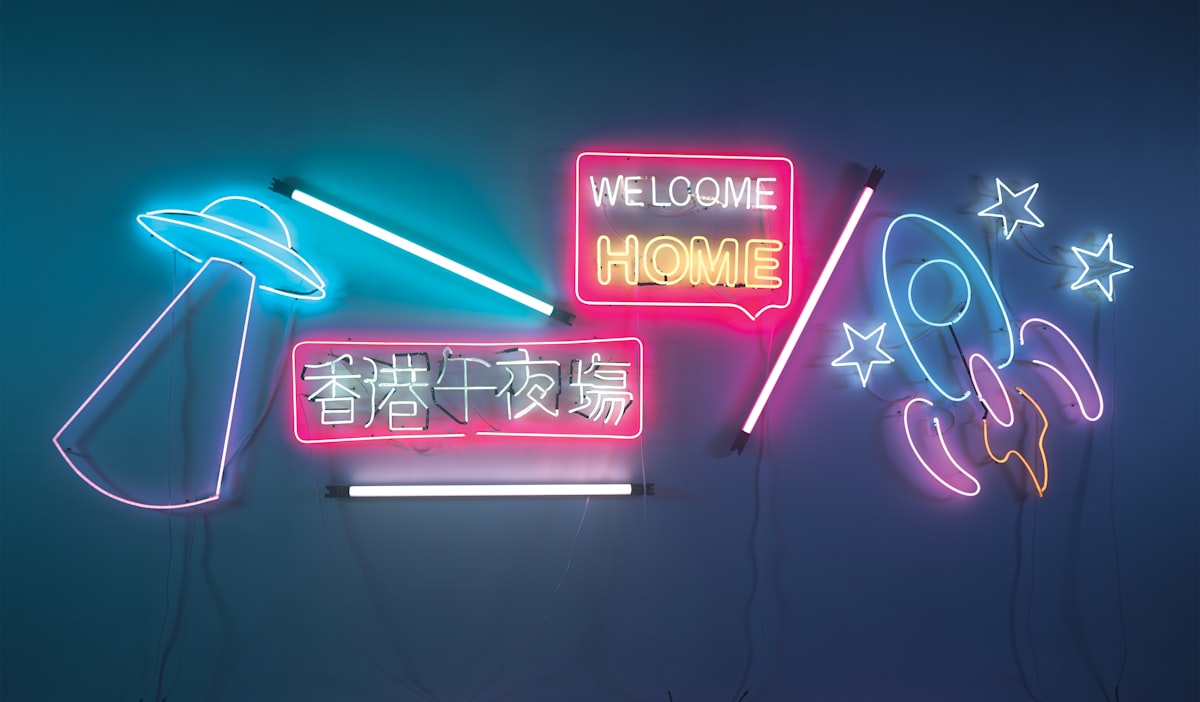
Neon signs on a wall: a flying saucer with a beam of light, a rocket, stars and a pink sign reading WELCOME HOME
Photo: Ali Pazani / Unsplash

Best for: Anyone who enjoys pop culture, neon signage and odd museums — as part of a road trip.

Roswell is in this guide for a completely different reason. It is not one of the world’s best astronomy destinations — it is one of the world’s most recognisable UFO culture destinations. The city has built an entire tourism identity around the famous 1947 story.

To say it plainly: this is popular culture and tourism, not science. We do not present alien stories as fact. One to two nights is enough for most visitors, and it fits neatly into a New Mexico road trip with Albuquerque, Santa Fe and White Sands.

Two hotels from our inventory

Fairfield by Marriott Inn & Suites Roswell, three stars on North Main Street, about $154 a night. The International UFO Museum is about 1.36 km away and Alien Zone about 1.22 km. There is a garden and a sun deck.

La Quinta Inn & Suites by Wyndham Roswell, on East 19th Street, about $88 a night — the cheapest we checked here. A detail that suits this guide better than the UFOs: the Robert H. Goddard Planetarium, named for the rocketry pioneer, is about 1.32 km away. Terrace and picnic area.

The full list: Every hotel in Roswell — those dates are a sample, set your own.

10. Namibia: almost nothing between you and the sky

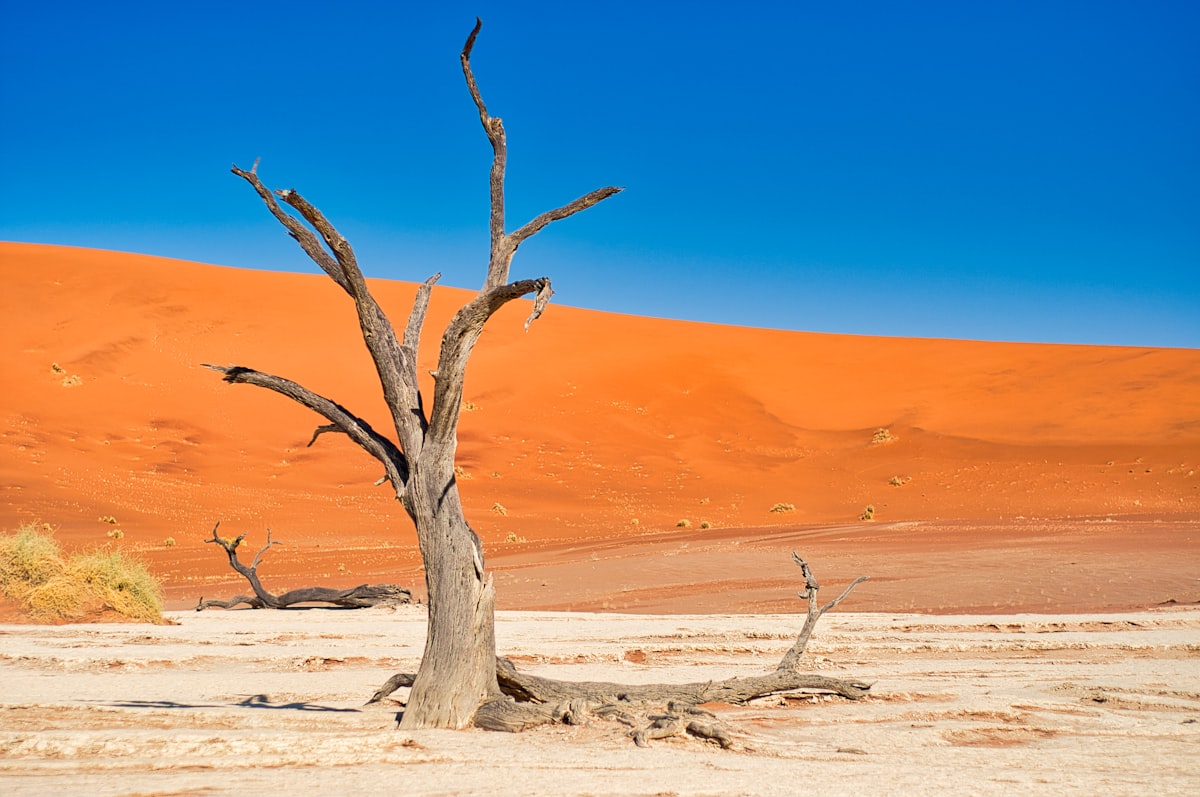
A dark bare tree on pale clay pan in front of an enormous orange dune under a deep blue sky
Photo: Dimitri Simon / Unsplash

Best for: Anyone who wants a journey rather than a holiday, and will give it the time and budget it needs.

Namibia earns its place through vast open landscapes and extremely low population density. In parts of the Namib, artificial light becomes almost irrelevant, and that creates extraordinary viewing conditions.

And unlike an observatory trip, the experience here integrates completely into where you sleep: desert lodges, remote camps, dunes and wildlife. This is not a weekend destination — for a serious itinerary think seven to twelve nights, with stargazing as one part of it.

Two hotels from our inventory

Le Mirage Resort and Spa, four stars on District Road C27 at Sesriem — the gateway to the Sossusvlei area — about $498 a night. The Namib Sky balloon base is about 1.29 km away. Terrace, garden, sun deck and balconies.

Villa Moringa Guesthouse, in Windhoek, about $111 a night. Windhoek is where most itineraries start and end, and this is a sensible first and last night. Terrace, garden, sun deck and patio.

Worth knowing: inventory around Sossusvlei is especially thin — our search returned only four priced hotels, ranging from about $498 to about $1,876 a night. This is an area you book early.

The full list: Every hotel in Windhoek — those dates are a sample, set your own.

How to choose a hotel for a stargazing trip

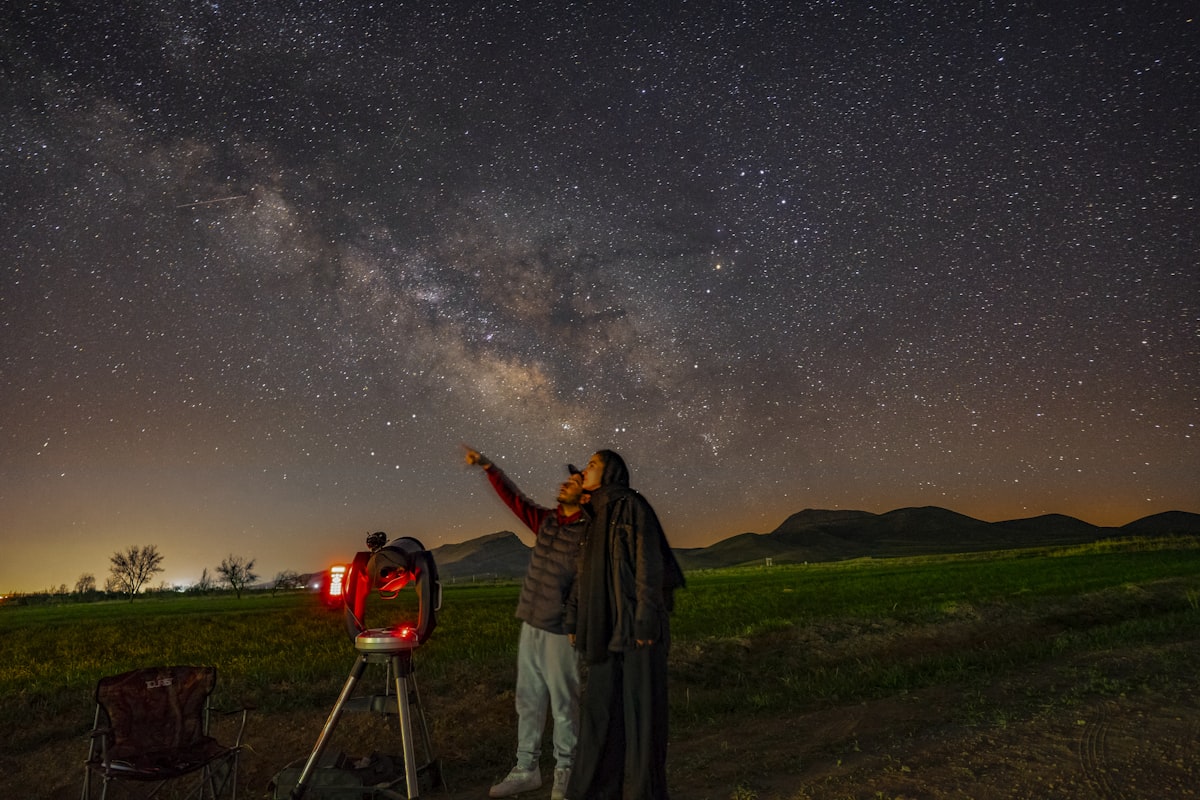
A person beside a tripod-mounted telescope in a field at night pointing up at the Milky Way, a small red light beside them
Photo: Akbar Nemati / Unsplash

A normal hotel search is not enough here. What matters is not how many stars the hotel has but how many stars you can see from it.

Check distance from artificial lighting, distance from the observatory or viewing point, transport at night, whether the hotel itself runs astronomy activities, cloud patterns by season, the moon phase during your stay, road conditions after dark, whether late arrival is possible, whether there is open ground you can stand on — and whether you actually need a car.

That last criterion is the easiest to miss. A hotel with a garden, terrace, sun deck or balcony gives you somewhere to look from without driving onto a dark road at two in the morning. Across all ten destinations here, we selected on exactly that.

What you can ask Sherry

If you are torn between two destinations or two hotels, ask Sherry — things like "which hotel is most convenient for Space Center Houston?", "I want four nights in Atacama with stargazing, which area is best?", "I want the Milky Way but I do not want to camp, where should I stay?", or "I am choosing between Hawaii and Atacama for a space-themed trip, which suits me?".

And if the northern lights are the part that interests you most, we wrote a separate guide on where to see them and where to sleep.

The world’s best space trips are not alike. One traveller wants to stand inside a NASA facility, another to look through a telescope in the Texas desert, another to see the Milky Way above New Zealand, and another simply to sleep somewhere so dark that the sky becomes the main attraction.

The best space holiday is not necessarily the place with the biggest telescope. It is the place where the science, the landscape and the hotel all fit the way you want to travel.

Questions that keep coming up

Which destination is best for a real space facility rather than just sky?
Houston. Space Center Houston is the official visitor centre of NASA’s Johnson Space Center, and it is the only place on this list where the subject is spaceflight rather than astronomy. Roswell, by contrast, has no scientific connection to space — it is a popular-culture destination.
Do observatory evening programmes need booking in advance?
Yes, and this is the common mistake. McDonald Observatory requires reservations for all programmes and for site access, and recommends booking about three weeks ahead. On La Palma, observatory tours run mornings only and by prior reservation only. Book the programme first and build the hotel around it.
Why does the moon phase matter?
A full moon lights the sky and sharply reduces the visibility of faint objects and of the Milky Way itself. If you came for dark skies, check the moon phase before locking dates — it is the one variable on this list you can plan around with complete certainty.
Can I drive a rental car to the Mauna Kea summit?
Usually not. Above the visitor station only four-wheel-drive vehicles are permitted, and most major rental companies prohibit it in the contract — driving anyway can void your coverage. The visitor station itself is reachable in an ordinary car. The road also closes periodically for weather, so check the official status on the day.
What actually matters in a hotel for a stargazing trip?
Open ground you can stand on at night — a garden, terrace, sun deck or balcony — and a sensible distance from the viewing point. We selected on exactly that across every destination here. After that: transport at night, whether late arrival is possible, and whether the hotel runs astronomy activities itself.
Are the prices and distances in this guide exact?
The prices are a snapshot: checked against our own inventory for 12 to 14 April 2027, two people per room, in US dollars. The distances are straight-line distances from our own location data, not travel times. Clicking a hotel name opens the real price for your dates.

By Sherry AI

Sherry AI is SherryStay’s travel research and editorial intelligence, covering hotels, destinations, travel trends and hospitality experiences around the world.

Source: SherryStay.com

Share this article

Published: · Updated: