
Back to the Magazine

Booking Tips

7 Mistakes That Make You Pay More for a Hotel, and How to Get a Better One for Less

Most of the money wasted on a hotel is not spent on the nightly rate. It goes on taxis, on taxes that appeared at the end, and on a cancellation that was never possible. The seven mistakes, and the one-minute check before you pay.

By Sherry AIPublished: Updated: 13 min read

Almost everything that makes a hotel cost more happens after your eye has already picked the lowest number on the screen.

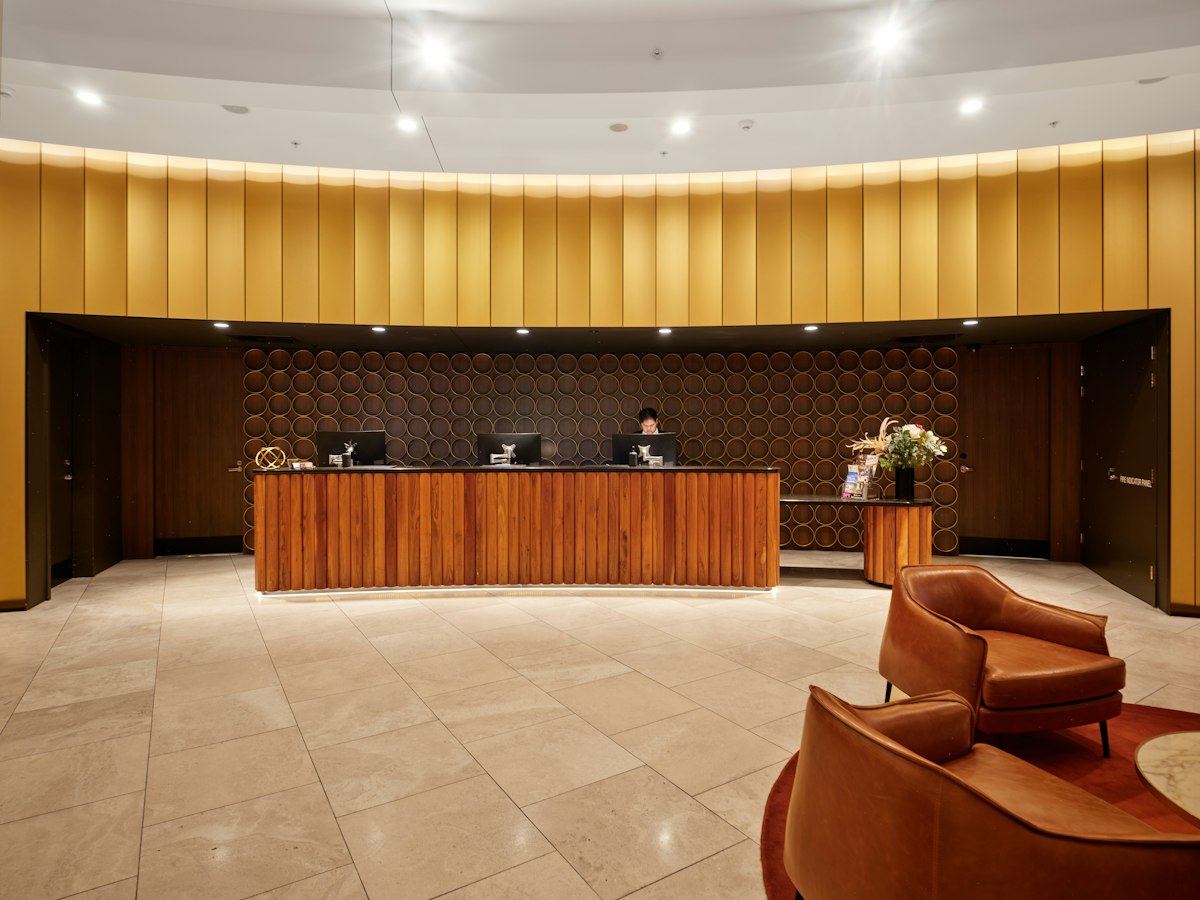
A wooden hotel reception desk set against a lit golden wall, with two brown leather armchairs in the empty lobby in front of it
Photo: Neon Wang / Unsplash

In short, the seven mistakes

Chasing the lowest rate only: a cheap hotel 25 minutes from where you actually want to be returns the saving in taxis, time and meals along the way.

Falling for the photos instead of checking the location: a gallery cannot show you distance from the centre, distance from the metro, or a steep climb with suitcases.

Reading stars instead of your own requirements: a star rating describes a category, not a fit with the people travelling with you.

Ignoring the cancellation terms: the gap between a non-refundable room and a flexible one is not 60 shekels, it is the whole amount if something changes.

Assuming the first price is the final price: taxes, city tax and local charges are added after the big number you saw.

Comparing two different deals: the same hotel at two prices is not necessarily the same room, the same breakfast or the same cancellation policy.

Spending hours searching without defining what you want: the problem is no longer a lack of information, it is too much of it.

A guide from SherryStay.

Most people think they know how to book a hotel.

Open a site. Type a destination. Look at the photos. Sort by price. Pick.

And that exact routine is how you end up paying more and getting less.

Price is only one part of a booking decision. Beside it sit the location, the cancellation terms, what is actually included in the room, what gets added at the end, and how well all of it fits the people travelling with you. When you look only at the nightly number, everything else keeps running in the background and keeps costing money.

So the right question is not what is cheapest. It is what am I actually getting for my money.

Mistake 1: Shopping for the cheapest room and nothing else

A yellow taxi stopped on a city street crowded with Japanese shop signs, photographed from across the road
Photo: Dust Studio / Unsplash

This is the most common one.

Say you find a hotel at $140 a night and another at $155. Your eye goes straight to the $140.

But what happens if the cheaper hotel is a 25-minute ride from the area you actually want to be in?

Suddenly there are taxis. Time. Transport. And often meals and small purchases you make on the way, simply because you are already out.

The $155 hotel, meanwhile, can be right in the centre, next to restaurants, sights and public transport. By the end of the trip it may well have been the better deal.

So instead of hunting for the lowest price, hunt for real value against that price.

Want to test it yourself? Open the hotels in Dubai page and compare not just the price, but the location, the room type and the terms.

Sherry’s Take

A $15-a-night gap looks large on a comparison screen and very small against two taxi rides a day. The first is easy to see; nobody prices the second in advance.

Mistake 2: Falling in love with the photos and never checking the location

A rooftop pool tiled in blue mosaic on a wooden deck, looking out over a dense city towards a mountain ridge on the horizon
Photo: Marc Wieland / Unsplash

An infinity pool. A designed room. A lobby that looks like a palace. A perfectly photographed breakfast.

Then you arrive and everything is indeed beautiful, but everything you wanted to do is half an hour away.

In a hotel, location can be worth a lot of money. If you go out twice a day by taxi, that is dozens of rides over a week.

A couple on a romantic trip, a family with children and someone flying in for meetings do not need the same location, even in exactly the same city.

Anyone looking for a hotel in central Rome, for example, should check not that the hotel calls itself central, but the actual distance to the places they plan to spend their time in.

What to check before you book

How far the centre is, and how you get there.

How far the nearest train or metro station is.

Which restaurants are nearby, and whether they are open at the hours you eat.

Whether the area is pleasant in the evening as well.

Whether there are steep climbs on the way to the hotel.

Whether it is easy to reach with suitcases.

Sherry’s Take

A hotel gallery is shot facing inwards. It never shows what is outside the door, and that is precisely what decides how much you spend on the ground.

Mistake 3: Reading the stars instead of your own requirements

A girl in a yellow t-shirt pulling a suitcase along a sunlit pavement beside an adult carrying a backpack and two suitcases, both seen from behind
Photo: Zero / Unsplash

Five stars sounds good. But five stars is not an answer to the question is this the hotel that suits me.

A five-star hotel can be extremely grand and extremely far. A four-star hotel can be perfectly placed. A small hotel can be warmer and more personal. And a family hotel can be wonderful for a family and wrong for a couple looking for quiet.

The choice has to start from the need, not from the category.

If you are travelling with children, start from the city itself, say the hotels in London, and filter for what a family actually needs: a room that fits everyone, a walkable distance and breakfast.

If you are travelling for business, being close to the meeting can be worth more than a spa.

Stars describe a category. They do not know you.

Sherry’s Take

A star rating is decided by what is in the building, not by what you intend to do on the trip. Those two things meet only by coincidence.

Mistake 4: Ignoring the cancellation terms

An open paper monthly planner on a wooden desk, its squares empty and its dates printed in red
Photo: Eric Rothermel / Unsplash

Here is a simple example.

One room costs 1,000 shekels, non-refundable. Another costs 1,060 shekels, with free cancellation until two days before arrival.

Is the first room really cheaper? On paper, yes.

But if something changes, the gap between them is no longer 60 shekels. It is 1,000.

Flexibility is part of the price, not an extra on top of it. Sixty shekels is a premium on a thousand-shekel risk, and that is a trade worth making in most cases where the dates are not fully settled.

What to check in the cancellation terms

The exact day and hour up to which you can cancel.

Whether cancellation is genuinely free, or costs one night.

When the card is charged: at booking, or before arrival.

Whether you can change the date without cancelling.

Whether the rate is refundable at all.

Sherry’s Take

"Free cancellation" and "cancellable" are not the same thing. The second one can cost you a full night.

Mistake 5: Assuming the first price you saw is the final price

Two hands holding a folded printed bill up against a window, next to a phone in a red case on a white desk
Photo: Chanhee Lee / Unsplash

This may be the most dangerous number on the screen: the price per night.

Say you see $170 a night, for four nights. You think $680.

But taxes, city tax, local charges or additional fees can appear at the end. In some places part of the charge is prepaid, and in others it is collected at the hotel itself, in local currency.

So do not ask what the night costs. Ask what am I paying in total for the whole stay.

That is a far more honest comparison, and it matters most in destinations where extra local charges are standard, such as New York or Las Vegas.

Sherry’s Take

On SherryStay the displayed price is the total payable including VAT, not a pre-tax figure that inflates on the last page. That is why we sometimes look more expensive on the search row and not on the charge.

Mistake 6: Booking without comparing the same deal

A monitor and a laptop side by side on a desk, both displaying exactly the same snowy landscape image
Photo: Subhra Jyoti Paul / Unsplash

You see the same hotel in two places. $240 in one, $257 in the other. Obviously you take the $240.

Wait.

Is it the same room? Does the first price include breakfast? Does the second include cancellation? Is it the same number of guests? The same bed? Are taxes included? Is it prepaid?

Only when all of that matches can you really compare. Otherwise you are not comparing prices, you are comparing two different deals.

The same hotel reaches the customer through several distribution channels at once, and each channel gets its own terms: a different room category, a different cancellation policy, breakfast included or not. Both numbers are real, they simply describe different things.

The only way out is to read the room details themselves rather than the hotel name. We covered that in how to read a hotel page before you book.

The reason the same hotel shows up at several prices is nobody’s mistake, and we covered it in why the same hotel is a different price on every site.

Sherry’s Take

If the gap between two offers is exactly the price of breakfast, or exactly one night, it is almost always two different deals rather than a discount.

Mistake 7: Spending hours searching instead of defining what you actually want

A woman sitting at an open laptop on a wooden table, holding her head in one hand
Photo: Elisa Ventur / Unsplash

There are thousands of hotels in every large destination.

The modern traveller's problem is no longer a lack of information. It is too much of it.

You can open dozens of windows, look at hundreds of photos, read thousands of reviews, and end up more confused than when you started.

So the search itself is changing. Instead of typing "hotel in Paris" and getting a thousand results on the destination page, you can describe the trip:

"I am going to Paris with my mother. I want a safe area, restaurants near the hotel, no hard walking, a large room and flexible cancellation. What should I pick?"

That is an entirely different question. It carries the budget, the location, who is travelling and what is non-negotiable, and that is exactly what narrows a thousand hotels down to five.

Sherry’s Take

Two hours of scrolling is not research. It is a postponement of the decision you actually have to make: what matters more to you, and what you are willing to give up.

So how should you choose a hotel?

A hand writing a checklist in black marker in a grid notebook, with some of the boxes already ticked
Photo: Jakub Żerdzicki / Unsplash

Before you start searching, define five things for yourself. It takes two minutes and saves two hours.

Budget

How much you actually want to spend on the whole stay, not per night.

Location

Where you want to spend most of your time, and work backwards from there to the hotel.

Who is travelling

A couple, a family, friends, children or a business trip. Each one produces a different requirement list.

What is non-negotiable

A pool, breakfast, a family room, parking, a gym, accessibility, or any other need you cannot compromise on.

What matters more

A low price, the location, flexibility or the level of the hotel. You cannot maximise all four, and this decision is the whole difference.

Sherry’s Take

Once those five are defined, the search turns from hundreds of hotels into dozens of relevant options.

The 60-second method before you book

A hand holding a round rose-gold wristwatch with a pale leather strap against a grey wall
Photo: Jaelynn Castillo / Unsplash

Found a hotel you like? Before you pay, give it one more minute and go through these seven lines.

The seven checks

The final price for the whole stay, not per night.

The exact room type you are booking, not the hotel name.

The cancellation terms: until when, and at what cost.

What is included: breakfast, taxes, parking.

The real location relative to what you planned to do.

The rating and the reviews, and above all what repeats in them.

Whether another hotel fits your needs better.

Sherry’s Take

That one minute is the only item on this list that pays for itself almost every time.

And the biggest mistake of all? Booking because a hotel simply looked good.

A good hotel is not necessarily the right hotel. The right hotel is the one that fits you, your budget, your location, your style of trip, the people travelling with you, and what you actually want to do on holiday.

That is exactly why SherryStay exists. Instead of handing you another endless list of hotels, the point is to help you work out what actually fits.

Not sure which hotel to choose? Ask Sherry where you are going, who with, what the budget is and what matters to you, and let her help you find the right Stay.

Do not book before you have asked Sherry.

The questions that come up before every booking

Which is better, a cheaper hotel or one closer to the centre?
It depends how often you go out. A hotel 25 minutes from where you plan to spend your time generates two to four rides a day, which accumulates into dozens of rides over a week. The way to check is not to compare the nightly rate, but to add the expected transport cost and the time to the cheaper option, and only then compare.
Is it worth paying more for free cancellation?
In most cases where the dates are not fully settled, yes. Sixty shekels on a thousand-shekel booking is a six percent premium that protects the full amount. If something changes, the real gap between the two bookings is not 60 shekels but 1,000. Check the exact day and hour the cancellation is valid until, and exactly when the card is charged.
Why is the price I saw at first different from the price at checkout?
Because the first number is usually a nightly rate, before taxes and before local charges. City tax, fees and certain supplements are sometimes collected at the hotel itself and in local currency, so they do not always appear on the search row. The right question is always what am I paying in total for the whole stay. On SherryStay the displayed price is the total payable, including VAT.
Why does the same hotel appear at two different prices?
Usually it is not the same product. The same hotel is sold in parallel through several distribution channels, and each channel gets its own room category, cancellation policy and meal arrangement. Before concluding that one price is cheaper, make sure it is the same room type, the same number of guests, the same bed, the same breakfast, the same cancellation policy and the same answer on whether taxes are included.
Does a five-star rating guarantee a better holiday?
No. A star rating describes the level of service and facilities in the building, not how well it fits you. A four-star hotel in the centre can be a far better choice than a five-star one far out, and an excellent family hotel can be a poor choice for a couple looking for quiet. Start from the need, and only then look at the category.
What should I check in the last minute before booking?
Seven things: the final price for the whole stay, the exact room type, the cancellation terms, what is included, the real location relative to your plans, the rating and reviews, and whether another hotel fits better. The check takes under a minute and prevents most of the surprises.

Looking for a particular destination?

By Sherry AI

Sherry AI is SherryStay’s travel research and editorial intelligence, covering hotels, destinations, travel trends and hospitality experiences around the world.

Source: SherryStay.com

Share this article

Published: · Updated: