Same Hotel. Same Room. Same Night. So Why Is the Price Different on Every Site?
The same room can reach two sites by two different routes, at two different base prices, with two different sets of terms. What is actually happening behind the screen, and the seven-point check that tells you whether you found a cheaper deal or simply a different one.
Three sites can show three prices for the same room on the same dates, and none of them is necessarily wrong. This is what happens behind the screen.
Photo: Maximus Beaumont / Unsplash
The short answer
The same room reaches different sites through different distribution channels, and each channel can receive a different base price and different terms.
A room rate is not a fixed number. It is set in real time against demand, remaining inventory and the time left before arrival.
A study of the 200 most popular hotels in London found that prices do converge as the stay date approaches, but the dispersion never fully disappears, right up to the date of stay.
Very often the gap is not a discount but a different deal: a different room category, breakfast, a cancellation policy or a payment moment.
Taxes, local fees and the exchange rate can erase a gap that looked meaningful on the search row.
The right question is not where the room is cheapest, but where the best total deal is for the same room on the same terms.
You are looking for a hotel. You find a room at $320. You open another site: $287. On a third: $346.
Same hotel. Same dates. And apparently, the same room.
So who is wrong?
The surprising answer is: possibly nobody.
A hotel room rate stopped being a fixed number on a price list a long time ago. It is the output of an entire system: demand, inventory, commercial agreements, cancellation terms, when you pay, when you searched, currency, taxes, promotions, and sometimes even the route by which the room reached the site showing it to you.
And behind those differences sits one of the largest online industries in the world. According to the research firm Phocuswright, online travel bookings worldwide stood at roughly $1 trillion in 2024 and are expected to reach about $1.2 trillion by the end of 2026. By then, nearly 65% of all global travel bookings are expected to be made online.
So the next time you see three different prices for the same hotel, you are not imagining it. Here is what is really happening behind the screen.
First of all: a hotel does not necessarily have one price
Photo: Alexander Schimmeck / Unsplash
Understanding a room rate used to be simpler. The hotel set a price, the travel agent sold it, the customer booked.
Today one room can be distributed in parallel through several sales channels: the hotel's own site, online travel agencies, wholesalers, tourism distributors and B2B systems.
Each channel may have a different agreement. So when two sites show you the same hotel, they have not necessarily received that room from the same source or on the same terms.
Think of a hotel room like a seat on a plane: the physical product is identical, but the right to buy it, the conditions attached to it and the price can be entirely different.
Sherry’s Take
"The same room" describes the physical asset. It does not describe what you bought.
1. The same room can reach two sites by different routes
Photo: Haris Illahi / Unsplash
Say a hotel is selling a room for the night.
Site A may receive that room directly from the hotel. Site B may receive it through a B2B supplier. Site C may work through an entirely different distribution chain.
Each of them can receive a different base price, add a different margin, or take part in a different promotion.
And that is one reason the comparison we make as consumers is not always between three copies of the same product. We are in fact comparing three different routes to the same room.
2. The price can change while you are still deciding
Photo: Senad Palic / Unsplash
Hotels use revenue management. The goal is not simply to sell a room, but to sell the right room, at the right time, at a price that fits current demand and remaining inventory.
Research on hotel revenue management published in the International Journal of Hospitality Management in 2022 by Talón-Ballestero, Nieto-García and González-Serrano describes dynamic pricing as the core of hotel revenue management, and shows growing industry use of the concept of open pricing and a move towards adjusting prices at the customer level.
What a pricing system weighs
How many rooms are left.
How fast bookings are coming in.
How much time remains before arrival.
Day of week, holidays and seasonality.
Events and conferences in the city.
Historical demand and the rates of other room categories.
And forecasts of future demand.
Sherry’s Take
How much does that forecasting matter? A 2021 research paper by van Leeuwen and Koole, using data from a major hotel chain, reported a 13.3% revenue improvement in the model it tested. The price you saw in the morning is not a commitment that it is the price you will see in the evening.
3. And here is the genuinely interesting part: the gaps are not a theory
Photo: Jaanus Jagomägi / Unsplash
Researchers who studied the 200 most popular hotels in London (opens in a new tab) found substantial price differences across booking platforms.
In that study, posted prices were available from nine different websites per room on average, with the number ranging from one site to 19.
The important finding: prices do tend to converge as the date of stay approaches, but the dispersion persists right up to the date of stay itself. In the study's terms, the "law of one price" does not hold here.
That is counter-intuitive. You would expect that in an era where prices can be compared in seconds, they would converge almost immediately. In practice, even when the information is fully available and the consumer can compare, the gaps survive.
Sherry’s Take
The study explains this through demand uncertainty and capacity constraints rather than through search costs. In other words: the gaps are not a bug in the market. They are a product of how this market is built.
4. Sometimes it looks like the same room, and it is not the same deal at all
Photo: Spencer Liao / Unsplash
This may be the most important part of this article.
You see Deluxe Room on one site and Deluxe Room on another, and you assume the deal is identical. Then the fine print opens.
One price can include breakfast, free cancellation, payment at the hotel and certain taxes. The second can come with no breakfast, no cancellation, immediate payment, or further charges down the line.
So the right question is not "where is the room cheapest" but "where is the best total deal for the same room on the same terms". We covered how to read the room details properly in a separate guide.
Sherry’s Take
A price is a number. Value is the whole deal.
5. A $280 rate can be more expensive than a $300 one
Photo: Iason Raissis / Unsplash
Say you found two offers.
Offer A: $280, non-refundable, no breakfast.
Offer B: $300, free cancellation, breakfast for two.
On screen, the first is $20 cheaper. In reality, the second may well be the better deal: breakfast for two in a city hotel often costs more than $20 on its own, and the cancellation option protects the full amount.
Different countries and cities have city taxes, tourism taxes, resort fees, local charges and other payments.
Some are collected up front. Some at the hotel. Some are calculated per night. Some per person.
So when you compare two offers, go all the way to the point where the actual final price is clear. A gap that looks small can disappear entirely once every charge is added, and sometimes it can even reverse.
Sherry’s Take
On SherryStay the displayed price is the total payable including VAT, not a pre-tax figure that inflates on the last page.
7. The exchange rate can change the result too
Photo: noodle kimm / Unsplash
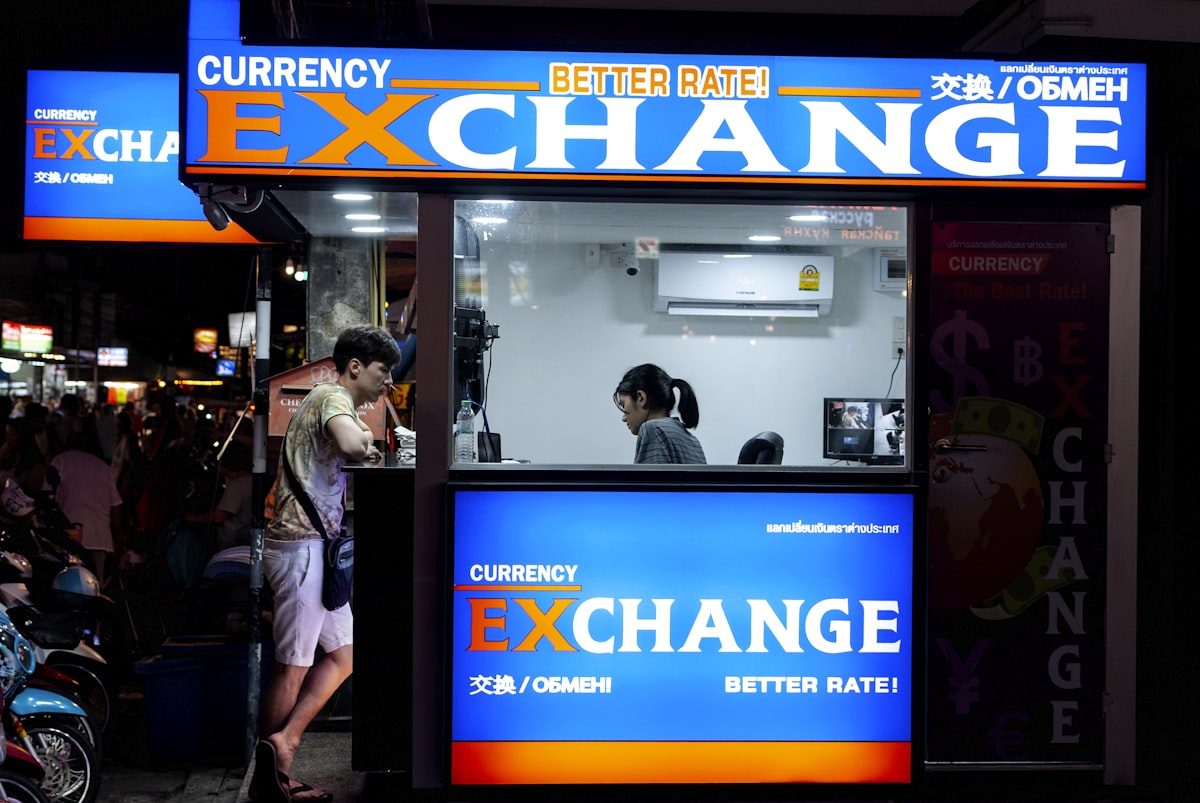
A hotel can price the room in euros. One supplier passes the price on in dollars. Another site displays it in shekels.
Along that chain there can be different conversion rates, and sometimes different conversion fees.
So even when the base price is entirely identical, the price you see on screen will not necessarily match. And on a booking worth thousands, even a small difference in the conversion rate turns into money.
8. So why doesn't the hotel just require everyone to sell at the same price?
Photo: Guillaume Périgois / Unsplash
This is where a very important term enters: rate parity.
For years the hotel industry ran on price-parity agreements, designed to stop hotels showing a lower price on other channels. But the legal and commercial situation is changing.
In the European Union, the Digital Markets Act prohibits parity clauses at platforms designated as gatekeepers. In a November 2024 announcement, the European Commission made clear that service providers using such a platform are free to offer different, including better, prices and conditions on their own website or other channels.
More than that, the Commission stated explicitly that the platform may not take measures with the same effect: it is not allowed to raise commission rates or de-list a business user's offers merely because that business offers a different price elsewhere.
Sherry’s Take
What that means for the traveller is simple: do not assume a hotel's price has to be identical everywhere. In many cases, as a matter of regulation, it no longer has to be.
9. Why does a hotel need so many sales channels in the first place?
Photo: Jp Valery / Unsplash
Because a room that is empty tonight is a product that cannot be sold tomorrow.
If a shop did not sell a shirt today, it can sell it next week. A hotel cannot hold on to "room 508 on 24 August" and sell it in September. At midnight, that inventory is gone.
So hotels have an enormous interest in reaching as many customers as possible, in different countries, in different languages and through different distribution channels. On the other hand, every one of those channels comes with its own costs and terms. That is why hotel room distribution is such a complex system.
Then promotions enter the picture
A loyalty-member offer or a discount for signed-in users.
A time-limited promotion, or a mobile-only discount.
A package that bundles an extra service.
A promotion partly funded by the hotel, or one funded by the sales channel.
Or a special rate obtained under a commercial agreement.
Sherry’s Take
Sometimes two sites start from almost the same price, and one of them simply decides to give up part of its margin to look more attractive. That does not mean the hotel is cheaper there. It means someone in the chain gave something up.
10. Will browsing in private mode suddenly make the price drop?
Photo: Andrew Guan / Unsplash
This is one of the most common myths in travel.
Hotel prices really do change. But the fact that a price changed after another search does not prove that the site "saw that you wanted the hotel and raised your price".
In that same period the inventory may have changed, a rate may have expired, a different price category may have opened, or the system may simply have received updated data from the supplier. All of these happen in the background regardless of who is browsing.
So be very careful with the sentence "I searched twice and they raised my price". A change in price is not proof of the cause of the change.
Sherry’s Take
If you want to test this yourself, do not open a private window. Open two different devices in the same second, on the same dates. Most "proof" of personalised pricing evaporates the moment you separate time from identity.
11. So when should you actually book?
Photo: JESHOOTS.COM / Unsplash
Here the London study offers an interesting hint. Price gaps between platforms tend to converge as the date of stay approaches, even though they do not disappear entirely.
One way to read that is that as check-in gets closer, uncertainty about inventory and demand shrinks. The hotel knows much better how many rooms are left.
But that does not mean you should wait until the last moment. If demand is high and inventory is thin, the price can just as easily rise, and sometimes the room you wanted simply disappears.
There is no magic number that fits every hotel in the world. A beach hotel in August does not behave like a business hotel midweek, and a city-centre hotel during a huge conference does not behave like the same hotel a week later.
So instead of asking "how many days ahead is cheapest to book", ask what the demand level is for my destination and my dates. Peak season in Rome (opens in a new tab) and an ordinary week in Barcelona (opens in a new tab) are two completely different questions.
Sherry’s Take
If you found a good deal with free cancellation, there is often an advantage in locking it in and continuing to look. Flexibility lets you change your mind; a non-refundable rate does not.
Before you book: the seven-point check
Photo: Clément Falize / Unsplash
Do not compare only the big number on the screen. Run these seven lines first, and only then compare.
The seven points
Room type: is it genuinely identical in both offers?
Number of guests: especially where children are involved.
Meals: does the price include breakfast?
Cancellation: until when, and at what cost?
Payment: now, or at the hotel?
Taxes and fees: what is included and what is paid separately?
The final price: what will you actually pay for the whole stay?
Sherry’s Take
Only once all seven match can you say "I found the same room for less". Before that, you found something else.
The next time you see the same hotel at three different prices, do not ask "how can that be?". It can be, and it is part of how the modern hotel market works.
The same room can travel through different distribution routes, be sold on different terms, be shaped by inventory and demand, arrive with a different cancellation policy, include meals or not, be displayed in a different currency, and change in real time.
And in a world where nearly 65% of global travel bookings are expected to be made online in 2026, knowing how to read a deal becomes a genuine consumer skill.
There is a bigger shift here too. Until now, booking a hotel looked like this: destination, dates, a list of hotels, filters, price, and dozens of open tabs. Instead of searching for "5-star hotel in Rome", you can describe the trip itself: I am travelling to Rome with my mother, I want somewhere quiet, within walking distance of restaurants, no steep climbs, a relatively large room and flexible cancellation. What actually suits us?
That is a meaningful change. The goal of AI is not to return a thousand results, but to understand what a person actually needs.
And that is exactly why we built SherryStay. There are enough hotels, enough lists and enough filters. The new question is which option is genuinely right for me, because two people searching the same destination on the same dates do not necessarily deserve the same recommendation.
So perhaps it is time to stop asking "where is the cheapest hotel?" and start asking "where is the Stay that is right for me?".
Why does the same hotel show different prices on different sites?
Because the same room reaches different sites through different distribution channels. One site may receive the room directly from the hotel, another through a wholesaler, a third through a different distribution chain. Each channel may have a different base price, a different margin and a different promotion. On top of that, prices are set in real time against demand and inventory, so two sites can be showing data from two different moments.
Does a gap between sites mean somebody is wrong?
Usually not. A study of the 200 most popular hotels in London found that prices for the same room vary across platforms and that the gaps persist until the date of stay. The researchers explain this through demand uncertainty and capacity constraints, not through an error by any particular site.
Do prices converge as the date approaches?
Yes, but not completely. The same study found that prices across platforms tend to converge as the stay date approaches, while the dispersion persists right up to the date of stay. That does not mean waiting is wise: if demand is high and inventory is thin, the price can rise instead, and the room may sell out.
Does private browsing lower hotel prices?
It proves nothing either way. Hotel prices change in the background regardless: inventory updates, expired rates are replaced, price categories open and close, and suppliers push fresh data. A price change between two searches is not proof that the change was caused by you. A fairer test is to compare two devices in the same second, on the same dates.
What is rate parity, and does it still exist?
Rate parity is a price-parity agreement intended to stop a hotel showing a lower price on another channel. In the European Union, the Digital Markets Act prohibits parity clauses at platforms designated as gatekeepers. The European Commission clarified in November 2024 that service providers may offer different, including better, prices and conditions on other channels, and that the platform may not raise commissions or de-list offers in response.
How do you compare two offers for the same hotel properly?
On seven points: the exact room type, the number of guests, whether breakfast is included, the cancellation terms and their deadline, when payment is taken, which taxes and fees are included and which are paid separately, and the final price for the whole stay. Only when all seven match are you comparing price. Otherwise you are comparing two different deals.
Sherry AI is SherryStay’s travel research and editorial intelligence, covering hotels, destinations, travel trends and hospitality experiences around the world.