Bermuda Beyond the Triangle: How You Actually Travel the Mysterious Island, Where to Sleep and What Not to Miss
Pink sand, underground caves, a town centuries old, and an island you can cross in an hour. Also: why tourists are not allowed to rent a car, and how that changes which hotel you choose.
For decades Bermuda has carried a reputation as a place where people disappear. In reality it is an active tourism destination with pink beaches, caves, reefs and a transport system that lets you travel without a car.
Photo: Ashley kaye / Unsplash
In short
Bermuda is not in the Caribbean. It is in the Atlantic Ocean, about ninety minutes' flight from New York.
The whole island is around 54 square kilometres, containing nine parishes and more than 30 beaches.
In 2025 it received 670,409 visitors: 199,193 by air and 467,525 by cruise ship.
Tourists are not permitted to rent a conventional car. You travel by bus, ferry, taxi, scooter or a small electric two-seater.
Which makes the hotel's position relative to transport matter more here than in most destinations.
For a first visit, four to six nights is a sensible range. The island is small, but it is not a two-day trip.
Everyone knows the Bermuda Triangle. Far fewer people know that Bermuda itself is one of the most distinctive holiday islands in the Atlantic.
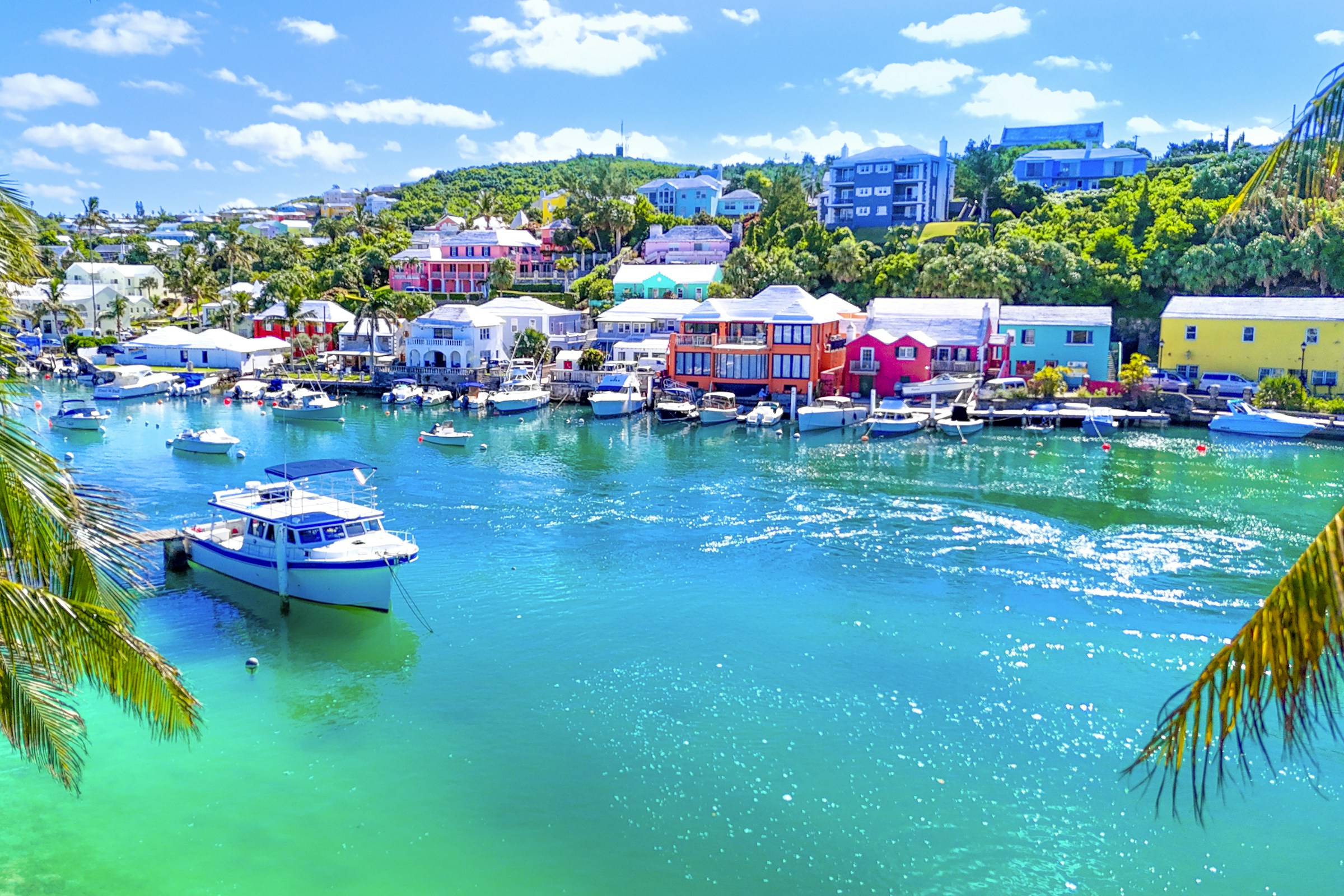
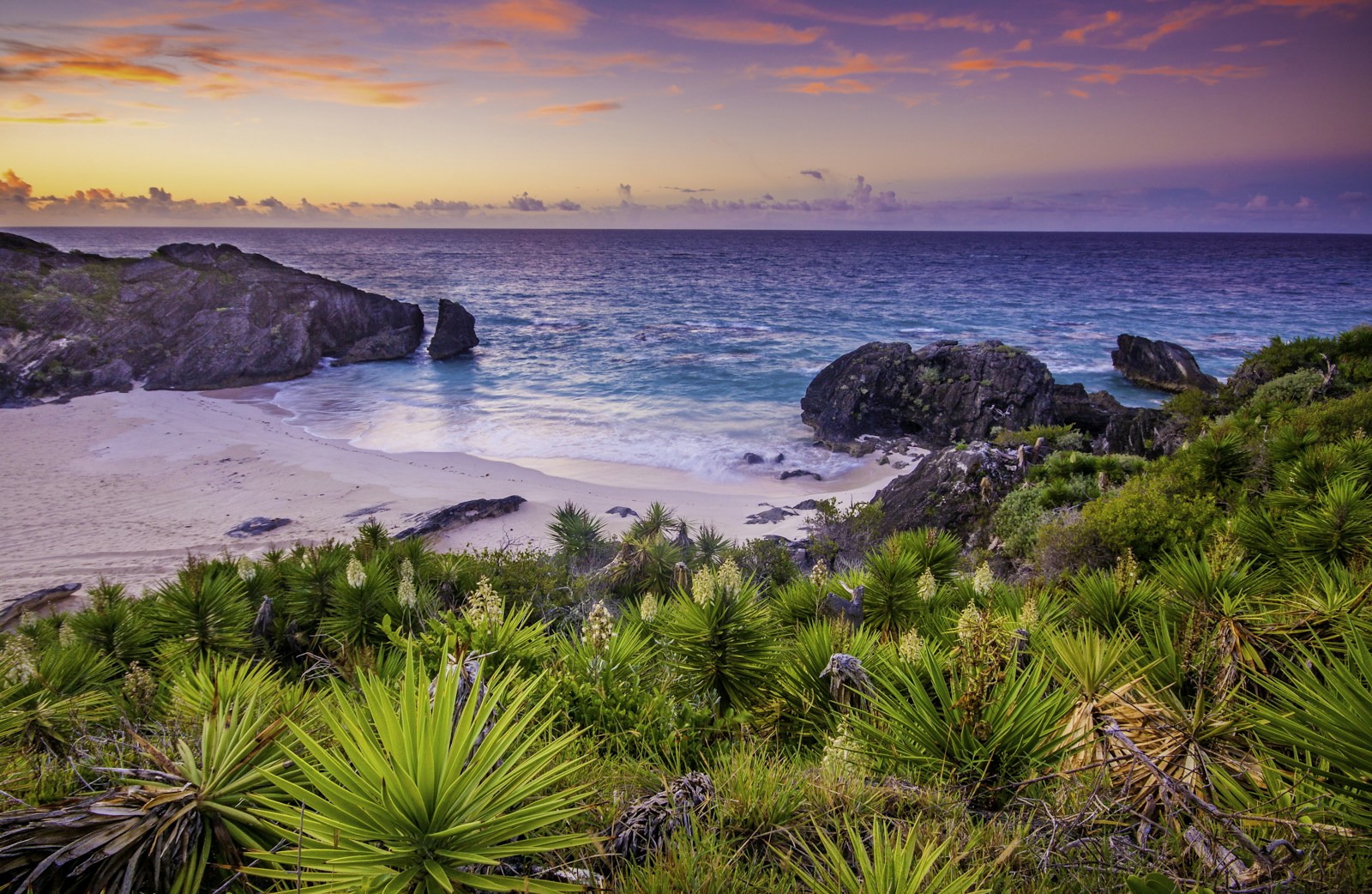
Beaches with pink sand. Underground caves with clear water. A historic town centuries old. Reefs. Shipwrecks. Luxury hotels. Colourful ferries. And an island small enough to cross from one side to the other in about an hour.
All of it in a place whose name has been tied for decades to planes and ships that vanished.
But if you actually go to Bermuda, you find that the most interesting story is not what disappeared there. It is what is there.
First of all, where is Bermuda?
Photo: Ashley kaye / Unsplash
One of the most common mistakes is to think Bermuda is in the Caribbean. It is not.
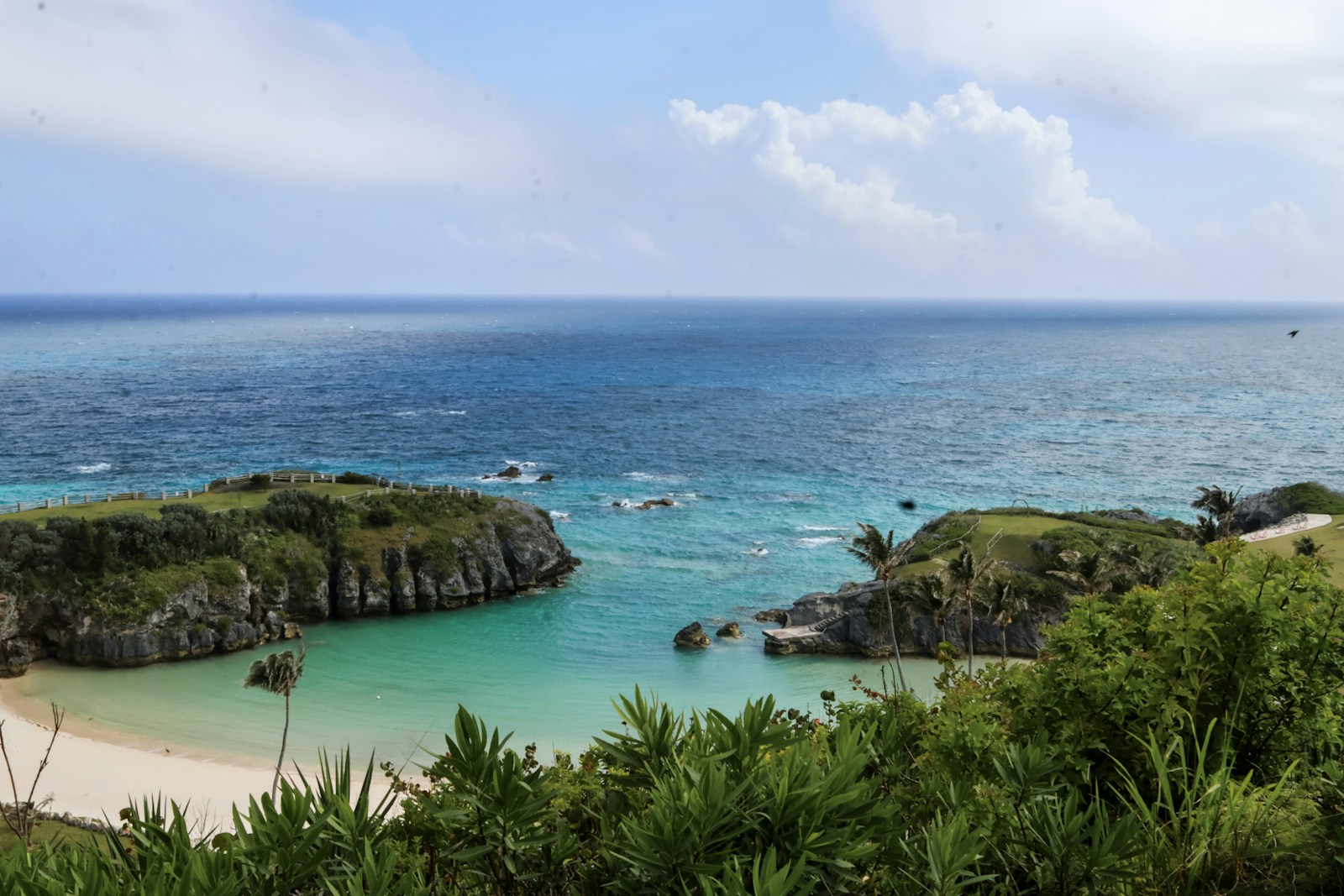
Bermuda sits in the North Atlantic Ocean. According to the official tourism site it is about ninety minutes' flight from New York, and roughly two to three hours from major cities on the US east coast. The international airport is L.F. Wade International Airport, on the eastern side of the island.
For a traveller coming from further afield, the practical route is usually a connection in North America, depending on the season and the flight schedules.
Sherry’s Take
The distinction is not semantic. Bermuda sits well north of the Caribbean, so its climate is different too: subtropical rather than tropical, with a winter that is pleasant but not hot.
How many people actually go to Bermuda, and what about the Triangle?
Photo: Kinø / Unsplash
Far more than you would think. In 2025 Bermuda received 670,409 visitors: 199,193 by air and 467,525 aboard cruise ships. The economic impact of tourism that year was put at around $550 million, plus roughly $12 million from yachts.
So this is not a mysterious island people are afraid to approach. It is an active tourism destination receiving hundreds of thousands of visitors a year.
And the connection to the Triangle is mainly historical and cultural. The familiar version links Bermuda, Florida and Puerto Rico, and for decades stories were built around vessels and aircraft that vanished in the area. But people reach Bermuda itself routinely, by plane, by ship and by yacht.
And perhaps that is what makes a holiday here interesting: you can sit on a pale beach, look out at the Atlantic, and know you are inside one of the most famous areas in popular culture without feeling for a moment that you are at a site of mystery.
How many days to give it, and how the island is laid out
Photo: Isaiah Pearman / Unsplash
Bermuda is a very small territory: about 54 square kilometres, which is roughly 21 square miles. The island chain runs about 21 miles end to end, and at its widest it is only about a mile and a half across.
Inside that small area sit nine parishes, more than 30 beaches, a capital city, a historic town and a transport system that lets you build an entire holiday without a car.
For a first visit I would plan four to six nights. The island is small, but I would not try to compress it into two days: there are beaches, Hamilton, St. George's, caves, boating, diving, history and restaurants, and areas that feel very different from one another.
Five days gives you enough time to see a great deal without turning the holiday into a race.
The most important question: which area should you sleep in?
Photo: Mark Harpur / Unsplash
In Bermuda the choice of area matters a great deal. The island is small, but each part of it offers a different experience.
Hamilton: the capital and the urban side
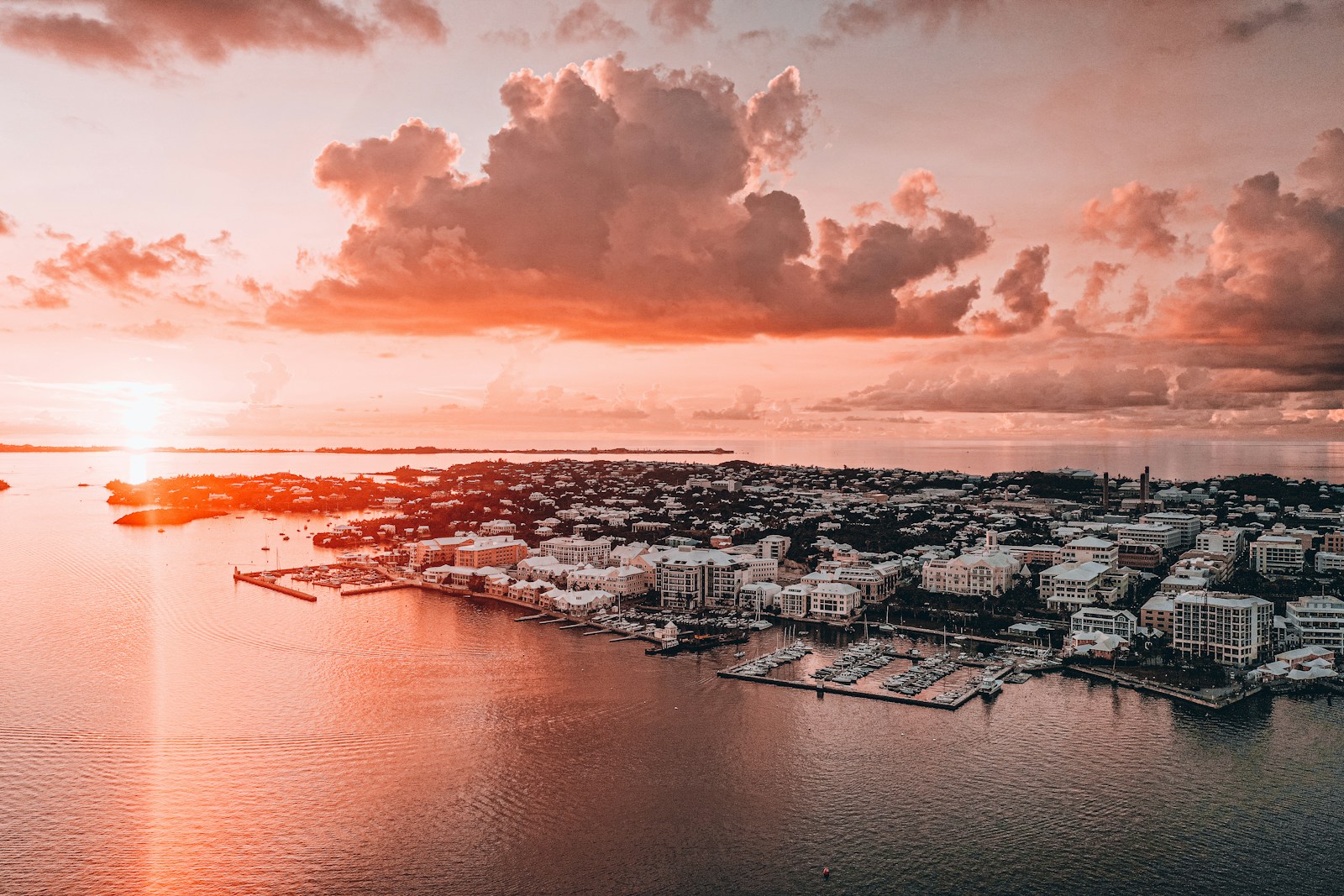
The island's business, cultural and culinary centre. It suits a first visit, anyone who likes going out in the evening, anyone who does not want to depend on taxis, and anyone who wants easy access to the ferries.
St. George's: the historic side
In the east, with historic streets, old buildings and a quieter feel. It suits anyone after calm and history, and it is relatively close to both the airport and the caves.
Southampton, Warwick and Sandys: the beaches
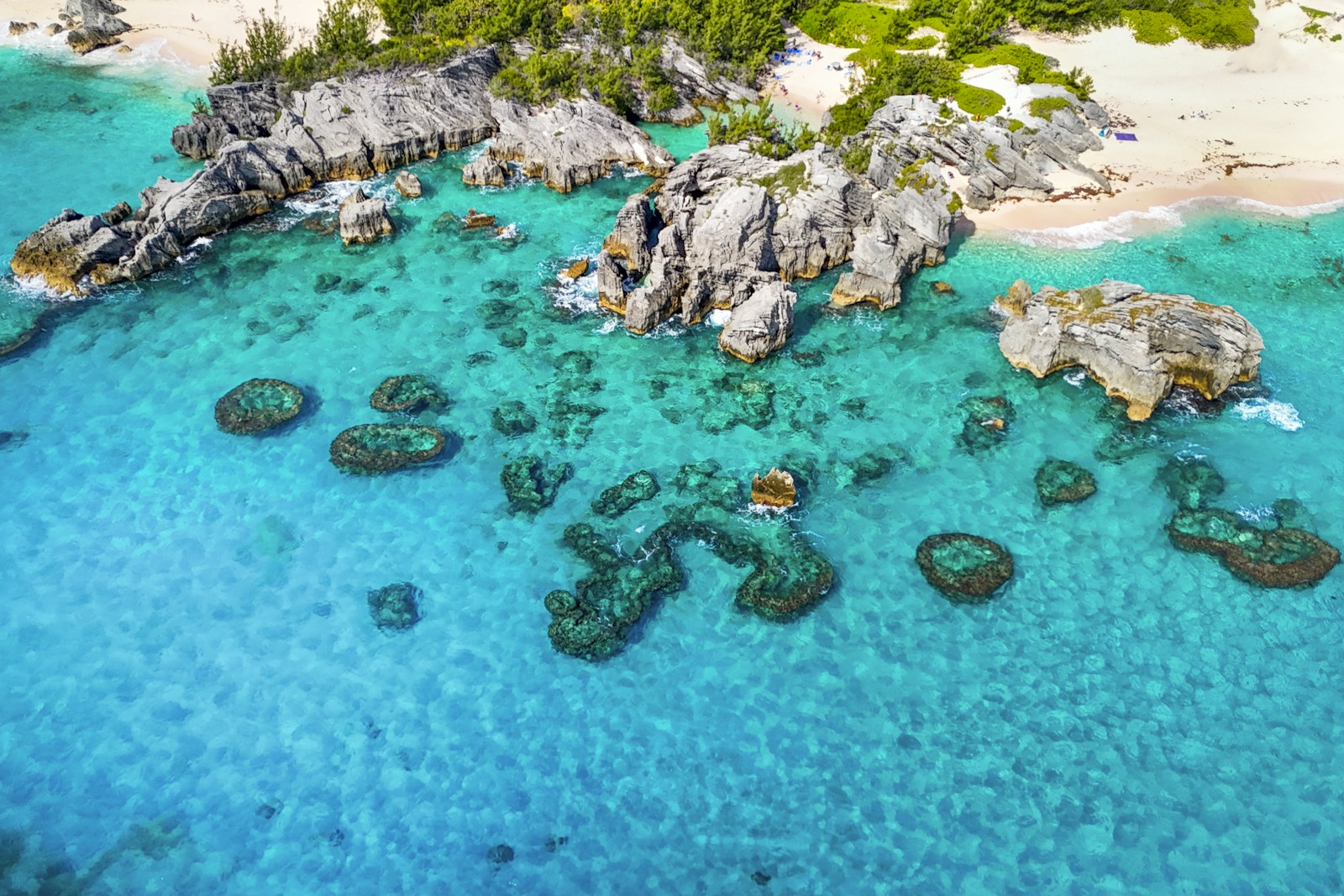
Anyone coming mainly for the beaches should look west and south. Horseshoe Bay is in the Southampton area and is one of the pink-sand beaches most identified with Bermuda.
Sherry’s Take
The pink tint comes from pale sand mixed with tiny particles of marine origin. In strong sun against blue water the result looks almost unreal, and it is one of the reasons these beaches feel unlike an ordinary tropical shore.
Five Bermuda hotels we actually carry
Worth knowing: Bermuda is not a cheap destination, and because of the transport restrictions a slightly more expensive hotel that sits near what you want to do can save you taxis, time and transfers. Here in particular, compare the cost of the whole holiday rather than the room rate alone.
We checked what genuinely exists, and what is actually available to book. These are five real options, deliberately drawn from different parts of the island.
By area
In Hamilton itself sits Hamilton Princess & Beach Club (opens in a new tab), four stars within walking distance of Front Street and the harbour. This is the choice for anyone who wants the town, restaurants and the ferries.
On the south shore, in the Southampton area, is The Reefs Resort & Club (opens in a new tab), four stars facing the sea, in the pink-sand stretch. It suits a quiet trip for two.
In the east, close to St. George's and the caves, there is Grotto Bay Beach Resort (opens in a new tab). It is the convenient option for combining history, caves and beach, and it is also nearer the airport.
And now one of the strangest things about Bermuda: tourists may not rent a car
Photo: Jon Tyson / Unsplash
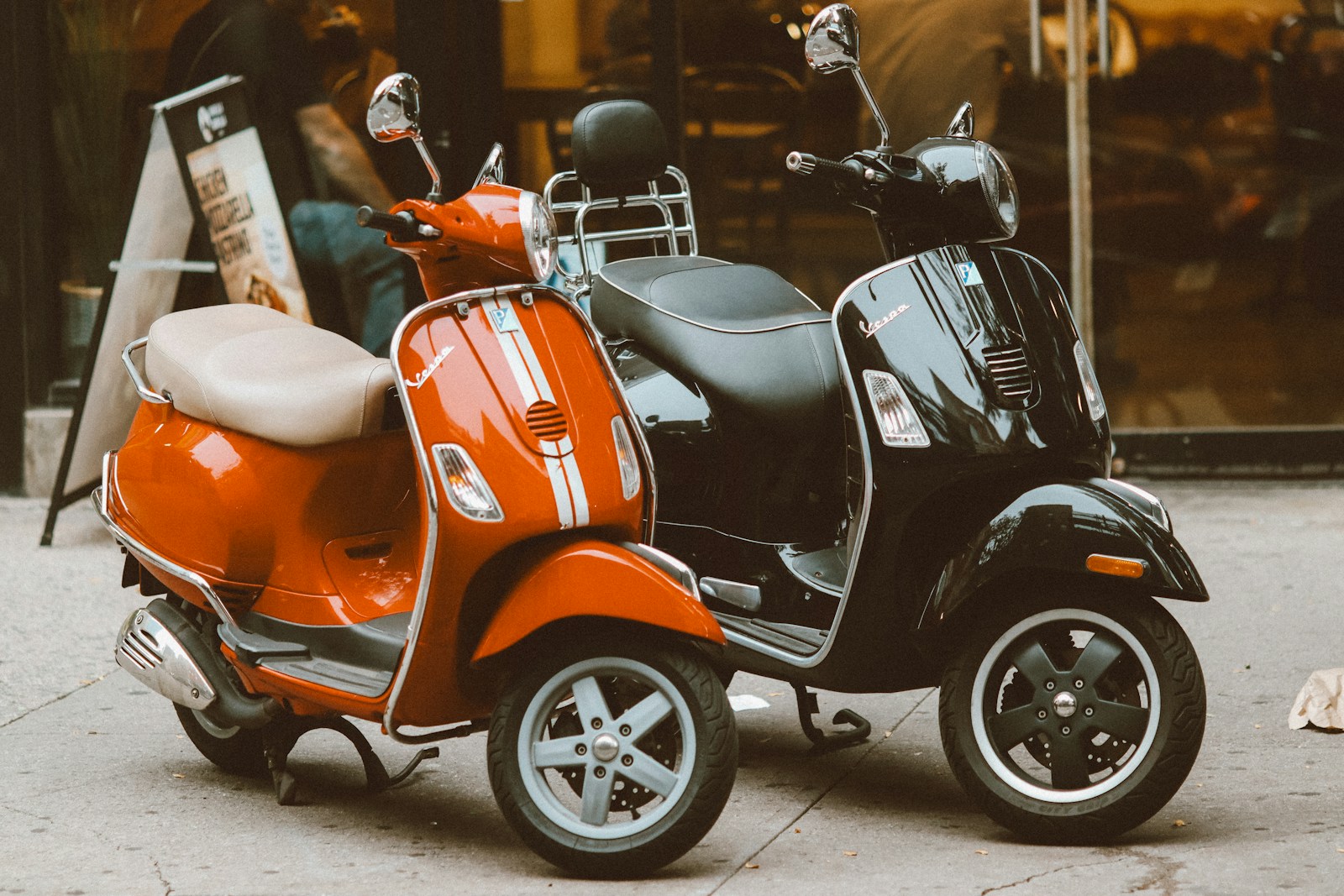
Yes, this is real. Tourists are not permitted to rent a conventional car the way they would in most holiday destinations. Instead you use taxis, buses, ferries, scooters, bicycles, or you hire a small electric two-seater.
Bermuda has 11 bus routes and 14 fare zones, alongside a ferry system connecting different parts of the island. In 2026 the direct ferry route between the Royal Naval Dockyard and St. George's was expanded to run Monday to Saturday through the summer season, making it easier to move between the west and the east.
Taxis are available near the larger hotels, at the airport, in Hamilton, in St. George's and at the Royal Naval Dockyard, and your hotel can call one for you.
A scooter is an option, but in Bermuda you drive on the left, the island-wide speed limit is 35 km/h, a helmet is compulsory, and hire is from age 18. Rental rates generally run to a few tens of dollars a day and vary between companies.
Sherry’s Take
This completely changes how you should choose a hotel. The question is not only how lovely it is, but how easily you can leave it: whether there is a bus stop or ferry landing nearby, and what a taxi will cost every time you want to move.
Going underground: the caves
Photo: Eric Sun / Unsplash
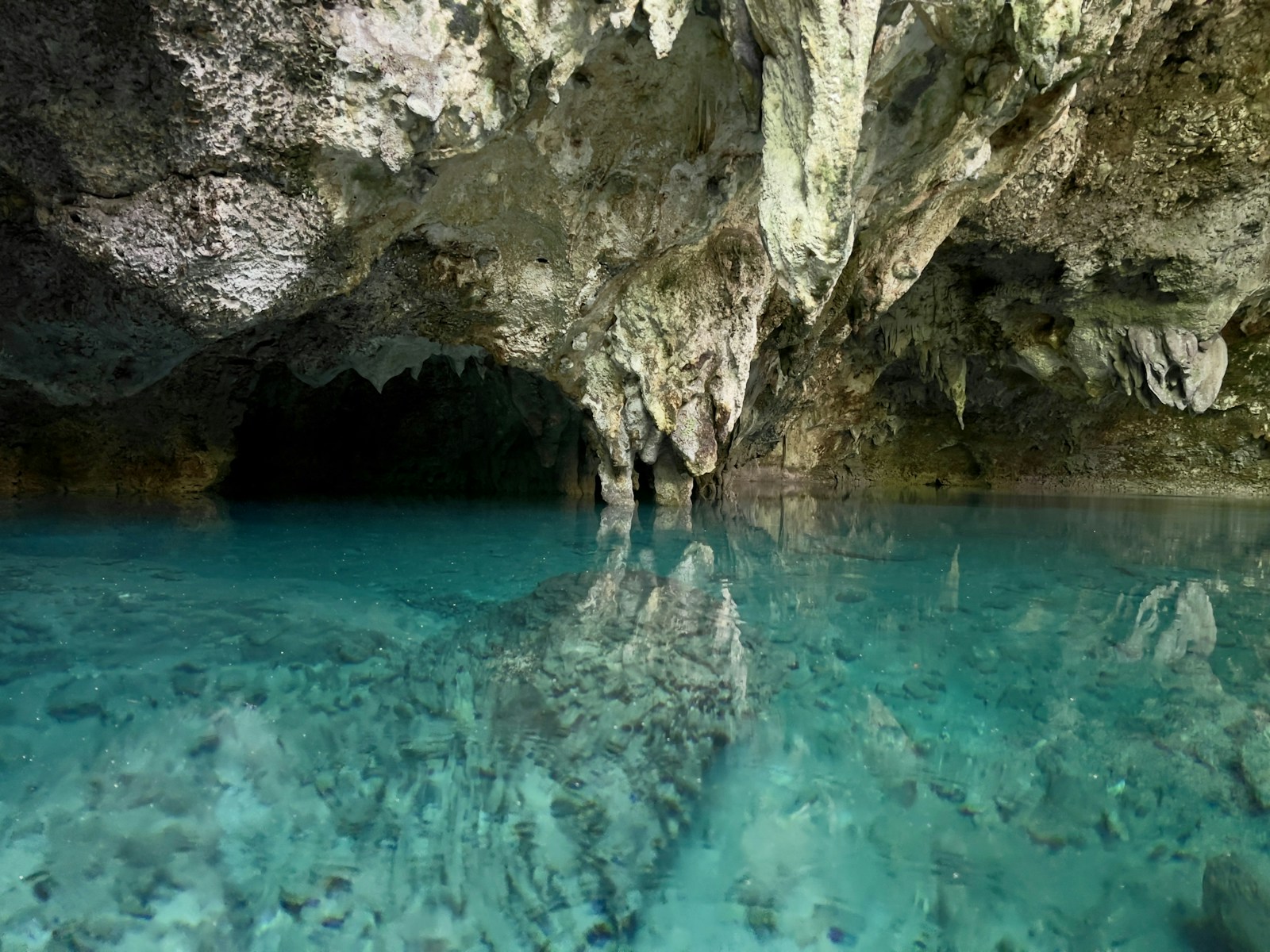
The Crystal Caves are among the places that best suit Bermuda's atmosphere: an underground world, clear water, rock formations and chambers shaped over enormous geological time. They are in the Hamilton Parish area, on the eastern side of the island.
If you came because of the name "Bermuda Triangle", this is a far more genuine way to experience mystery. No aliens, no vanishing ships. Simply extraordinary geology.
And the ships that really are down there
Photo: Olga ga / Unsplash
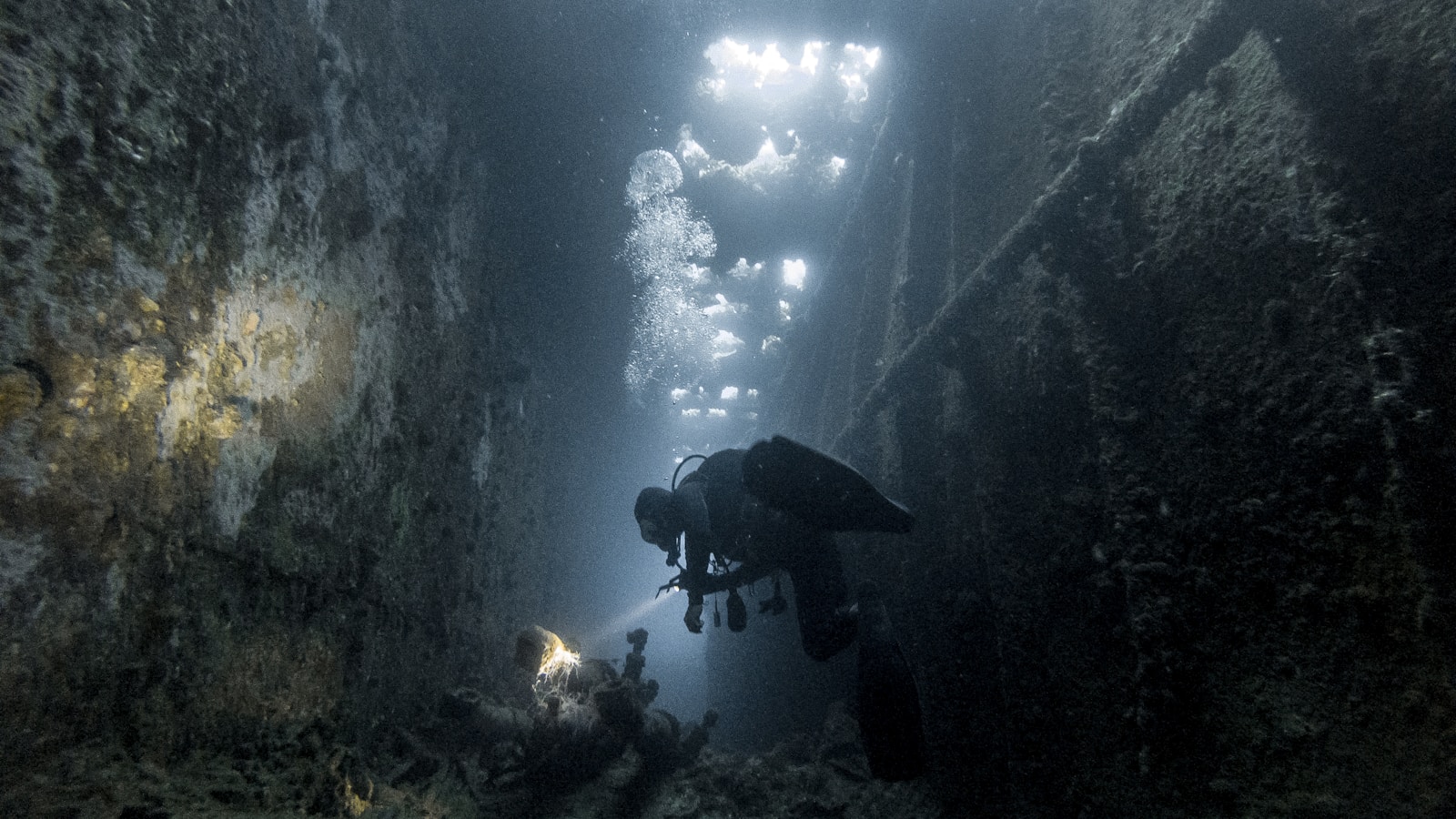
Here we finally return to the Bermuda Triangle, but from the interesting side.
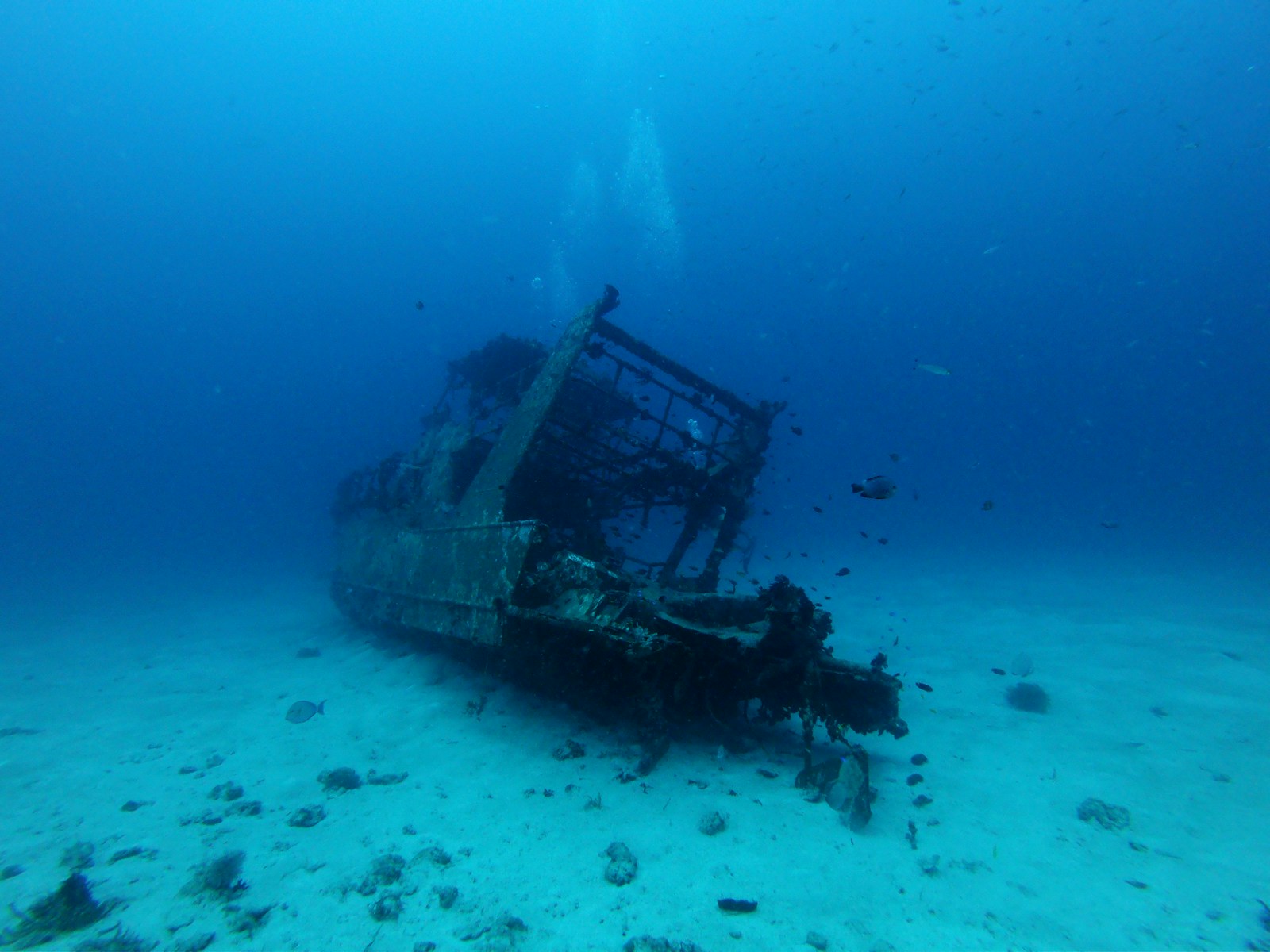
Bermuda is ringed by reefs, and its maritime history includes a large number of vessels wrecked in the area over the centuries. The shallow reefs that protected the island also brought down a good many ships.
So instead of chasing stories about what disappeared, you can dive to ships whose position is known, charted and accessible.
Sherry’s Take
To my mind that is a far more interesting experience than any "mystery tour" selling legends. Bermuda's real mystery is on the seabed, and it has been mapped.
Diving, snorkelling and what you can see from above
Photo: Marek Okon / Unsplash
Divers will find one of the more interesting concentrations of wrecks in the Atlantic here. Non-divers do not have to miss out: Bermuda's reefs are relatively shallow, so some sites are reachable by snorkel and from glass-bottom boats.
And that is worth factoring into the choice of area: if diving is a main goal, check where the boats depart from rather than only how pretty the beach in front of the hotel is.
When to come, and what it costs
Bermuda has a subtropical climate. In summer temperatures are usually in the 80s Fahrenheit with high humidity, and in winter in the 60s and 70s.
But there is another figure worth knowing: the Atlantic hurricane season can affect the island. The tourism authority reported that in 2025 unusually high storm activity between August and early November caused cancellations and a decline in air tourism, which fell 1.9 percent against the previous year.
So if you are travelling during the storm period, check insurance and cancellation terms carefully before you commit.
And if you are comparing hotel prices, read first about deposits, resort fees and city tax, that is usually where the surprise in the final bill comes from.
Two practical things before you travel
Non-resident visitors arriving by air or private yacht must complete a digital Bermuda Arrival Card. The form is free, and the official tourism site warns explicitly about sites that try to charge for it. Use only the official form.
The local currency is the Bermuda Dollar, pegged to the US dollar at 1:1, and US dollars are accepted normally across the island.
A five-day route might look like this: a relaxed first day in Hamilton and around the harbour to understand how the island connects, a second day on the south shore, a third in St. George's and the east, a fourth at the caves and around them, and a fifth on the water, boating, snorkelling or diving the wrecks. If a further day is left, I would simply give it to a beach.
And where does the Bermuda Triangle fit? Exactly where it should. Not at the centre of the holiday, but as an extra layer of story. You can reach the island, sleep facing the ocean, sail, dive, hear about the maritime history, and then understand something important: the reality of Bermuda is far more interesting than its myth.
It does not need aliens or a rip in time. It has deep ocean, reefs, caves, shipwrecks, history, pink beaches, and the feeling of an island sitting in a very unexpected part of the Atlantic.
Do not come to Bermuda only for the mystery. Come for the island.
Frequently asked questions about travelling in Bermuda
Is Bermuda in the Caribbean?
No, and this is one of the most common mistakes. Bermuda is in the North Atlantic Ocean, about ninety minutes' flight from New York and roughly two to three hours from cities on the US east coast. Because it sits further north, its climate is subtropical rather than tropical.
How many days should you give Bermuda?
For a first visit, four to six nights is a sensible range. The whole island is about 54 square kilometres and you can cross it in roughly an hour, but it holds nine parishes, more than 30 beaches, a capital city, a historic town, caves and dive sites. Five days lets you see a great deal without the holiday becoming a race.
Is it true tourists cannot rent a car in Bermuda?
Yes. Tourists are not permitted to rent a conventional car. Instead you can use taxis, the 11 bus routes, the ferries, a scooter, a bicycle or a small electric two-seater. On a scooter you drive on the left, the island-wide speed limit is 35 km/h, a helmet is compulsory and hire is from age 18.
Which area should you stay in?
It depends on the kind of holiday. Hamilton suits anyone who wants the town, restaurants and easy ferry access. St. George's and the east suit anyone after quiet, history and proximity to the caves and the airport. Southampton and the south shore suit anyone coming mainly for the beaches. Because of the transport restrictions, being near a bus stop or ferry landing is worth more here than in most destinations.
What do you need to complete before entering Bermuda?
Non-resident visitors arriving by air or private yacht must complete a digital Bermuda Arrival Card. The form is free, and the official tourism site warns about sites that charge for it. Once completed you receive a confirmation to present on arrival.
When is the best time to go, and what about hurricanes?
The climate is subtropical: hot and humid in summer, milder in winter. But the Atlantic hurricane season does affect the island, and the tourism authority reported that in 2025 unusually high storm activity between August and early November caused cancellations and a 1.9 percent decline in air tourism. Anyone travelling in that period should check insurance and cancellation terms.
Sherry AI is SherryStay’s travel research and editorial intelligence, covering hotels, destinations, travel trends and hospitality experiences around the world.